


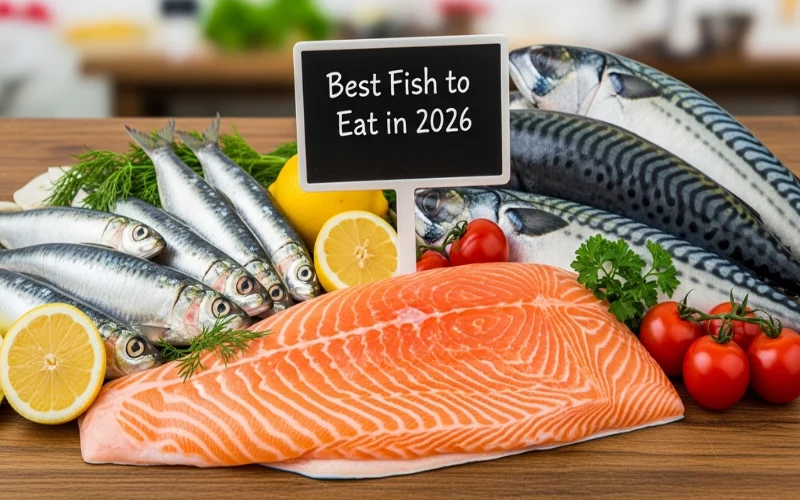
I consume fish three or four times per week and I have very strong thoughts on it. There are those fish which are really worth your money and those which are hyped trash. So I will remove the noise on your behalf.
My candid list of the healthiest fish to eat is supported by FDA statistics, actual cooking experience, and no fluff.
Why Fish Belongs on Your Plate Every Single Week
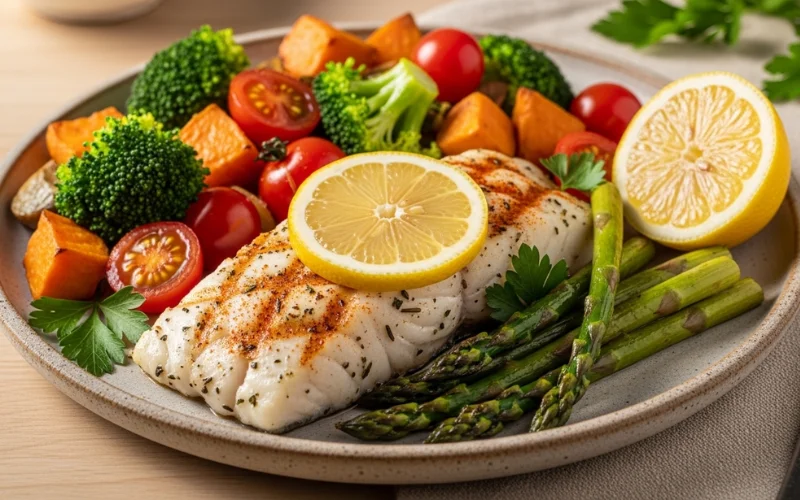
Probably, fish can be the only good source of protein you can consume. At least that is a big claim, but I have a point. According to the American Heart Association, two portions of fish eaten per week can lower your chances of dying of heart disease by 36%. Such a figure is insane.
The omega-3 fats in fish (EPA and DHA in particular) work in a way that can never be completely imitated by a supplement. They decrease triglycerides, decrease inflammation, improve brain performance, and even improve depression. Adults should consume no less than 8 ounces of fish per week as recommended by the FDA. The target is 8 to 12 ounces of pregnant women.
What Makes One Fish Healthier Than Another?
It all comes down to three: omega-3 content, mercury levels and the overall nutrient density. The fish might be loaded with omega-3s, but it might be loaded with a ton of mercury (hello, swordfish). The omega-3s in high amounts and low levels of mercury are the sweet spot. That is what this whole guide is about.
I also consider taste, cost, and ease of home cooking of each fish. Since we are not all deceived, no one will consume a meal twice a week that is like cardboard.
Top 15 Healthiest Fish to Eat (My Personal Ranking)
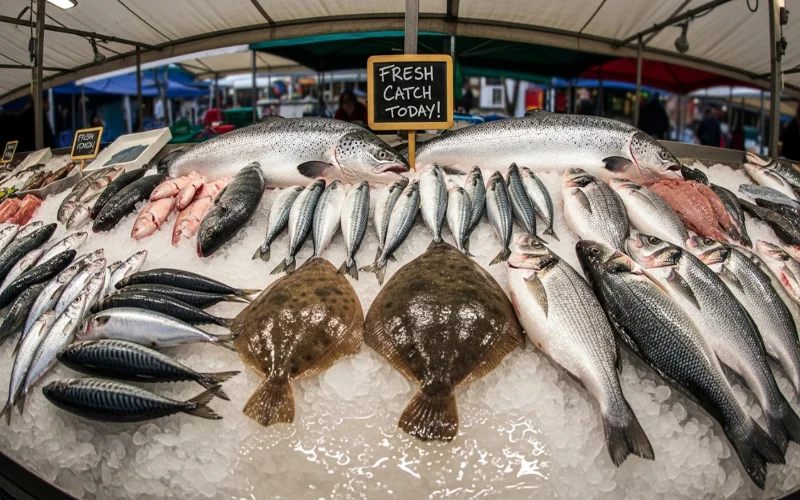
These I have rated depending on a combination of omega-3 content, mercury level, protein, taste and availability. This does not come straight off some nutritional database. I have prepared and consumed all these kinds of fish to eat.
| Rank | Fish | Omega-3 (mg/3oz) | Mercury (ppm) | Calories/3oz | Best For |
| 1 | Wild Salmon | 1,000+ | 0.022 | 175 | Overall best |
| 2 | Sardines | 980+ | 0.013 | 177 | Budget omega-3s |
| 3 | Atlantic Mackerel | 1,000+ | 0.050 | 174 | B12 and selenium |
| 4 | Herring | 1,000+ | 0.078 | 173 | Highest omega-3 |
| 5 | Anchovies | 1,000+ | 0.016 | 111 | Low cal, high omega-3 |
| 6 | Rainbow Trout | 1,000+ | 0.071 | 143 | Sustainable option |
| 7 | Arctic Char | 500-1,000 | Low | 140 | Salmon alternative |
| 8 | Alaska Pollock | 500-1,000 | 0.031 | 100 | Lean and affordable |
| 9 | Cod | Under 250 | 0.111 | 73 | Weight loss |
| 10 | Skipjack Tuna | 250-500 | 0.128 | 99 | High protein |
| 11 | Halibut | 250-500 | 0.241 | 94 | Magnesium rich |
| 12 | Mahi-Mahi | Under 250 | 0.178 | 93 | Very lean |
| 13 | Tilapia | Under 250 | 0.013 | 110 | Budget protein |
| 14 | Catfish | Under 250 | 0.024 | 105 | Southern classic |
| 15 | Striped Bass | 500-1,000 | 0.152 | 105 | Underrated pick |
1. Wild Salmon: The Undisputed King
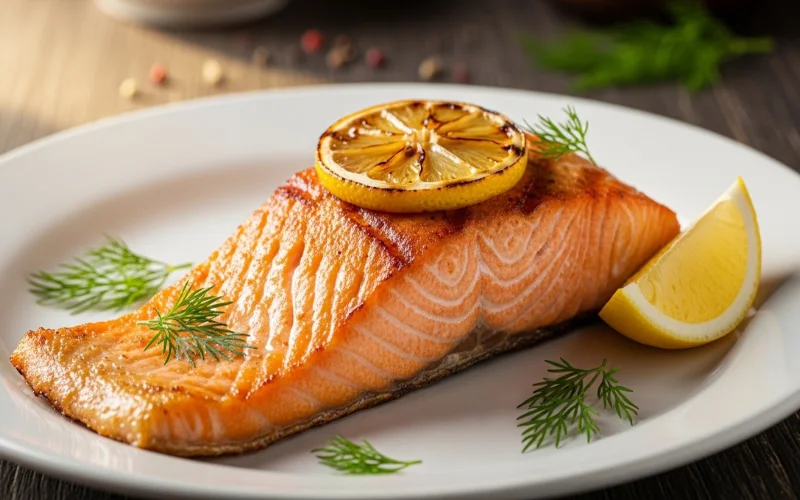
Whenever a person poses a question about what is the best fish to eat. I would always say salmon. Always. Wild-caught salmon (especially sockeye or king) has over 1,000 mg/serving of omega -3s, 22 grams of protein and an enormous amount of vitamin D. Its mercury level is only 0.022 ppm, which is literally insignificant.
I grill it on the skin-side in a hysterically hot skillet with no more than salt, pepper and a squeeze of lemon. Approximately eight minutes. The skin becomes crunchy; the interior is pink and buttery. Do not overcook it. Seriously.
This is a gigantic British and Scandinavian dish. Smoked mackerel on rye bread is one of my favorite light meals. Have it grilled whole with herbs, if you be able to get it fresh.
2. Sardines: The Most Underrated Fish on This List
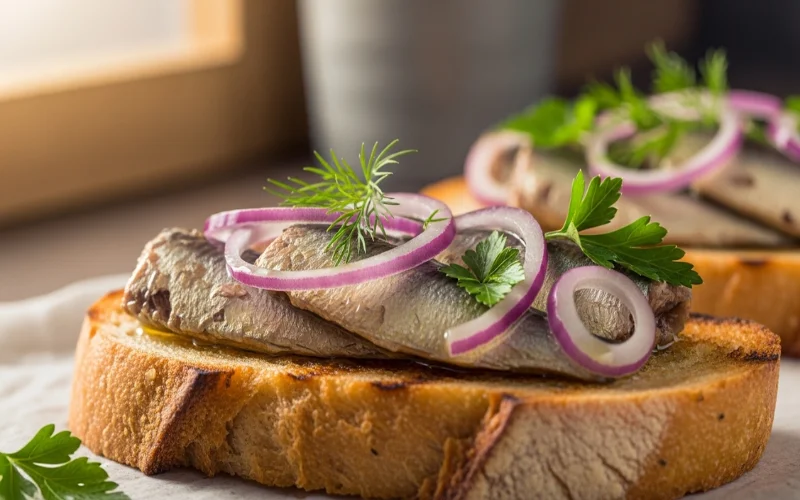
The best fish to eat for health on a budget is Sardines. A can will provide approximately two bucks and will provide you with close to 1,000 mg of omega-3s, 23 grams of protein, and calcium and vitamin D. The level of mercury is nearly zero at 0.013 ppm. They are among the safest fish to eat on Earth.
I understand that sardines scare people away. I get it. Begin with the boneless, skinless ones packed in olive oil. Place them on toast with some hot sauce and red onion. Trust me on this.
3. Atlantic Mackerel: A Nutritional Powerhouse
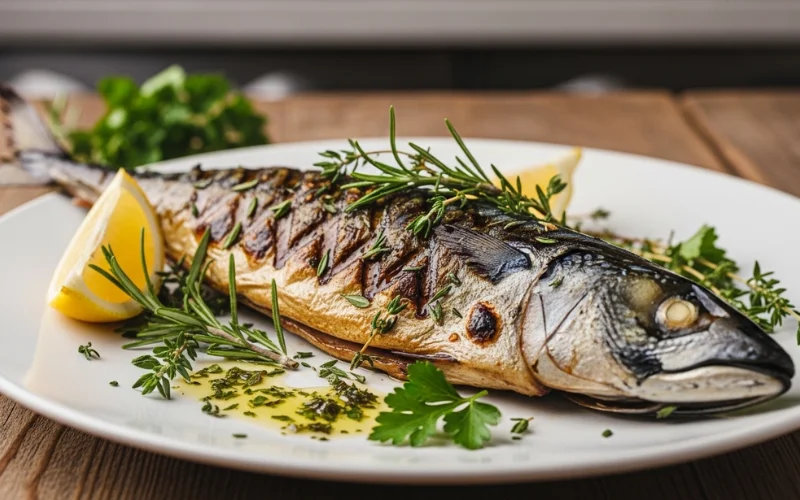
One of the most nutritious fish you can purchase is Atlantic mackerel (not king mackerel, which is rich in mercury). One serving provides more than 500 per cent of the daily B12 and an insane level of selenium. The content of omega-3 exceeds 1,000 mg/serving.
This is a gigantic British and Scandinavian dish. Smoked mackerel on rye bread is one of my favorite light meals. Have it grilled whole with herbs, should you be able to get it fresh. The taste is oily in the best sense of the word.
4. Herring: The Omega-3 Champion
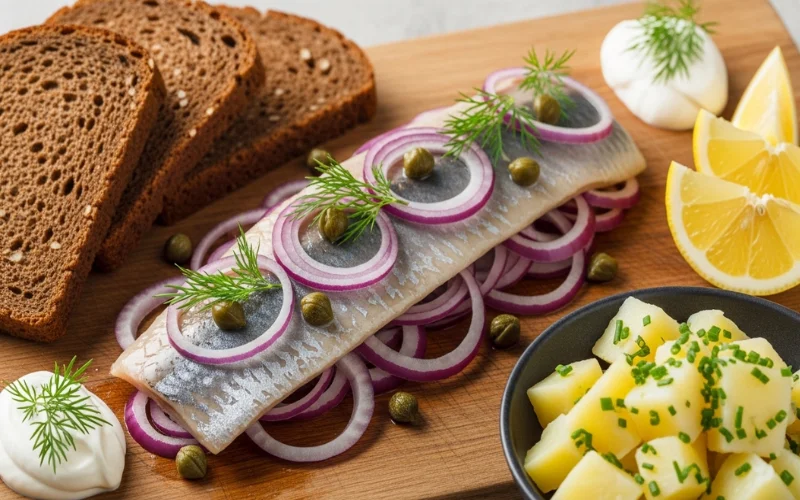
Herring even contains more omega-3 than salmon. The majority of the population is not aware of that. A 3.5 ounces portion contains approximately 2,150 mg of EPA and DHA. It is also full of vitamin D and B12. Herring has a case to answer to the question of which fish is the healthiest per gram.
Herring is a traditional Polish cuisine, which it is pickled, smoked and consumed in dozens of ways. It is cheap, eco-friendly and rich in nutrients. It is something that more people should give a chance.
5. Anchovies: Tiny Fish, Massive Benefits
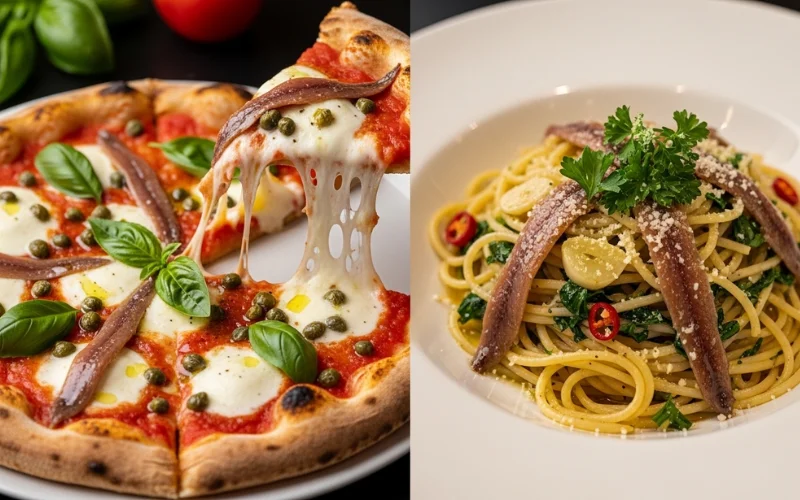
These midgets have a heavy hit. More than 1,000 mg of omega-3s per small meal, and hardly any mercury, 0.016 ppm. They are one of the cleanest fish to eat, according to FDA data. Rich in calcium, since you consume the entire fish, including bones.
I have been using them as a foundation of flavor in pasta sauces, as a topping on pizza, and melted in butter on steak. They melt away into dishes and give them this profound savoriness which no other thing can render.
6. Rainbow Trout: The Sustainable Pick
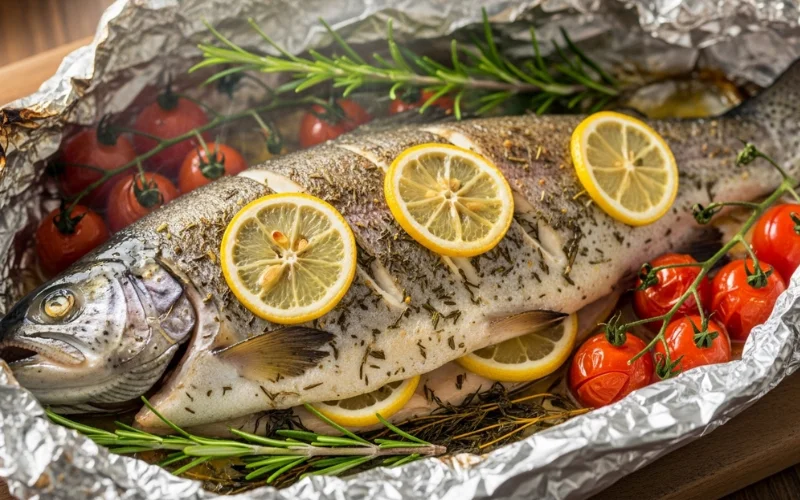
Rainbow trout is the best type of fish to eat in case sustainability is a concern to you, and is farm-raised. It is a Monterey Bay Seafood Watch Best Choice and has more than 1,000 mg of omega-3s. It is better than most supplements because one serving provides you with 81 percent of your daily vitamin D.
Trout is light and has a hint of nutty taste and it can be baked in foil with garlic and lemon slices. It is quick to cook (less than 15 minutes) and flakes well. A simple dining table meal.
7. Arctic Char: The Salmon Alternative Nobody Talks About
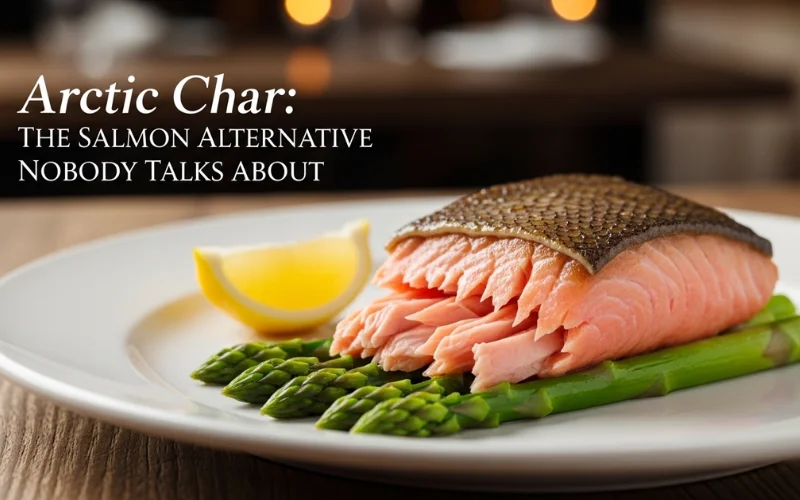
Arctic char resembles salmon, and it tastes like salmon-trout, and it is nearly always sustainably farmed. Assuming you are tired of salmon (that does occur), use Arctic char instead. It has a low range of mercury, with an omega-3 level of between 500 and 1,000 mg.
I took it the first time in one of the restaurants in Reykjavik and got hooked. It should be cooked as salmon. Equal temperature, equal time, equal seasonings. It works.
8. Alaska Pollock: The Affordable All-Rounder
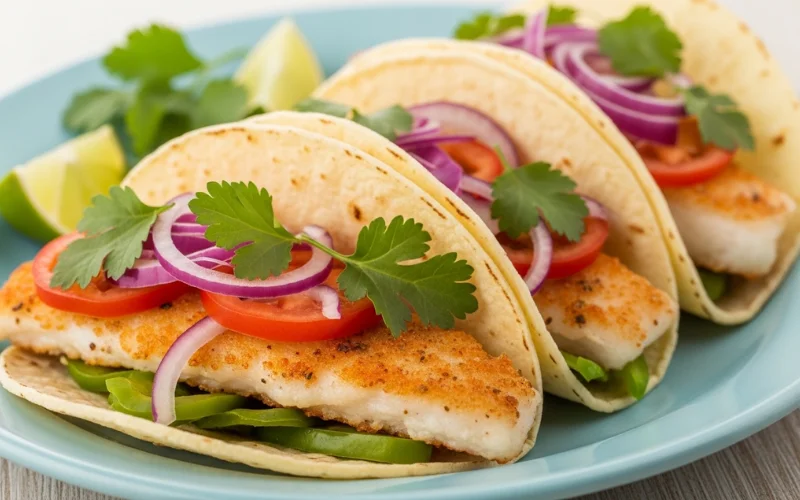
Most fish sticks and fish sandwiches in the fast food category use Alaska pollock. However, fresh pollock is a good option. It is slim, cheap, and contains 500 1,000 mg of omega-3s and has very low levels of mercury at 0.031 ppm. It is also among the best fish you can have when you are in need of something light.
The flavor is not overpowering and is pure. Tacos made of fish, fish and chips, or a plain pan-fry served with breadcrumbs. It lacks the richness of salmon, yet it is much cheaper.
9. Cod: The Lean Protein Machine
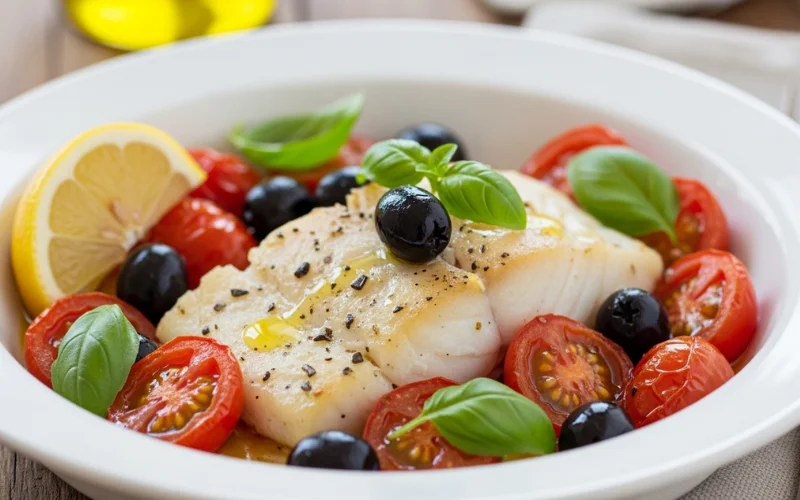
Cod is the fish of choice among people in need of calories. Only 73 calories and 16 grams of protein and almost no fat in 3-ounces. The amount of omega-3 is less than in fatty fish, but the ratio of protein to calories is difficult to rival when it comes to weight loss.
One of my weeknight meals is baked cod with cherry tomatoes and olives and capers. It bakes in a hot oven in 12 minutes and the cleaning is minimal. The bland taste renders it a favorite among the masses, particularly to individuals who claim to dislike fish.
10. Skipjack Tuna: The Smarter Tuna Choice

The following is the thing about tuna. Tuna is not all the same. Compared with albacore or bigeye, skipjack (the type of canned tuna in most of the light category) contains much less mercury. With a level of 0.128 ppm, it is included in the FDA “Best Choices. Protein will be 22 grams per serving, the highest on this list.
I always have some cans of skipjack in my pantry. It is a fast lunch made in three minutes, mixed with avocado, lime juice and a little chili flakes.
11 to 15: More Great Fish Worth Eating

Haliburton is a meaty, solid white fish that is rich in magnesium and niacin. Mercury is in moderation at 0.241 ppm, hence once a week only. Mahi-mahi is a kind of fish to eat that is one of the lightest foods to consume, with only 93 calories per dish. Tilapia is falsely accused, yet it has almost no mercury and it is a good, cheap source of protein. The most popular farmed fish in the US is catfish and it also goes well with Southern-style spice rubs. In this case, striped bass is the sleeper with 500 to 1000 mg of omega-3s and an absolutely fantastic grilled flavor.
Omega-3 Content Compared: Which Fish Gives You the Most?
Fish are not all created equal as regards to omega-3 fatty acids. The disparity is enormous. One serving of herring provides more than 2,000 mg and 1 serving of tilapia provides less than 250 mg. The following is the hierarchy of the different types of fish to eat.
| Omega-3 Tier | EPA+DHA per Serving | Fish in This Tier |
| Tier 1 (Highest) | Over 1,000 mg | Mackerel, herring, anchovies, salmon, sardines, trout, sablefish |
| Tier 2 (High) | 500 to 1,000 mg | Alaska pollock, Arctic char, striped bass, mussels, albacore tuna |
| Tier 3 (Moderate) | 250 to 500 mg | Halibut, skipjack tuna, catfish, snapper, flounder |
| Tier 4 (Low) | Under 250 mg | Cod, mahi-mahi, tilapia, shrimp, scallops, haddock |
My mind was also shocked at the fact that bluefin tuna provides approximately 1,710 mg of omega-3s compared to the 140 mg of omega-3s that yellowfin tuna provides. That is a 12-fold difference in the same species. So, tuna without any modifier is essentially meaningless in a nutrition label.
Mercury Levels in Fish: The FDA Breakdown
The greatest concern of the people with regard to fish consumption is mercury. And is a justifiable concern, particularly among pregnant women and young children. The FDA and EPA come up with a jointly issued fish advisory that classifies fish into three groups. This is what you really should know.
| FDA Category | Mercury Level | How Often | Fish Examples |
| Best Choices | Under 0.15 ppm | 2 to 3 servings/week | Salmon (0.022), sardines (0.013), pollock (0.031), cod (0.111), tilapia (0.013), trout (0.071) |
| Good Choices | 0.15 to 0.46 ppm | 1 serving/week | Halibut (0.241), mahi-mahi (0.178), albacore tuna (0.350), snapper (0.166), sea bass (0.152) |
| Avoid | Over 0.46 ppm | Do not eat | Shark (0.979), swordfish (0.995), king mackerel (0.730), tilefish (1.450), bigeye tuna (0.689) |
Important Mercury Facts Most Sites Skip
Preparation of food does not lessen mercury in any way. It is conjugated to the fish protein and remains there irrespective of the temperature. The best you can do to regulate your mercury consumption is to select species with lower levels of mercury. That is it. A high-mercury fish cannot be made right with any cooking trick.
In addition, bigger and older fish have more mercury because it accumulates. That is why sardines, anchovies and herring are small fish that are of the cleanest. They are short-lived and near the food chain.
Wild-Caught vs Farm-Raised Fish: Which Should You Pick?

It is also one of the most debatable questions in the seafood business and so to speak, a solution is not as simple as many people think it is. Each of them has its justified advantages and disadvantages.
| Factor | Wild-Caught | Farm-Raised |
| Calories (3oz salmon) | About 130 | About 180 |
| Omega-3s | High % of total fat | May have more total mg but worse omega-6 ratio |
| Mercury | Varies by species | Generally lower |
| Antibiotics | None | Often used |
| Colour | Natural (from krill diet) | Artificial astaxanthin added to feed |
| Cost | More expensive, seasonal | Cheaper, available year-round |
| Environmental Risk | Overfishing, bycatch | Water pollution, disease spread |
My honest take? I purchase trout and salmon that are caught wild and raised on a farm. That is my healthy area of food and money. However, the professional opinion by Tufts University is spot on: seafood is good no matter the source, particularly when it substitutes red meat. Here, do not permit perfection to be the adversary of good.
Best Fish to Eat for Specific Health Goals

Various fish are good at different things. This is where you can find out which fish is best to eat according to what your body requires at the moment.
Best Fish for Heart Health
The American Heart Association suggests a diet of two portions of fatty fish a week to protect the heart. This has been found to add 36 years of life expectancy with respect to heart disease. Salmon, mackerel, herring, sardines or anchovies. They also pack in over 1000 mg of omega-3s in one sitting.
The most important is EPA and DHA (not the ALA in plant sources such as flaxseed). Your body is very poor at converting ALA to DHA, approximately 5%. So fish is the most efficient for your heart indeed.
Best Fish for Brain Health
DHA is a constituent of approximately 40 percent of the polyunsaturated fatty acids in your brain. Enhanced consumption of DHA is connected with lower cases of Alzheimer’s, dementia and cognitive impairment. The best picks here include wild salmon, sardines and mackerel.
I have also observed a tangible change in my personal concentration and mood when I consume fish on a regular basis as compared to when I go without it once a week or even twice a month. Anecdotal? Sure. Nevertheless, the study supports it.
Best Fish for Pregnancy
Reduced to 8 to 12 ounces per week, the FDA recommends low-mercury fish to pregnant women. DHA plays a vital role in the development of the fetal brain and eyes. Salmon, sardines, herring, trout, anchovies, pollock, tilapia, and cod are the most suitable ones.
Eating should be avoided in pregnant women when they are eating shark, swordfish, king mackerel, tilefish, bigeye tuna, marlin and orange roughy. Halve the albacore tuna to 6 ounces/week. And eat not raw or half-cooked fish (wretch, sushi eaters).
Best Fish for Weight Loss
High protein, low protein. High-protein lean white fish contains cod, tilapia, halibut, pollock and mahi-mahi, each of which has less than 120 calories in 3-ounce portions. My own favorite to cut with is cod, which is 73 calories and 16 grams of protein, is ludicrously efficient. Even fatty fish such as salmon helps in weight management due to the anti-inflammatory properties of omega-3s.
Fish You Should Avoid Eating (and why)

Not all fish are meant to be on your plate. Some have high levels of mercury and some are a nightmare for sustainability. These are the ones that I actively shun.
| Fish to Avoid | Mercury (ppm) | Why to Avoid |
| Tilefish (Gulf of Mexico) | 1.450 | The highest mercury levels of any commercial fish |
| Swordfish | 0.995 | Extremely high mercury, overfished |
| Shark | 0.979 | High mercury, slow to reproduce, endangered |
| King Mackerel | 0.730 | Very different from Atlantic mackerel, high mercury |
| Bigeye Tuna | 0.689 | Much higher mercury than skipjack |
| Orange Roughy | 0.571 | Lives 100+ years, extremely slow to recover from overfishing |
| Marlin | 0.485 | High mercury, sport fish with declining populations |
People are always confused with the king mackerel versus Atlantic mackerel thing. They are entirely dissimilar fish. Atlantic mackerel happens to be one of the healthiest things to eat. King mackerel will give you the sicks. Always make sure what species you are purchasing.
Best Cooking Methods to Keep Your Fish Healthy
The way you prepare your fish is nearly as important as the type of fish you use. Frying a gorgeous salmon almost annihilates the nutritional value of the fish. This is what the study says concerning the retention of nutrients.
| Method | Omega-3 Retention | Notes |
| Steaming | Up to 95% | Best method overall for nutrient retention |
| Poaching | 90%+ | Gentle low-temperature cooking preserves everything |
| Baking/Roasting | 85-90% | Retains 100% of vitamin D (frying loses about 50%) |
| Grilling | 80-85% | Good but creates some harmful compounds at high heat |
| Pan-Frying | 75% | Fish absorbs cooking oil, about 25% EPA loss |
| Deep-Frying | Under 80% | Worst choice: alters fatty acid profile, negates most benefits |
I prefer using a hot cast-iron skillet in a small amount of avocado oil. On the skin side, 4 minutes, turnover, 2 minutes. That makes you have crunchy skin and a fat centre. The internal temperature must reach 145 degrees Fahrenheit.
Freshwater vs Saltwater Fish: What is the Difference?
It is a question I witness every day and no one can answer it well. The nutritional profiles are in fact very different.
| Factor | Freshwater Fish | Saltwater Fish |
| Omega-3s | Generally lower | Generally much higher |
| Iodine | Very low | Significantly higher |
| Calcium and Iron | Higher | Lower |
| Calories | Usually lower | Usually higher (more fat) |
| Common Types | Trout, catfish, tilapia, bass, perch | Salmon, tuna, mackerel, cod, sardines, herring |
| Mercury Risk | Lower on average | Higher in large predator species |
I would advise eating a combination of the two. Fish is made with saltwater and provides the Omega-3 that your heart desires. Freshwater fish is also more likely to be leaner and richer in some minerals. Diversity is truly the most effective approach in this case.
How Many Servings of Fish Should You Eat Per Week?
Here is what the major health organizations recommend:
| Organization | Weekly Recommendation |
| FDA / EPA | At least 8 oz (2 servings) for adults; 8-12 oz for pregnant women |
| American Heart Association | 2 servings of non-fried fish per week (3.5 oz each) |
| WHO | 0.25 to 2g EPA+DHA per day (about 2 servings of fatty fish) |
| Children (FDA) | 2 servings/week: 1 oz ages 1-3, 2 oz ages 4-7, 3 oz ages 8-10, 4 oz ages 11+ |
A single portion is approximately the size of your palm or a deck of cards. Two portions per week is quite possible. I would personally have three or four, since I really enjoy preparing fish and I can feel the difference in my mood
Which Fish Is Safe for the Planet?

It is not only a question of your health to choose the right fish. The issue of overfishing exists and is a serious one. The following are the most sustainable choices as per Monterey Bay Aquarium Seafood Watch.
Best Sustainable Picks
- Wild Alaska salmon (all 5 Pacific species)
- Pacific sardines
- Atlantic mackerel
- Farmed rainbow trout
- US farmed catfish
- Alaska pollock
- Farmed Arctic char
- Any fish carrying MSC or ASC certification
Sustainability Red Flags
- Orange roughy (lives 100+ years, decimated populations)
- Bluefin tuna (critically endangered)
- Imported shrimp (habitat destruction, forced labour concerns)
- Chilean sea bass (unless MSC-certified)
- Sharks (slow reproduction, ecosystem keystone)
Find the blue MSC label on wild fish and the green ASC label on farmed fish. They are not ideal certifications, but they are the best consumer-facing tools we have so far.
How Fish Is Enjoyed Around the World

I adore the fact that the way people prepare fish varies in every culture. And experimenting with these various methods has completely altered my home fish-eating habits.
In Peru, ceviche is raw fish that has been cured in citrus juice, which is perhaps my favorite method of consuming fish of all time. Peruvian food traditions are always a good point to start in case you have never tried it. The fish is actually cooked in the lime and the outcome is fresh and tangy and addictive.
In the US Gulf Coast, particularly in areas such as the Orange Beach, Alabama, you will find blackened fish tacos and grilled red snapper that will change your life. And some of the most delicious fish stews I ever heard of are the ones on the Colombian shore of the Caribbean.
Tips from Experience: How to Buy and Cook Better Fish
- Smell it first. Fresh fish is either supposed to smell like the sea or nothing. When it has a fishy or ammonic smell, turn tail. That is the test number one and it always works.
- Check the eyes. Eyes of the whole fish are supposed to be clear, bright, and slightly bulging. Sunken or cloudy eyes indicate that it has been lying too long.
- Press the flesh. When you press it with your finger it should spring back. When your fingerprint remains, then it is not fresh.
- Frozen is fine. The supermarket had most of the so-called fresh fish frozen in the sea and thawed to be frozen. It is better to purchase it frozen and warm it at home, which usually provides you with more fresh results.
- Do not overcook it. This is the greatest mistake that people commit. After approximately 90 seconds, fish becomes rubbery. When it is still in the middle slightly translucent, take it off the heat. The job is completed by carry-over heat.
- Pat it dry. Before cooking, always pat your fish dry with paper towels. A good sear is an enemy of moisture.
- Keep canned fish stocked. Canned tuna, salmon and sardines are almost equal in nutritional value to fresh. They are long lasting, cheaper and a meal can be ready within minutes.
Mistakes to Avoid When Choosing Fish

- Thinking that all tuna is equal. Skipjack contains 0.128 ppm mercury. Bigeye has 0.689 ppm. This is a fivefold difference. Never fail to ask yourself what kind of tuna you are purchasing.
- Ignoring canned fish. One of the healthiest and most inexpensive products is canned sardines and salmon. Snobs who dismiss canned fish are missing out.
- Eating fish sticks and calling it healthy. The frozen fish sticks are mostly deep-fried, breaded, and high in sodium. They do not count.
- Confusing Atlantic mackerel with king mackerel. Atlantic is fantastic. King has dangerous mercury levels. Know the difference.
- Buying farmed salmon without checking the source. Farmed salmon is not made the same way. Find ASC-certified or Norwegian/Scottish farms with good track record.
- Skipping fish because of the smell. When your fish is stinking up your house then you are either purchasing bad fish or cooking it too long. Cooked fish that is good should not be a problem.
Frequently Asked Questions About Eating Fish
What is the number one healthiest fish to eat?
Most nutrition experts will give the first place to wild-captured salmon and I concur. It contains an almost perfect blend of omega-3s (more than 1,000 mg/serving), very low mercury (0.022 ppm), high protein and abundant vitamin D. It is easily accessible, as well as simple to prepare.
Can fish be eaten on a daily basis?
Yes, yes, to most people, provided you alternate between low-mercury species. According to FDA, 2-3 portions of fish per week of the type that is labeled as the best choice are safe, but most cultures consume fish on a daily basis, with no harm being reported. Simply seafood that is rich in mercury such as swordfish and shark, and alternate.
Which fish has the least mercury?
The lowest mercury of any fish commonly eaten, according to FDA testing data, is tied between sardines (0.013 ppm) and tilapia (0.013 ppm). Anchovies (0.016 ppm), salmon (0.022 ppm), and catfish (0.024 ppm) are also extremely low.
Is tilapia a good fish to eat?
Tilapia receives a bad unjustified reputation. It contains very little mercury, is rich in protein and is extremely cheap. The major disadvantage is that it contains low amounts of omega-3s and more omega-6s than fatty fish. I would not make it your one and only fish, but it is a fine thing to change in.
Is canned tuna healthy?
A good option is canned light tuna (skipjack) that has moderate omega-3s and a mercury level of 0.128 ppm. Albacore in cans has more omega-3s and has more mercury at 0.350ppm. I consume tuna that is canned tuna two or three times per week without any concern.
What is the best fish to eat during pregnancy?
Salmon, sardines, herring, trout, pollock, cod and tilapia are some of the good types to consume during pregnancy. Low-mercury fish is recommended by the FDA at 8 to 12 ounces a week among pregnant women. Should be avoided: shark, swordfish, king mackerel, tilefish, bigeye tuna or raw fish.
How can I tell if the fish is fresh?
When buying whole fish, three tests will be employed: smell it (should not smell of fish), touch the meat (should have the springy touch), and look at the eyes (should be bright and clear). When the fish fails in all these tests, then never purchase it.
Is farm-raised salmon bad for you?
Not necessarily. Salmon, which is raised on farms, still contains high amounts of omega-3 and has lots of protein. It is more likely to contain more calories, more saturated fat and might include antibiotics or artificial colorants. In the case of the budget, even farm-raised salmon remains a much healthier option in comparison with the majority of other proteins.
What is the difference between fatty fish and lean fish?
The fatty fish (salmon, mackerel, herring, sardines) accumulate fat in the muscle tissue, which implies more omega-3, but it is also more calories. Store fish (cod, tilapia, pollock, halibut) store fat in the liver and therefore the fillet is not really high in fat or calories. Both of them are healthy; the most effective is consuming a combination of the two.
Can fish help with weight loss?
Fish is among the most ideal weight loss proteins. Cod and tilapia are extremely low-calorie and high-protein foods that satiate the appetite. Even fatty fish like salmon can help to manage weight because of the impact of omega-3s to reduce inflammation and improve insulin resistance.
How should I cook fish to keep it healthy?
The highest number of nutrients is retained in steaming (dose 95% omega-3s). Poaching and baking are also very good. Deep-frying should be avoided because it alters the composition of the fats radically, and it can destroy the majority of the health benefits. My happy medium is the pan-sear with a small portion of olive oil since it is healthy and delicious.
What fish should I absolutely never eat?
The FDA recommends reserving tilefish (1.450 ppm mercury), swordfish (0.995 ppm), shark (0.979 ppm), and king mackerel (0.730 ppm). The other ones that would be added to the never list are orange rough and bigeye tuna because they contain high levels of mercury and pose serious sustainability problems.
The Bottom Line about Eating Fish
There is no need to make a difficult choice of the best fish to eat. Limit mercury species such as salmon, sardines, mackerel, herring, and trout to high omega-3, low mercury. Buy fresh, cook a little and eat it twice a week.
Your waistline, brain and heart will all be thankful. Now put down your book and cook some fish.
Read Next: Best Food in Houston: An Honest Guide from Someone Who Actually Eats Here


