


Before I researched on Colombian food, I believed that I was familiar with Latin American cuisine. I was wrong. It is one of these food cultures that passes unnoticed yet is one of the most diverse ones on the continent.
Hence the following is my no-frills guide to Colombian traditional food. All the dishes, drinks and street foods that do matter.
Why is Colombia Food So Different than the Latin Cuisines?
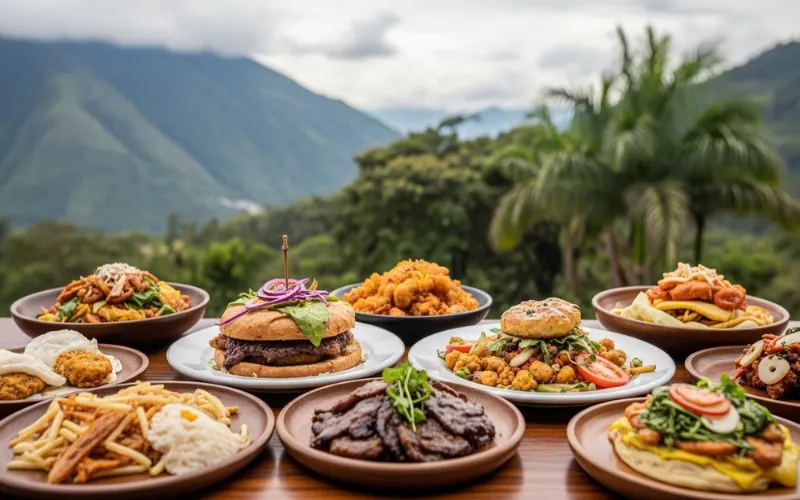
This is the mistake that most people make, Colombian food is not spicy. At all. You will be surprised in case you are expecting Mexican-style heat. These flavors are the result of slow cooking, piled-on seasonings and fresh ingredients as opposed to chilli peppers.
Geographic diversity is the true magic. Colombia is a country with Andes mountains, Caribbean coasts, Pacific coasts, Amazon forest and open plains. Both regions are entirely different in cooking. A plate in Cartagena has in common with a plate in Bogota very little. This is what makes the cuisine in Colombia so interesting.
The Colombian Dishes that You Must Know About.
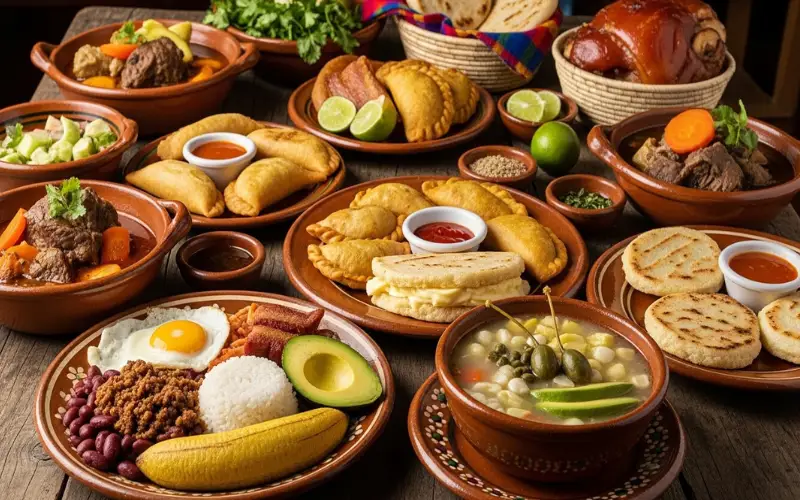
Let us move on to the big boys. These are the famous Colombian dishes that the natives are so proud of. No tourist traps, no overrated choices. These are the real ones.
Bandeja Paisa: The Unofficial Colombian National Dish.
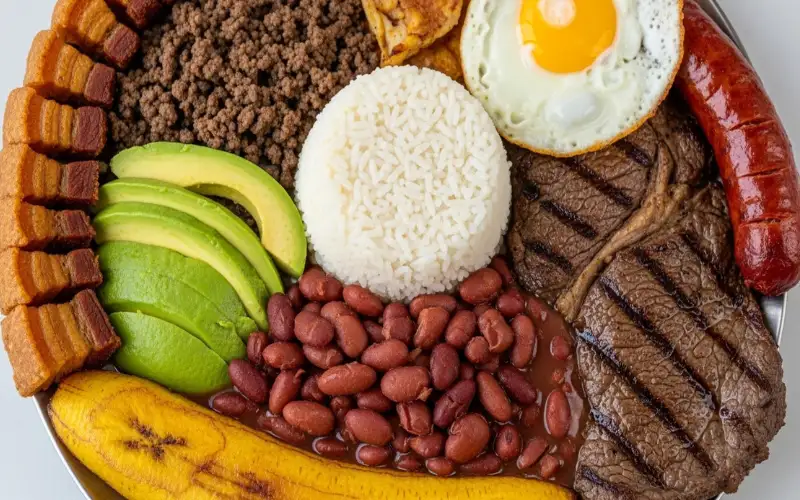
When someone offers me some information concerning what is the most popular food in Colombia, I will always say bandeja paisa. It is massive oval plate of red beans, white rice, ground beef, chicharron, chorizo, morcilla, fried egg, sweet plantain, arepa, hogao sauce and avocado. Up to 14 components on one plate.
This began as a lunch of the labourer in the costa coffee area of Antioquia. Serious fuel was required by the workers and thus they stacked it up. It appears to be overkill and it literally is. In my opinion, though, bandeja paisa may well be the sole meal that can be easily called a one-sitting experience of the Paisa food culture.
Ajiaco: Bogota Signature Soup
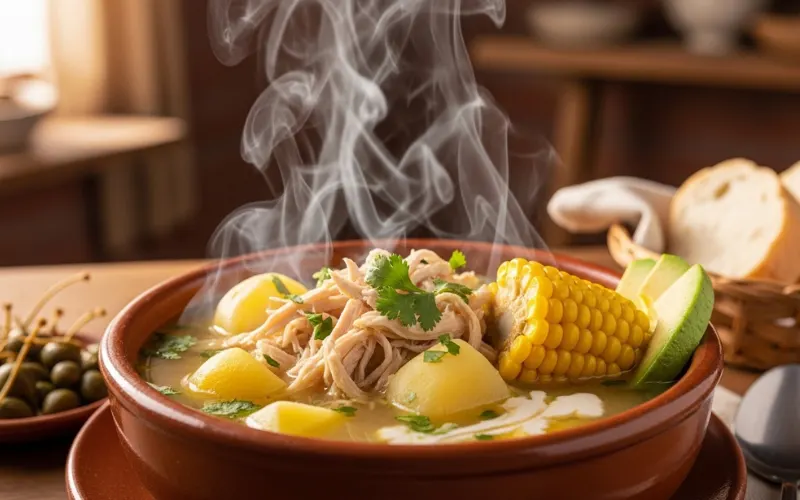
Ajiaco is the pride of Bogota. It is a hearty chicken soup prepared by use of three varieties of potatoes (including tiny yellow papa criolla which dissolve in the broth), corn on the cob, and herb that is known as guascas. Locals will not even refer to it as real ajiaco without guascas. No joke.
You serve it with capers, heavy cream and rice on the side. This soup strikes otherwise in cold Bogota climate (14C annually all around). It is comfort food at its finest and one of the most iconic foods in Colombia rightfully so.
Sancocho: The Communal Stew Every Region Claims
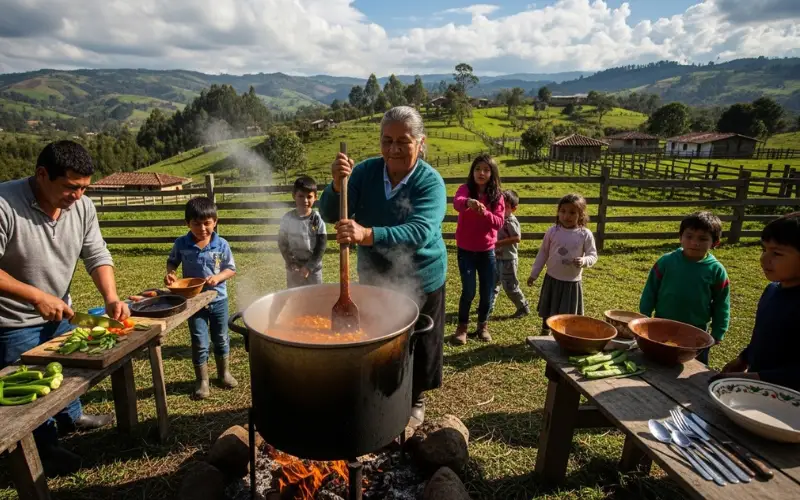
Sancocho is rather a social phenomenon than a recipe. It is a meat (chicken, beef or fish, depending on the area), yuca, plantains, potatoes and corn stew that is low and slow simmered. It is prepared in gigantic pots by families during meetings and festivals.
Caribbean coast version consists of fish. Andean versions contain chicken. The best one belongs to Valle del Cauca. It has even a trifasico one that has three types of meats. Question any Colombian what does Columbian eat at the family reunions and one will always say sancocho.
Lechona Tolimense: Roasted Pig the Right Way
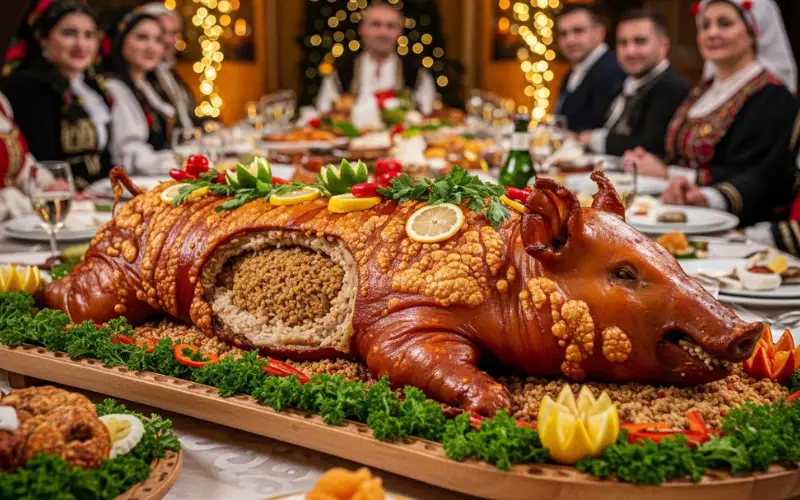
This one’s a showstopper. Lechona is a debone whole pig stuffed with its own meat combined with rice, yellow peas and spices and then slowly roasted in a brick oven over the course of 10-12 hours. The skin becomes entirely crackling.
It’s a celebration dish. Christmas, New Year, Independence. The entire pig (including the head) is served as a centre piece. A lechona is capable of serving 20 to 100 people. It is one of those famous Colombian dishes that you would not forget to see or taste.
The Tamales Colombianos: Not What You Think.
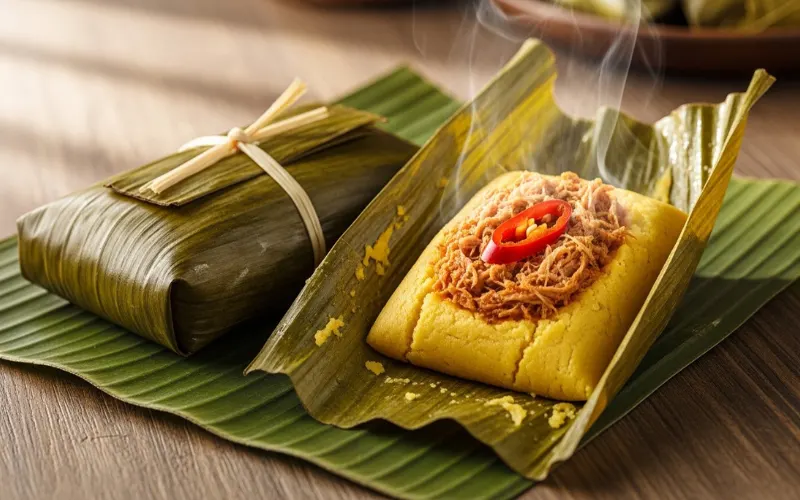
Colombian ones will confuse you in case you know nothing but Mexican tamales. they are wrapped in banana leaves (not in corn husks), are bigger, and of less taste. They are best of all tamales Tolimenses, stuffed with chicken, pork, carrots, potatoes, peas, rice, and hard-boiled egg.
Each family has its recipe. That is what is with the with traditional Colombian dishes. They’re personal. The recipe of tamales of your grandmother is a secret. Tamales Santandereanos are hotter, Tamales Llaneros are square-shaped. A whole world is served in a single dish.
Sobrebarriga and Other Must-Try Main Courses
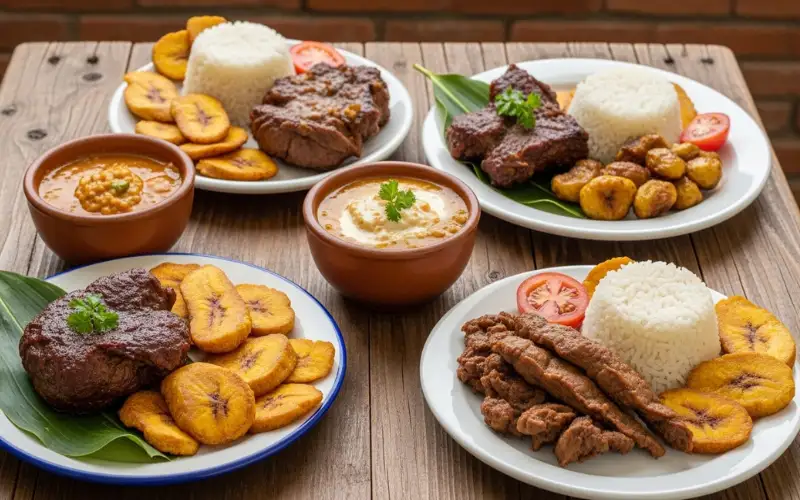
Sobrebarriga is slow cooked flank steak which disintegrates with a fork. Colombia has its version of the comfort rice, which is called arroz con pollo. A huge breaded cutlet made of pork in Cali is called chuleta valluna. Sudado de pollo is onion tomato-braised chicken. Everything good Colombian worth tasting.
Then there is the lomo al trapo, which is crazy. Beef tenderloin loin was covered with cloth, coarse salt and tossed into hot coals. It is rural (finca) custom and one of the most dramatic Colombian meals preparations that I have encountered.
Colombian Street Food That Honestly Hits Different
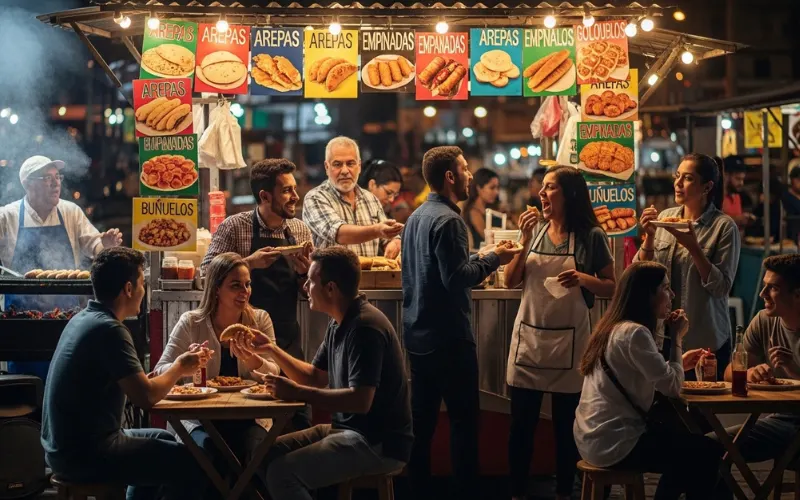
The Colombian street food is a whole new game. Forget fancy restaurants. The corner carts, market stalls, and road vendors are the best places to get the best bites. These are the Colombian food favorites that are available everywhere.
Arepas: The One Food Every Colombian Eats Daily
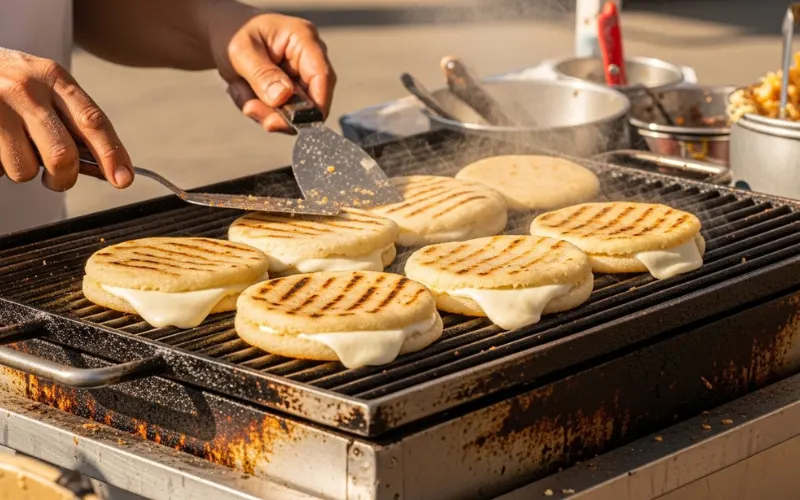
Arepas to Colombia is what bread is to France. Grilled, baked or fried flat corn cakes served at breakfast, lunch, and dinner. At least 42 variants are recognised. White and flat paisa arepas are cooked with butter and cheese. Arepa de choclo is thick and sweet corn. The huevo arepa of the coast is an egg fried.
The term is a product of Chibcha indigenous language. These were in existence predating the arrival of Spanish colonisers. In case you seem to be wondering what is Colombia’s food identity of Colombia can be in a single word, it is arepas. No question. They form the basis of all Columbian cuisine.
Empanadas: The Best Street Snack for Under a Dollar
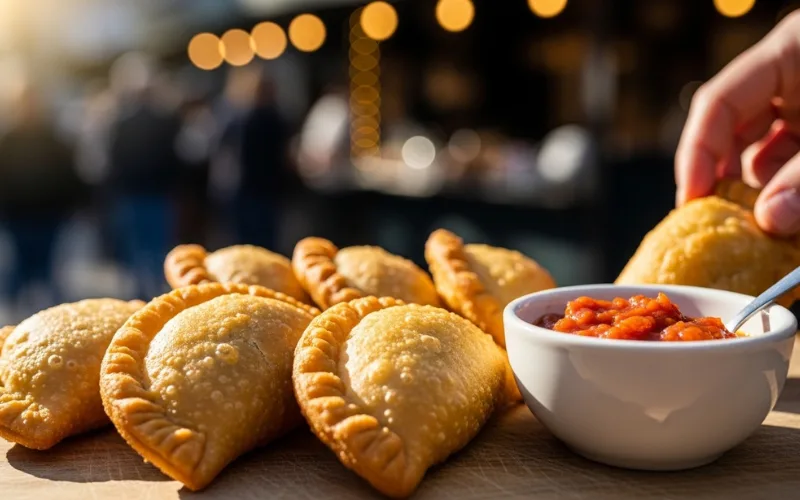
The Colombian empanada is deep fried (it is never baked), and cooked using yellow corn flour and stuffed with potato, seasoned beef or chicken. They cost about 1,200-3000 COP or 25 -70pence. At every single street corner.
Always served with aji sauce. The Colombian version is made with corn flour as opposed to the Spanish empanada and is fried at all times and provides the golden crunchy exterior. They are the food to go to in Colombia when you want something fast, inexpensive and good.
Patacones: Twice-Fried Plantain Perfection
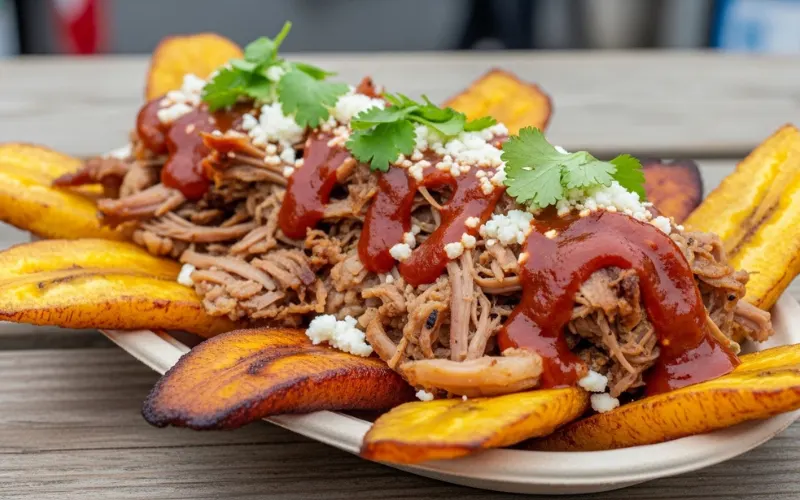
Green plantains Cut thick and fried once, and smashed flat and fried again till golden and crispy. That’s a patacon. Served as a side dish or topped with hogao, cheese or shredded meat. The coastal one is sparser and drier.
What is special about them is the twice-fry technique. First fry softens the inside. That crunch is made by second fry. And it is a plain idea, a brilliant outcome. Colombian food is said to be one of the most common and, at the same time, one of the tastiest.
Bunuelos and Pandebono: Colombia’s Cheese Bread Game
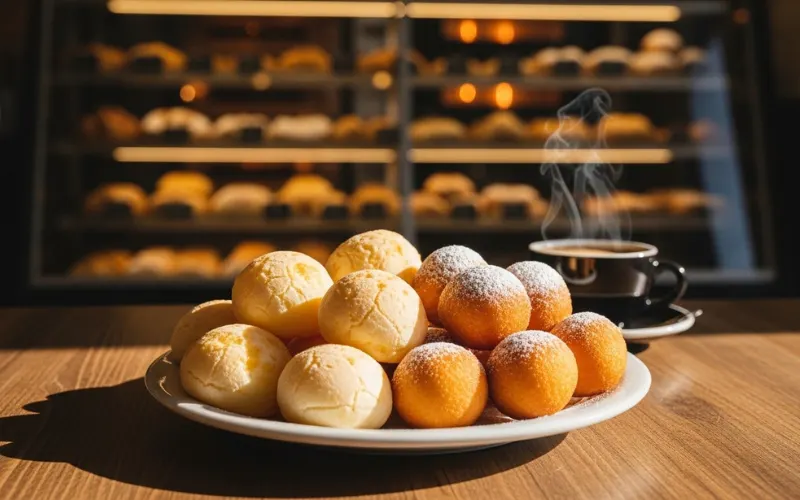
Bunuelos are fried cheese balls, which are spiced and then deep-fried. They are not sweet as it is in the rest of Latin America countries. Burnished on the outside, chewiness on the inside, and addictiveness. The natilla custard is eaten with them, and at Christmas particularly by the Colombians.
Pandebono is a cheese bread of Valle del Cauca prepared with cassava flour and queso fresco. It is gluten free, of course, allowing a nice bonus. You can also easily bake them at home and the outcome is justified should you like baking. Get acquainted with some basics of baking before you can try them. The two are crucial Colombian snack foods.
Obleas: Wafer Desserts Sold on Every Plaza
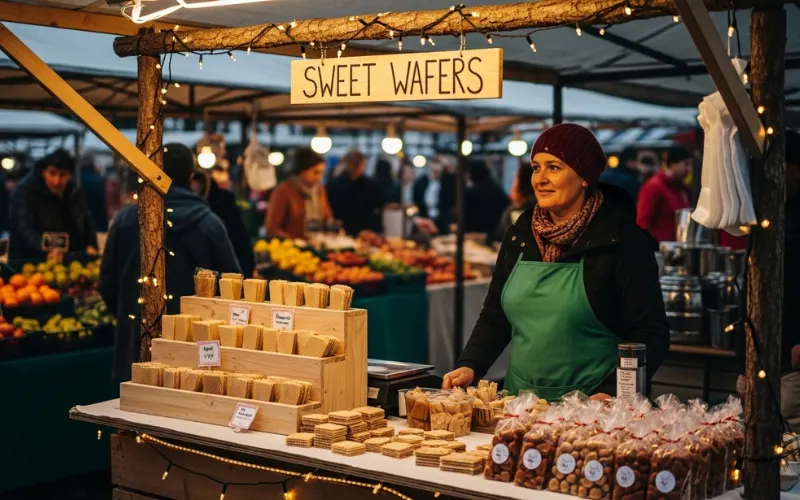
Sandwiches of two thin wafers, filled with arequipe (Colombian dulce de leche), occasionally jam, cheese or coconut. They are sold by vendors who are working in wooden boxes around plazas and parks. Basic, sweet and one of those foods from Colombia that is sentimental even though you may not have been raised there.
The arequipe is the star. It is fatter and denser than regular caramel. There are vendors that allow you to choose your fillings. What I would recommend: arequipe with grated cheese. Sounds strange, comes out superbly.
Fritanga: A Sharing Platter of All the Good Stuff
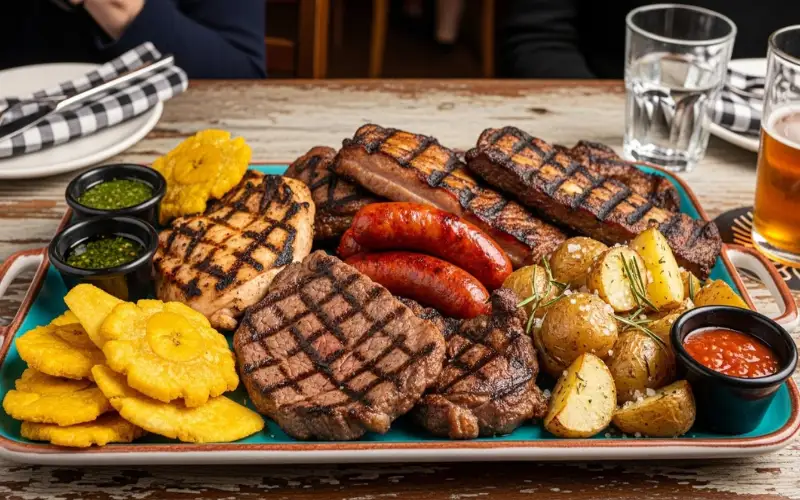
Fritanga is a mixture of grilled and fried meat: chorizo, chicharron, morcilla, and fried pig ears or not. It is accompanied by fried plantains, papas criollas, arepas and aji. The term is also used in describing the stalls (fritangerias) in the streets where they sell the stuff.
Imagine that it is the Colombian response to fast food, only everything is cooked in front of your eyes. It is among those popular foods in Colombia and are best eaten among friends and cold beer.
Hormigas Culonas: Yes, Colombians Eat Ants
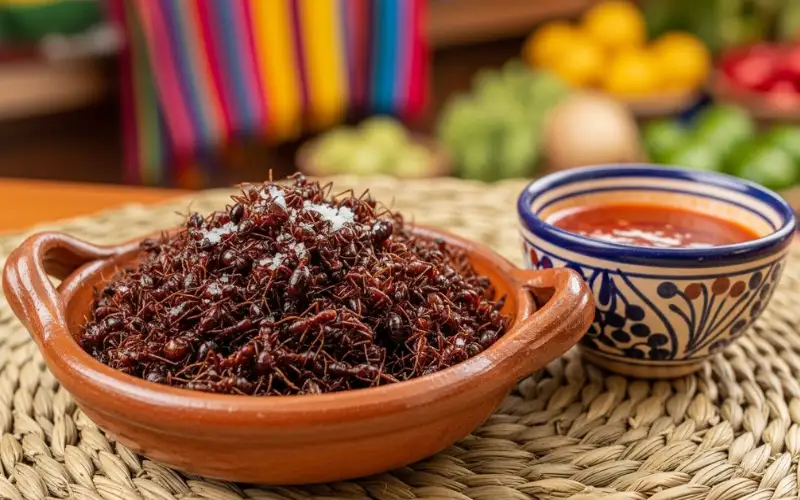
I know. But hear me out. Hormigas culonas translates to fat-bottomed ants and this is a delicacy in Santander. These are big leafcutter ants, which have been toasted or fried and salted. Their flavor is similar to a chocolate and peanuts. Seriously.
Guane people are indigenous and have consumed them in over 500 years. They are harvested at the time of rainy season (March to June) and they yield up to 52 percent protein on the dry weight. Villagers refer to them as the caviar of Santander. The strangest thing on any Colombian food list, perhaps.
Colombian Soups and Breakfast Dishes Most Guides Miss
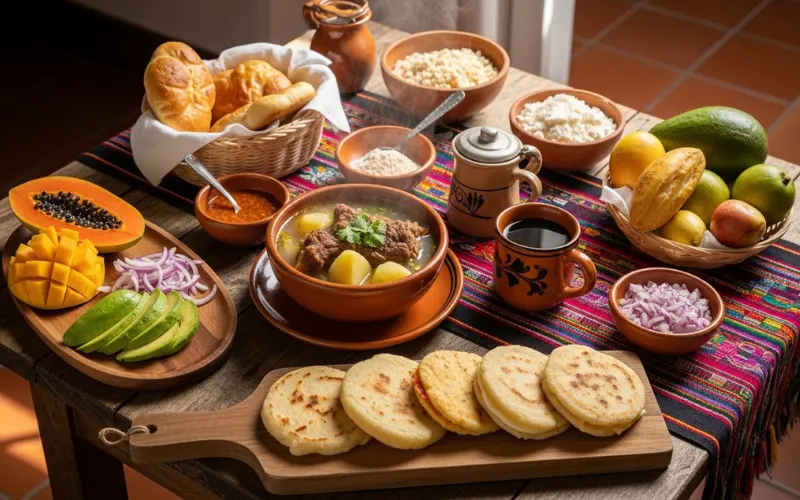
This is one of the things that struck me as unusual about what do people eat in Colombia: soup in the morning is perfectly usual. Particularly in the Andean highlands which are cool in the mornings. These are the foods that competitors hardly talk of but the Colombians consume on a daily basis.
Changua: Bogota’s Breakfast Soup
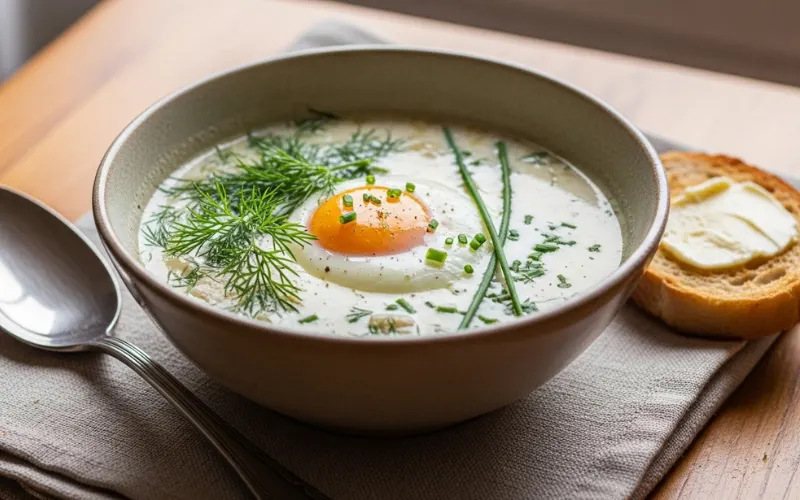
The dish known as changua is simple and is made with milk and water broth, with eggs poached in it, scallions, cilantro, and toasted bread on its surface. It is a Bogota traditional food that puzzles the tourist. Hot soup for breakfast? It is completely logic