

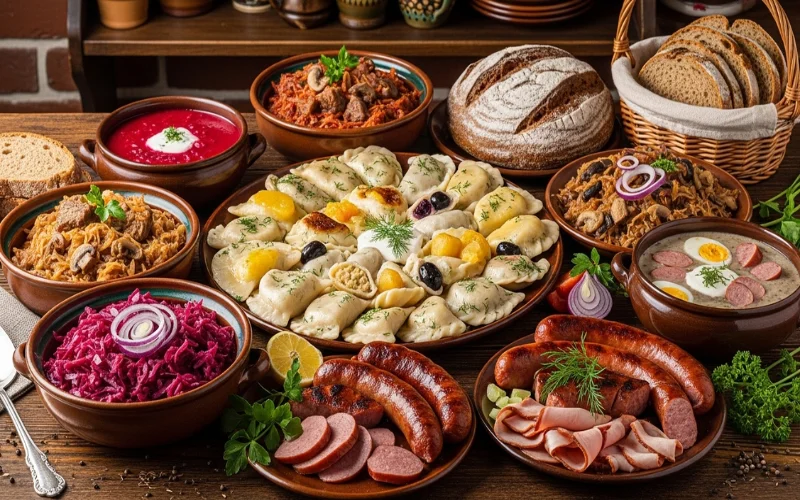
When you believe that Polish food begins and ends with pierogi, then you are in a world of surprise. The Polish cuisine is substantial, and the soups, smoked sausages, feasts at Christmas and pastry can only be dreamed of by a baker in France.
This guide is assembled after a gustation tour of Warsaw, Krakow, and the Tatra Mountains. And here is what you actually should know about the Polish cuisine.
What Is Polish Food? A Quick Look at Poland’s Cuisine
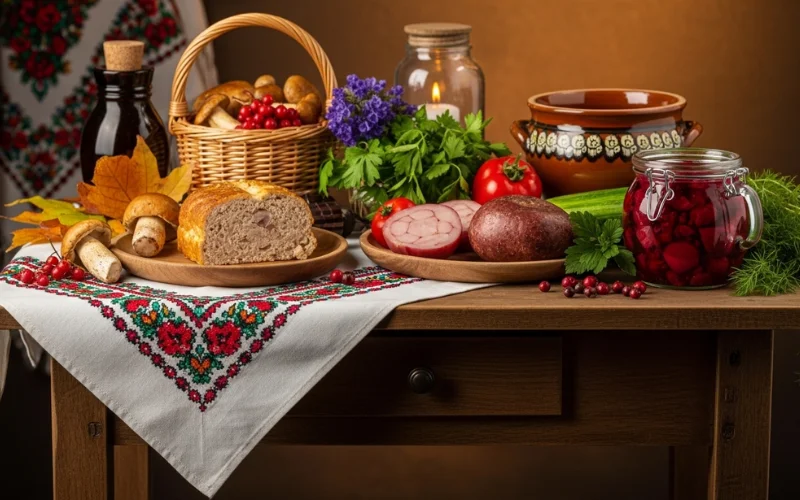
Then what is Polish food? Fundamentally, its comfort food was based on potatoes, cabbage, pork, rye bread and sour cream. But to designate it simple would be an injustice. Polish cuisine is full of historical layers in each plate, and each dish has an Italian queen, Jewish baker, or French chef.
Typical Polish food is based on what is in season. Winters bring with them heavy stews and dumplings. In summers, there are cold mountain-produced soups, fresh berries, and grilled cheese. It all is about home meals, family recipes and the fact that you should never go out hungry.
The National Dish of Poland: Is It Bigos or Pierogi?
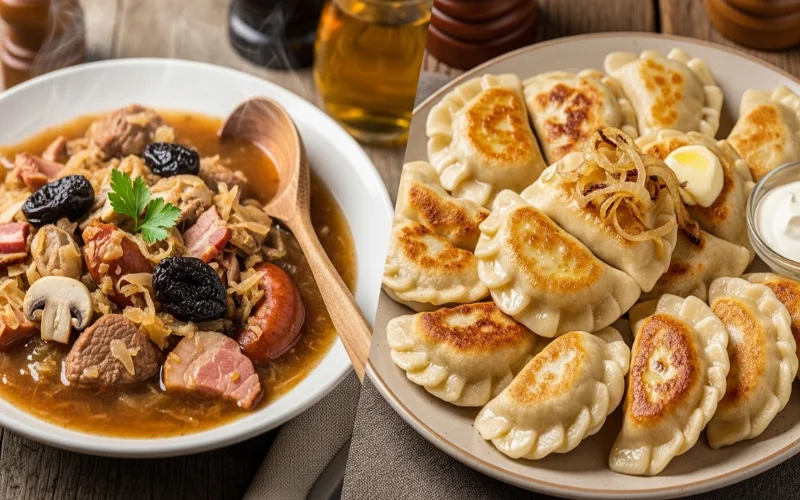
Ask ten Polishers, what the national dish of Poland is and you will have a good enough argument. It has no official answer but two dishes compete to win the title: bigos and pierogi. Both are the embodiment of the classic Traditional Polish food, but very differently.
The more well-known export is Pierogi. The whole of Chicago to London knows those fat little dumplings. But bigos has deeper roots. It was glorified by Adam Mickiewicz, the greatest poet of Poland in his national epic. It is a slow roasted stew of sauerkraut, fresh cabbage, mixed meats, and dried mushrooms that is good to eat every time it is reheated.
So Which One Is the Polish National Dish?
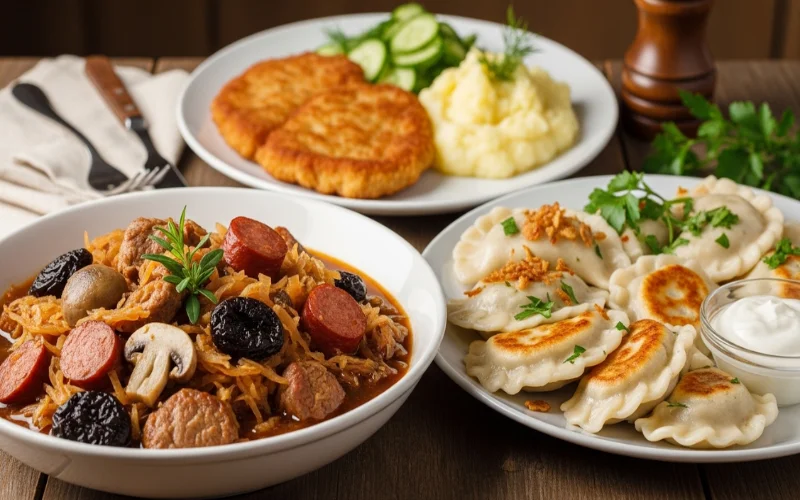
Honestly? Both. Pierogi is the image of the Polish food the world. At home the center of it is bigos. Had to choose only one national dish in Poland, I would choose to pick bigos, as nothing in this world smells like it. Pierogi has relatives all over the world, such as Ukrainian varenyky or Russian pelmeni.
But there are enough Poles who would not agree with me, and that is half the fun. The third competitor is kotlet schabowy (the breaded pork cutlet) that unobtrusively takes an almost daily popularity victory, as most Polish families consume it at least once a week.
Traditional Polish Soups That Start Every Meal
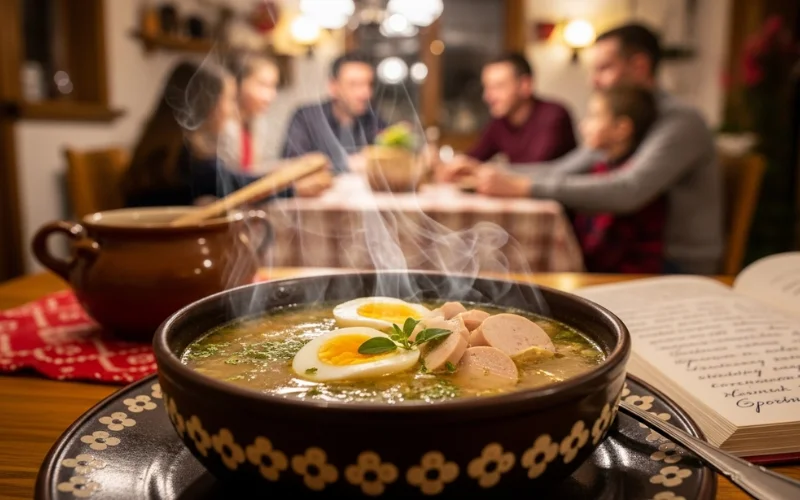
This is something that most tourists are not aware of: food in Poland, soup is almost always the first type of food. It’s not optional. During a classic Polish obia (main meal), a guest would feel very lost without the soup dish. There are dozens of recipes of soups in Poland, and it is a domestic matter in families as a state secret.
Soups play a very significant role in Polish culture food that even it has a saying; a Pole without soup is a sad Pole. I would have assumed that to be an exaggeration. I understand it fully after a week of Polish diet.
Zurek: The Sour Rye Soup Everyone Talks About
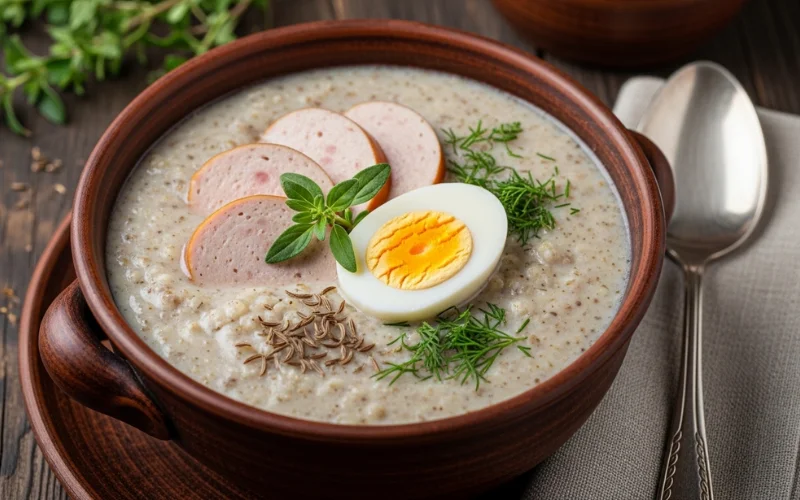
Zurek may be the most Polish of things that you are ever going to eat. It is made on zakwas, a rye flour starter which is fermented to provide the soup with a sour base with a tangy flavor. Put in pieces of white sausage, hard boiled eggs and potatoes and you have what sounds weird but tastes fantastic.
You can take zurek in a loaf of bread that has been hollowed out in tourist hangs around Krakow. That is good, but the real thing is a good bowl in a milk bar or at the kitchen table of some one. It is the centrepiece of the Polish traditional food spread of Easter and I believe it is the most under-rated soup in the entire of Europe.
Barszcz Czerwony: Poland’s Iconic Beetroot Soup
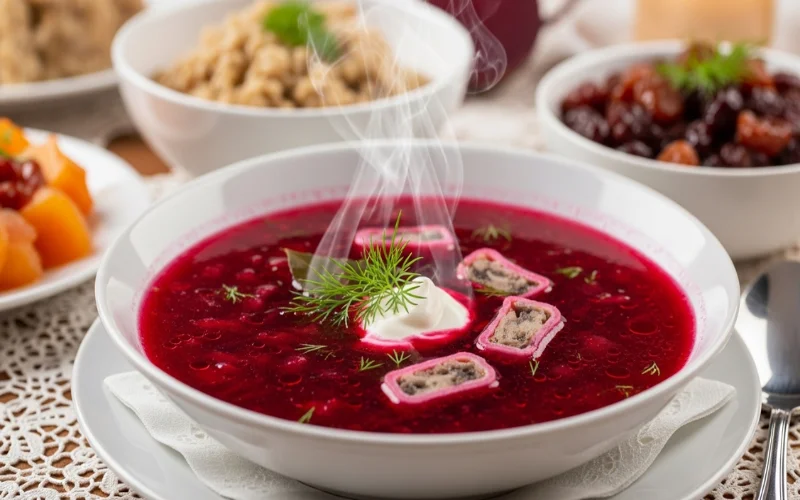
When the notion of famous Polish food soups comes to mind, most individuals visualize barszcz. It is a beetroot broth of rich ruby red color and it does not resemble any other broth. The Christmas Eve edition is made of crystal clear and it is accompanied by uszka, small ear shaped mushroom dumplings that float in the bowl.
The daily one is creamier and usually served with a slice of boiled egg or a topping of sour cream. Anyhow, barszcz is a dish that is good to grow on you in Poland. Initial taste may come as a surprise. By the third, you’re hooked.
Rosol: The Sunday Chicken Broth
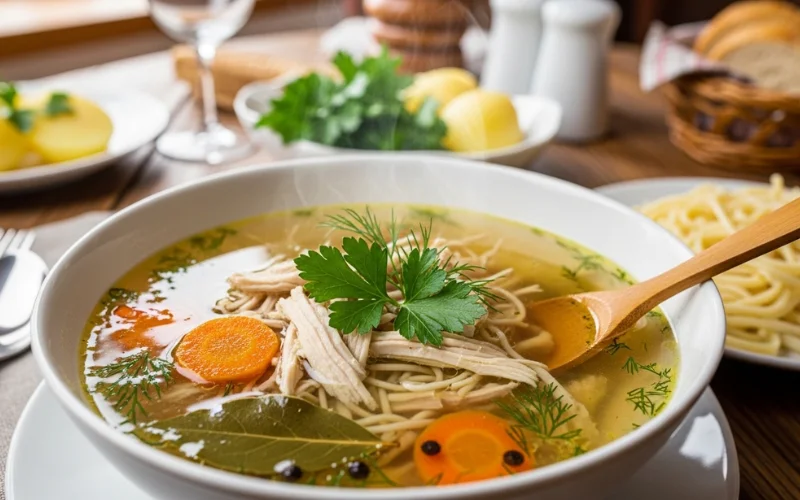
Each family in Poland has its own recipe of rosol which they insist is the best. It is an oro golden, gradual simmered chicken soup together with slim egg noodles. Imagine it was the Polish version of chicken soup but they take it much more seriously than most cultures do their broths.
Rosol appears everywhere, at all wedding receptions, at all Sunday family dinners, at all times when people are getting a cold. It is unobtrusive, yet possibly the favorite among the popular Polish foods. You miss it and you have missed something with regard to the way Polish people really eat.
Other Polish Soups Worth Trying
| Soup Name | What It Is | When to Try It |
| Chlodnik | Cold beetroot and buttermilk soup | Summer only (June to August) |
| Kapusniak | Sauerkraut soup with kielbasa | Winter and Lent |
| Grochowka | Thick split pea soup (army soup) | Cold weather, mountain lodges |
| Flaczki | Tripe soup with marjoram | Late night at weddings (4 AM tradition) |
| Zupa ogorkowa | Dill pickle soup | Year round, home cooking staple |
| Zupa pomidorowa | Tomato soup (made on chicken broth) | Weekday family favourite |
| Zupa grzybowa | Wild mushroom soup | Autumn and Christmas Eve |
| Krupnik | Barley soup with root vegetables | Winter comfort food |
Best Polish Main Dishes You Have to Try
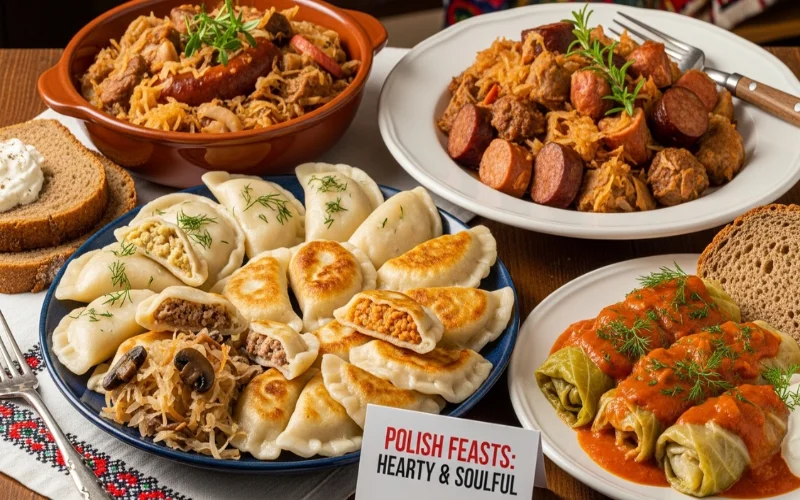
Now we are coming down to the big hitters. Polish dishes has no hesitation with serving. Its main dishes are very hearty, meaty, and will allow you to keep warm throughout the cold winter in Poland. These are the ones that you must start with in case you are wondering what to eat in Poland.
The majority of these traditional Polish dishes are available in the restaurant menus all over the nation. However, the best ones I have had were always at a kitchen table of some one or in a milk bar with no frills and cooks who have made the same recipe over the last 30 years.
Pierogi: Poland’s Most Famous Dumplings
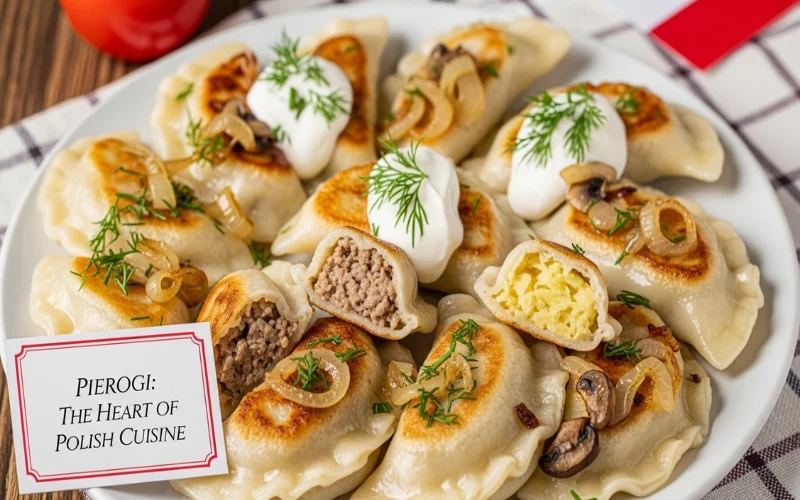
It is impossible to discuss the Polish food without mentioning pierogi. They are half moon shaped dumplings, stuffed with everything, ranging between potato and cheese to wild mushrooms to fresh strawberries. Pierogi ruskie (filled with potato and twarog cheese) are the traditional one, and the name is also related to the historical territory of Red Ruthenia, rather than Russia.
The special thing about pierogi lies in the fact that they unify all occasions. The blueberry sweet ones appear at summer tables. Mushroom pierogi and sauerkraut are indispensable at Christmas Eve. Pan fried and crispy onions with a scoop of sour cream? That’s a Tuesday night dinner. Pierogi is the plural form, by the way, and does not need further pluralization. One dumpling is a pierog.
Bigos: The Hunter’s Stew
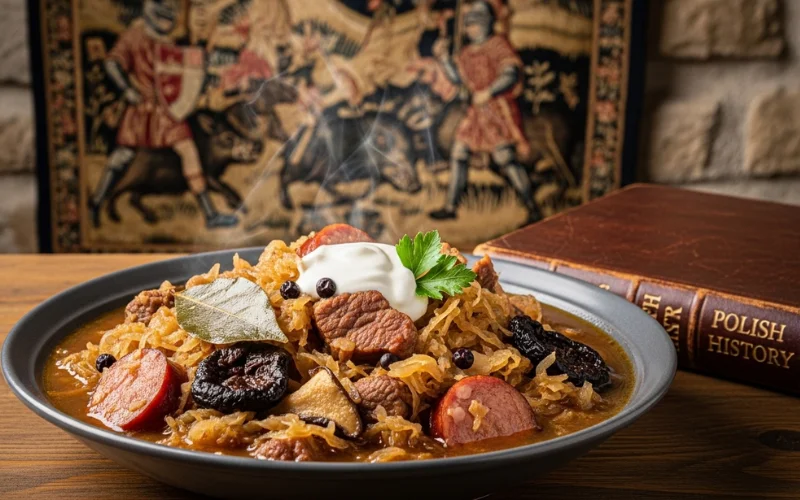
When the face of the favourite Polish dishes is pierogi, the background belongs to the bigos. This stew is a slow cooked dish with sauerkraut, fresh cabbage, various types of meat (pork, beef, sausage, and in some cases game), dried mushrooms and prunes. The magic trick? The more you reheat it, the better. There are families that cook a pot and spend three or four days consuming it.
Bigos is an ancient tradition that was glorified by a famous poet by the name Adam Mickiewicz. Preparation of good bigos is a slow process. You can’t rush it. The flavours require time to blend in and the time lag is what distinguishes the good bigos and life changing one. It is the only best Polish food I have ever had in my money.
Kotlet Schabowy: The Breaded Pork Cutlet
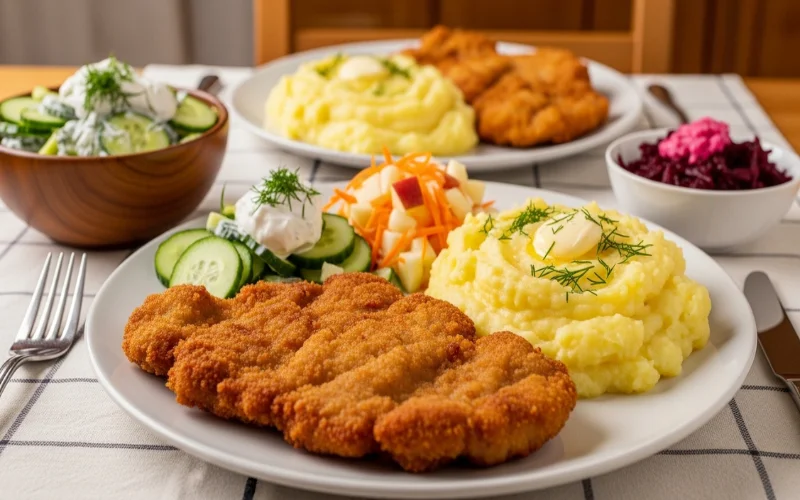
In case you are interested in knowing what Polish people eat during a normal week night dinner, it is kotlet schabowy. A fatted pork loin chop is pounded thin, battered with egg and breadcrumbs and pan fried. It is accompanied by muted potatoes and surowski (raw vegetable salad). Every. Single. Time.
Just imagine it is a Polish interpretation of a Wiener schnitzel, only Poles will argue you a lot about who is the first to be invented. On Sundays afternoons the banging of meat to make schabowy would be heard in apartment buildings. It is one of the common Polish foods that are like a hug on a plate.
Golabki: Stuffed Cabbage Rolls
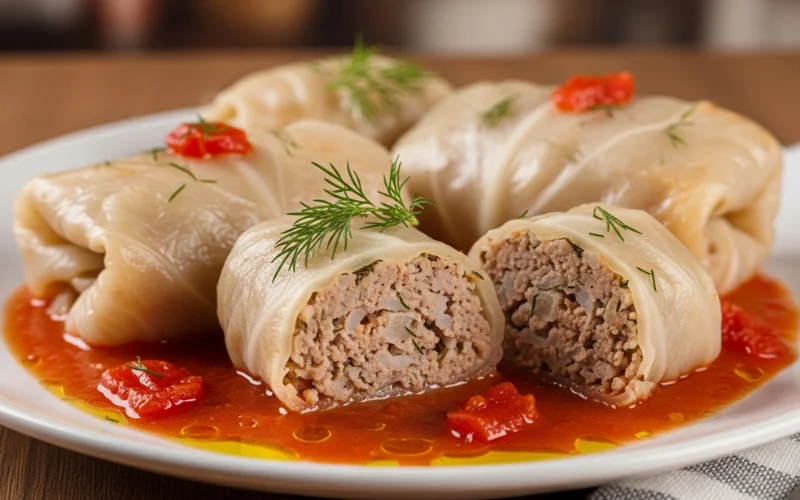
Golabki, the word translates to little pigeons, a very cute name to use in reference to such a roll of blanched cabbage, filled with minced pork, rice, and onion. They are cooked in a tomato sauce until all the components become soft and the flavours combine. According to my friends of Polish origin, their grandmothers always prepared too much, and no one ever raised any objections.
These are among the Polish dishes popular and familiar enough to have tasted stuffed cabbage anywhere in Eastern Europe. However, the Polish variant has its identity, particularly when the tomato sauce is home-made and with a little tanginess. They also freeze wonderfully and therefore, Polish mums take them home by dozens and serve them to their children.
Kielbasa: More Than Just Sausage
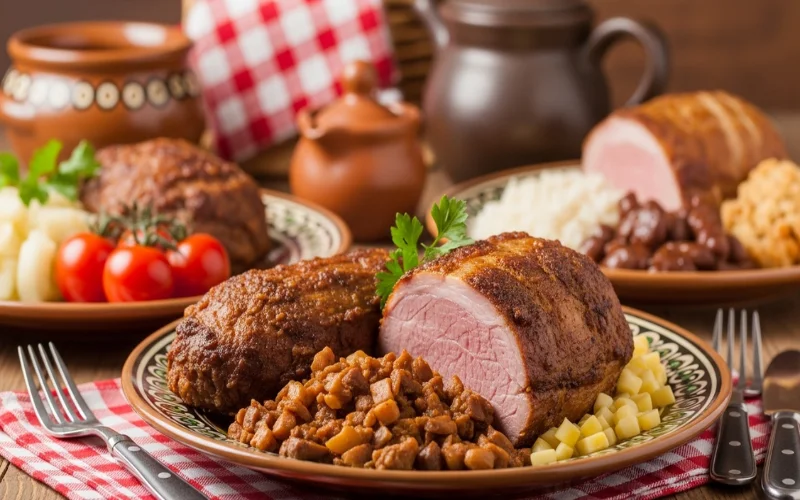
It is like calling kielbasa a sausage simple, as wine a grape juice. There are dozens of types of regional sausages in Poland, including the garlicky kielbasa krakowska or the smoked kielbasa podwawelska or the white sausage (biala kielbasa) that are required at Easter. A recipe, a method of smoking, a fierce pride belongs to each region.
Kielbasa will be at any family party, grilled on summer barbecues, sliced on breakfast plates, and packed into zurek. It also happens to be one of those Polish foods that are travel worthy. The regional varieties are provided in the Polish delis across the world, and after having tried a well-smoked Polish sausage, the stuff in the supermarket is no longer acceptable.
More Classic Polish Main Courses
| Dish Name | What It Is | Insider Tip |
| Zrazy | Beef roulades with pickle filling | Noble origins; ask for mushroom sauce |
| Golonka | Roasted pork knuckle | Best with dark beer and mustard |
| Kotlet mielony | Ground pork patties | Poland’s real everyday dinner |
| Kaszanka | Blood sausage with buckwheat | Grilled at a campfire is the best way |
| Befsztyk tatarski | Polish steak tartare | Popular restaurant starter, raw beef with egg yolk |
| Fasolka po bretonsku | Beans in tomato with sausage | Budget comfort food classic |
Polish Sides, Dumplings, and Street Food
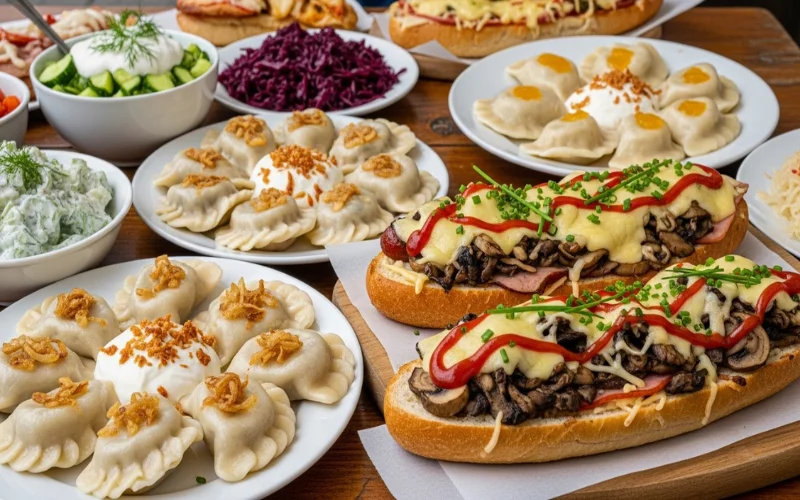
There is nothing like Polish sides. Some of them can truly pass as a meal in themselves. The dumpling game in Poland extends much further than pierogi and the street food scene accommodate some surprises which most guides constantly bypass.
When you are creating a list of what are some Polish foods to try besides the main courses, then you have to begin with this one. These are those dishes that complete a Polish meal and make the entire experience complete.
Placki Ziemniaczane: Crispy Potato Pancakes
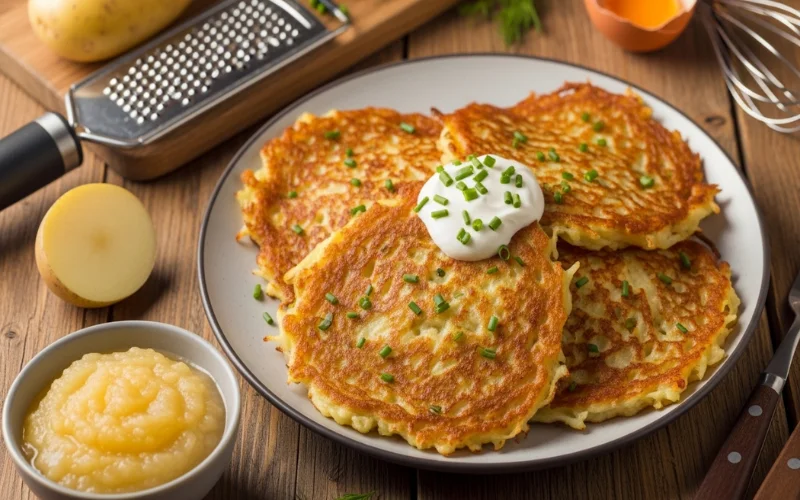
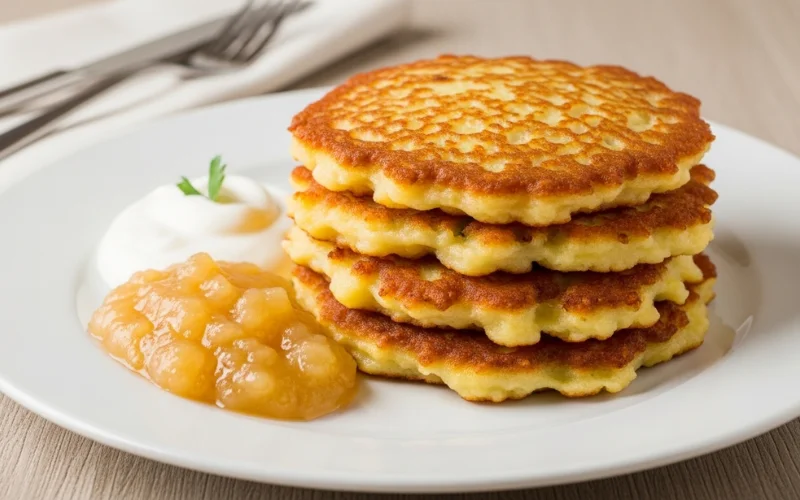
Placki ziemniaczane are potato pancakes, which are grated and fried until crispy and golden on the edges with the potatoes remaining soft in the middle. They are served with mushroom sauce, sour cream or (and this surprised me) sugar. The sugary one is a childhood favourite to many Polish individuals, and it is not as bad as it may sound.
These are found in almost all the traditional restaurant lists and found even in the markets and festivals in the hands of street vendors. They are easy, they are fulfilling and they are one of those Poland dishes that one can eat any time of the day and nobody will judge them.
Kopytka, Kluski Slaskie, and Other Polish Dumplings
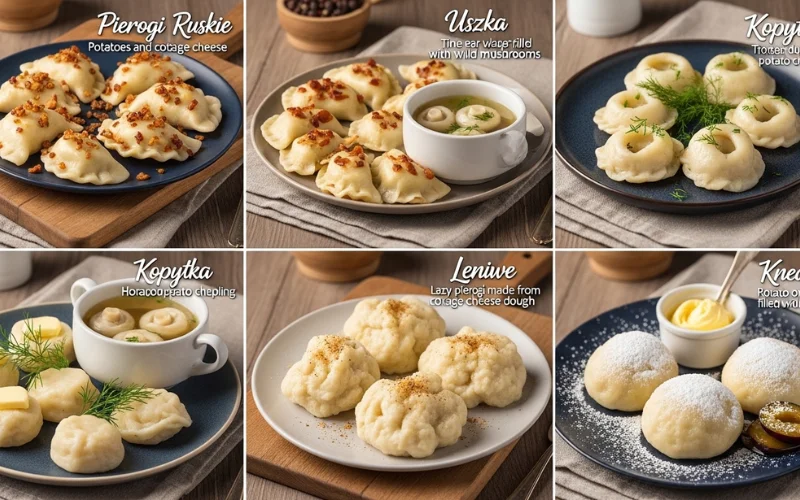
Kopytka are small potato dumplings that resemble a little like the Italian gnocchio. The name, little hooves, explains them in the way they are shaped. Buttered Pan fried and a stew? Perfect. Then there are kguski slaskie of the Silesia, prepared with potato and starch, and each one of them pressed with a thumb to form a small dimple that contains the sauce.
The type of dumplings that are found in Poland goes deeper than most people suspect. Pyzy are round, huge potato dumplings that are filled with meat. Kluski leniwe (lazy dumplings) is a weekday dish in which cheese is added directly to the dough. Every style possesses its part of the world, its own faithful, and its own firm convictions regarding the proper method of serving it.
Zapiekanka: Poland’s Street Food King
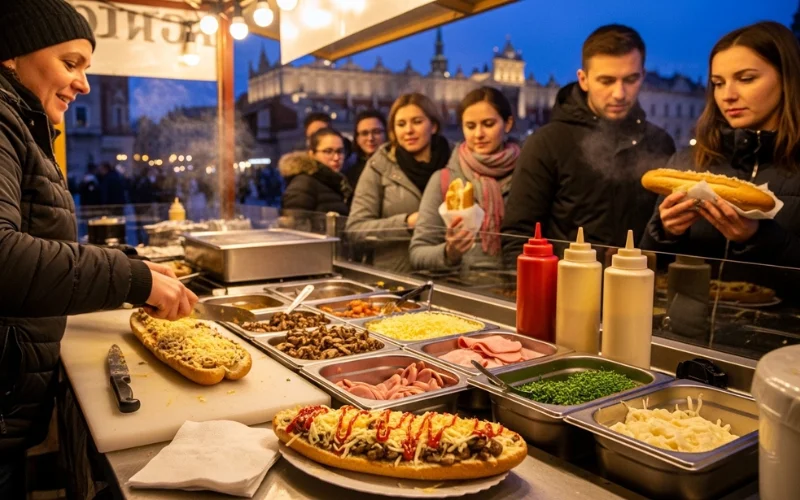
Imagine a baguette, divided in long slices, and filled with mushrooms, sauteed and melted cheese, and ketchup or a slice of garlic sauce drizzled over it. It is zapiekanka, and it is been the Polish street food since the 1970s. The epicentre is the Plac Nowy in the Kazimierz district of Krakow where they are fed on tiny windows all through the night.
Contemporary ones have become gourmet-level toppings such as smoked salmon, truffle oil, and pulled pork. Still, the traditional mushroom and cheese edition is the one that will strike the most at 2 AM. When it comes to the question of popular food in Poland that locals actually consume (as opposed to what tourists eat), it is zapiekanka.
Other Notable Sides
- Mizeria: Cucumbers served in sour cream and dill. The most widespread Polish side dish.
- Salatka jarzynowa: Potato and vegetable salad with mayonnaise. Shows up at every holiday.
- Surawska: Raw salad vegetables, to every main course.
- Krokiety: Crepes filled with sauerkraut and mushroom rolled and fried. Absolutely addictive.
- Oscypek: Carved sheep cheese (smoked in the Tatra Mountains) which is then grilled and accompanied by cranberry jam. One of the Polish delicacies that is safeguarded by the EU.
Polish Desserts and Pastries That Will Ruin You for Anything Else

I have to be frank: a game with desserts in Poland is not a joke. The baking culture in this country dates back centuries, and each and every holiday is associated with the sweets of its own. In case you want to know more about the overall history of history of cake baking, Poland can easily fit the story quite well.
On the sweet side, Polish delicacies have been neglected far too much, although they are as much a part of it as jam filled doughnuts or the favourite cream cake of the pope. I will take you through the ones that were quite outstanding.
Paczki: The Polish Donuts You Can’t Stop Eating
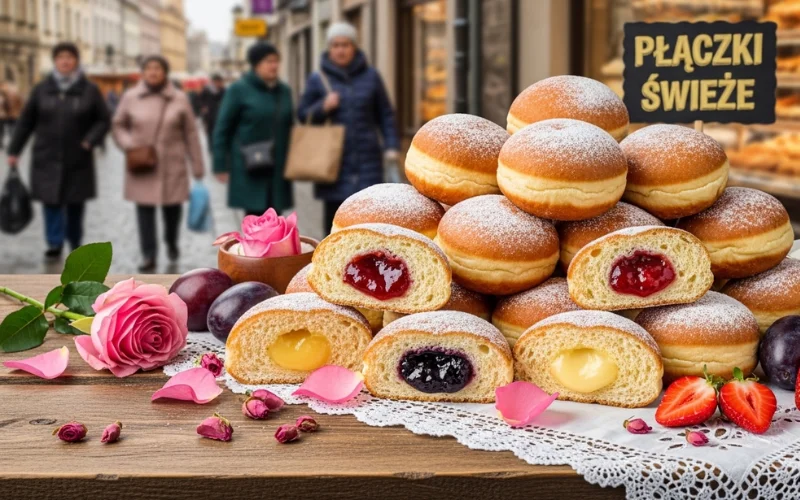
Paczki are deep-frying yeast doughnuts, usually stuffed with rosehip jam and glazed with sugar or an icing. They are thicker and tastier than the typical doughnut and on Fat Thursday (Tlusty Czwartek), Poland is crazed with them. We are talking about some 100 million paczki eaten in one day.
Starting in the morning the lines meander around bakeries. Boxes are received in the offices on behalf of the entire team. It is truly one of the most popular food traditions in Poland and in the event that you are in Poland during the Fat Thursday, then forget about everything and make your way in line. Fillings of lemon curd and advocaat (egg liqueur) are trendy as well, but purists use rosehip.
Sernik: Polish Cheesecake Is Different (and Better)
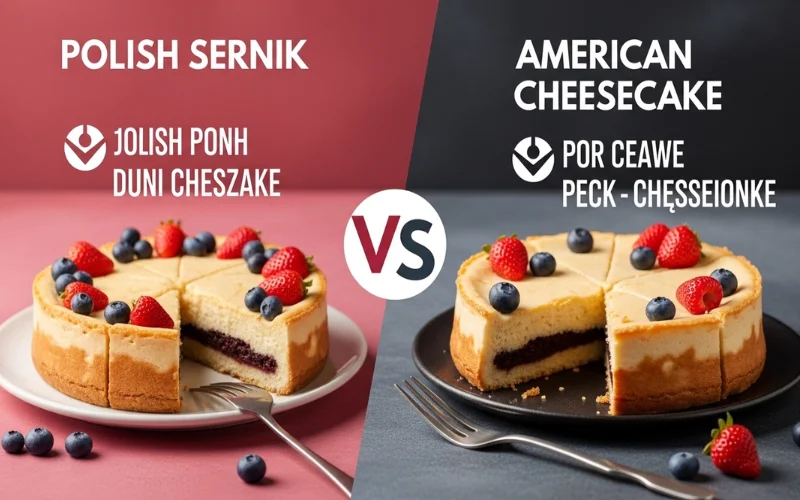
Polish sernik does not equate to New York cheesecake and I would fight to prove why it is superior. It is prepared using twarog which is a kind of farmer chicken cheese that makes the cake have a firmer and drier consistency with a light tangy flavor. The outcome is poorer but in a way more gratifying. The Polish approach is worth considering in case you are fond of making the perfect cheesecake,.
Sernik can be found anywhere in Polish bakery and cafe. Others are made with raisins, some with crumbly top and the seasonal varieties are made fanciful. It is one of the best Polish food that does not have the food photography potential of its American counterpart but definitely has the flavour. You can also have baked cheesecakes with twarog, assuming that you find it.
Szarlotka: Poland’s Answer to Apple Pie
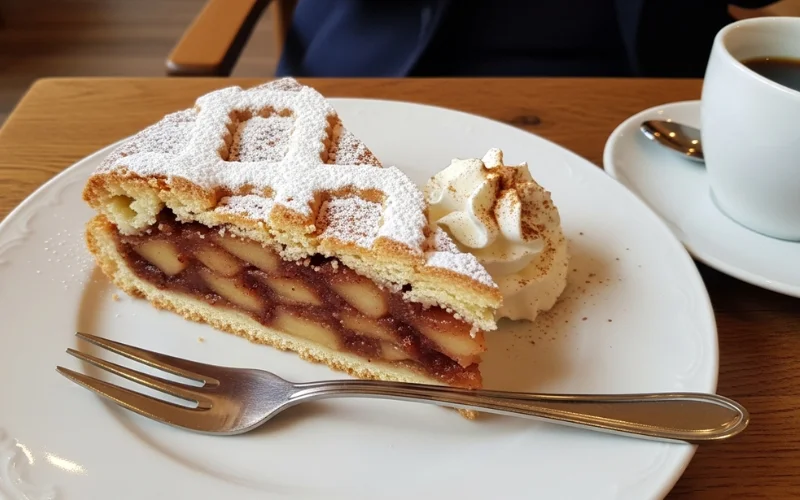
Szarlotka is available in every Polish cafe, and not without reason. It is a two crusted shortcrust pastry stuffed with cinnamon spiced apples. Served hot, with a dollop of ice cream or a sprinkling of powdered sugar on it, it is the sort of thing that makes you close your eyes when you eat it.
In contrast to the American apple pie, szarlotka is prepared with a crumbly, nearly biscuit like dough which gives structural support to the tender apple filling. This Polish version of the idea will pleasantly surprise you, in case you like baked apple recipes. It goes very well with a cup of hot coffee on a chilly afternoon.
Kremowka Papieska: The Papal Cream Cake
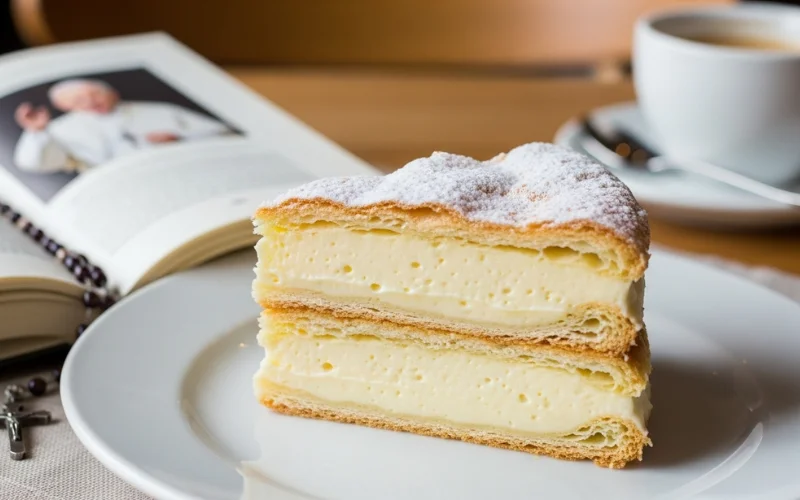
This one possesses a great back story. Kremowka is puff pastry which is filled with vanilla custard in layers. It was so popular that Pope John Paul II had once reminisced that he ate them as a boy in Wadowice, his native town. It is said that he and a friend consumed 18 of them on the day after their final school exams.
Every bakery nowadays in Wadowice is selling kremowka papieska (papal cream cake), and it is more or less of a pilgrimage snack. The pastry is similar to a French mille feuille or Napoleon, the Polish one is more likely to have a thicker layer of custard though. It is disheveled, it is delightful, and it is among the more appealing stories about more famous food in Poland.
Makowiec, Mazurek, and Other Polish Sweet Treats
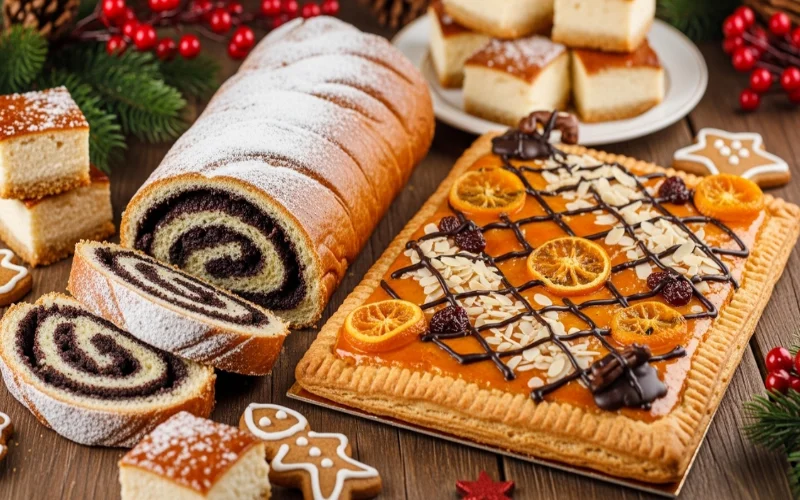
Makowiec is a cake of rolled yeast dough twisted with thick filling of ground poppy seeds, honey and walnuts. It appears both at Christmas and Easter and the flavour is very distinctively Central European. Mazurek is the flat ornamented Easter tart packed with dry fruits and nuts and chocolate.
Forget not babka wielkanocna (rich Easter yeast cake), faworki (fried pastries in the shape of angel wings) and karpatka (choux layered cream cake), and pierniki torunskie, the gingerbread of Torun that they have been making in the 13th century. Polish Easter desserts are some of the most beautiful, especially to those who value the Easter baking traditions of other parts of the European continent.
Top 10 Polish Foods: A Quick Comparison
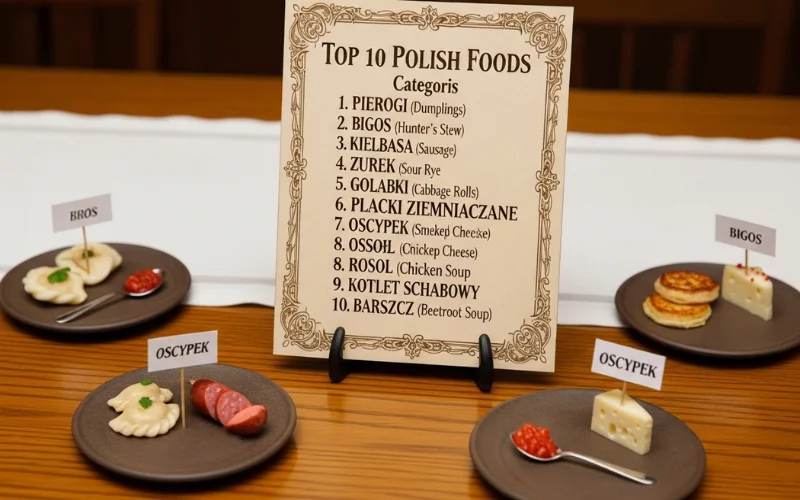
In case you are in a hurry and need to find out what the top 10 Polish foods are that you, as a tourist, simply cannot afford to overlook, I will tell you my unbiased ranking against flavour, cultural significance, and the ease of their location.
| Rank | Dish | Category | Why It’s Essential |
| 1 | Pierogi | Main/Side | The most iconic Polish food worldwide |
| 2 | Bigos | Main | The soul of Polish home cooking |
| 3 | Zurek | Soup | Nothing else in the world tastes like this |
| 4 | Kotlet schabowy | Main | What Poles actually eat every week |
| 5 | Paczki | Dessert | Fat Thursday alone makes this a top pick |
| 6 | Barszcz czerwony | Soup | Stunning and essential at Christmas Eve |
| 7 | Golabki | Main | Grandma’s cabbage rolls are legendary |
| 8 | Sernik | Dessert | Polish cheesecake done right |
| 9 | Zapiekanka | Street food | Poland’s favourite late night snack |
| 10 | Kielbasa | Meat | Dozens of regional varieties to explore |
How Polish Meals Work: Breakfast, Obiad, and Supper
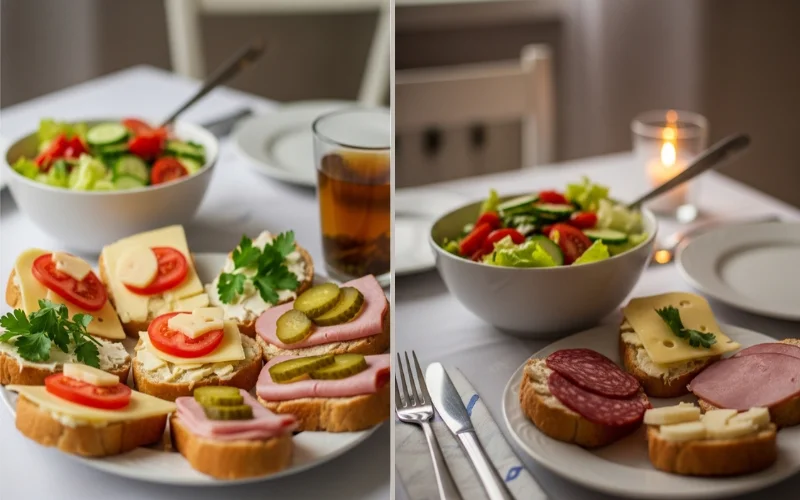
Knowing Polish food implies forgetting the three meal system that you are accustomed to. Poles traditionally take five meals a day. It may look as much, however, every meal has its purpose and size. Here’s the breakdown.
| Meal | Polish Name | Time | What You’ll Eat |
| Breakfast | Sniadanie | 6-8 AM | Open sandwiches, cold cuts, cheese, eggs, tea with lemon |
| Second breakfast | Drugie sniadanie | ~11 AM | A lighter sandwich or pastry, still practised in schools |
| Main meal | Obiad | 1-4 PM | Soup course, then meat with potatoes and salad (biggest meal) |
| Afternoon tea | Podwieczorek | ~5 PM | Tea and cake, increasingly rare in modern Poland |
| Supper | Kolacja | 7-9 PM | Cold: bread, cold cuts, cheese, pickles (lightest meal) |
Obiad is the greatest shock of the visitors. It is neither lunch nor dinner. It is a lunch meal of the day, and it is usually consumed at approximately 2 or 3 PM. It always begins with soup and then the meat dish with potatoes and a raw vegetable salad. The consumption of obiad later in the evening, intertwining it with kolacia into a hybrid meal, has become common among many people in the modern urban Poland.
What Do They Eat in Poland During Holidays?
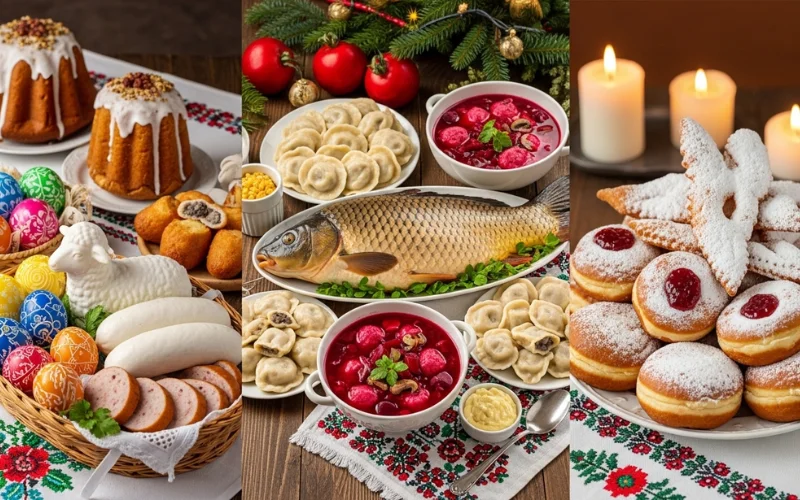
The actual clue to Poland food culture can be found in the table of holiday. Festive food is taken very seriously by Poles. Christmas Eve alone consists of 12 different dishes and all the things on the Easter basket have some meaning. This is where the traditional food in Poland is shining the most.
Christmas Eve (Wigilia) and the 12 Dishes
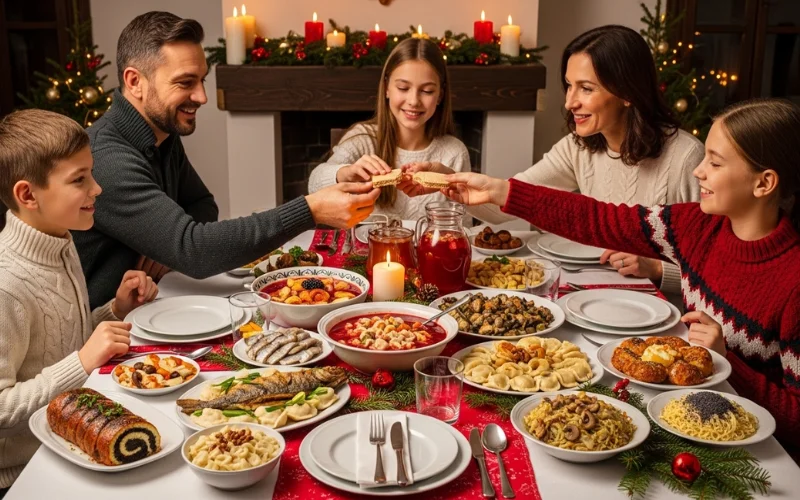
The most vital meal in Poland is called Wigilia. On the 24 th of December, families convene and eat 12 meatless meals symbolizing the 12 Apostles. Every person should sample all the foods as a lucky day. The meal starts with the initial star of the evening sky and until eating, the family performs oplatek, a communion style wafer made of thin material.
Additional accommodation is always made at the table in case of an uninvited guest or a deceased relative. The food usually consists of some clear barszcz and uszka, fried carp (which used to spend days in the bathtub till Christmas), pierogi with sauerkraut and mushrooms, ushered herring, wild mushrooms soup, poppy seed dishes, and kompot of dried fruit. In case you are interested in the way in which various cultures take their festal baking, you can always read about the decorating a Christmas cake as well in order to have a different viewpoint.
Easter Food Traditions
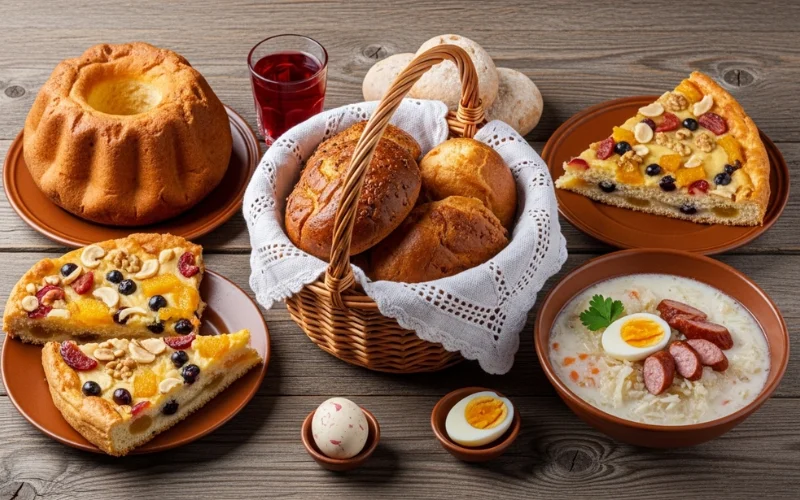
Polish Easter begins the next day, on Holy Saturday, to which the families take decorated baskets to church to be blessed in a ceremony known as Swieconka. Every basketball product has a symbol: bread to prosperity, eggs to new life, salt to purity, kielbasa to health, and a butter or sugar lamb to Christ.
Easter Sunday breakfast is a meal. Zurek with white sausage and hard boiled eggs are in the limelight, baked ham, stuffed eggs, and cwikla (beetroot and horseradish relish which gets all of the taste buds going). And to finish off, there is dessert such as mazurek, babka wielkanocna and sernik. Then on Easter Monday, there is Smigus Dyngus when everybody throws water at each other. Yes, really.
Fat Thursday (Tlusty Czwartek)
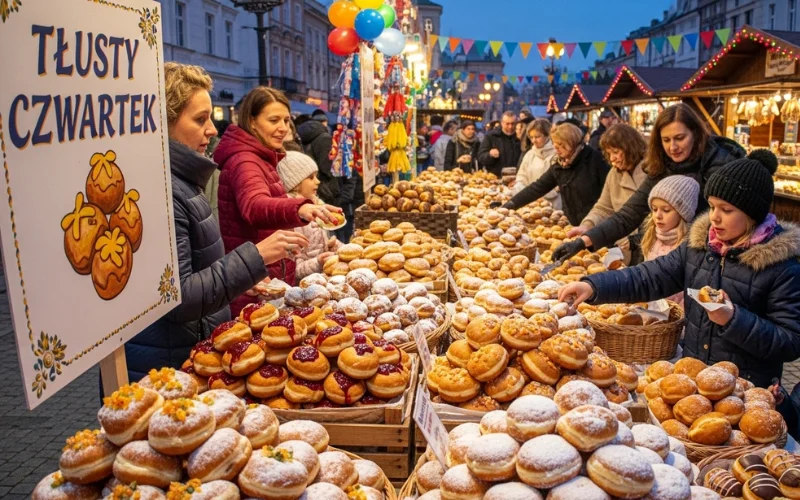
I had already mentioned it in the paczki section, although Fat Thursday deserves a separate mention. It is on the eve of the Lent and it is a national day of doughnuts, in essence. Bakeries begin preparing days earlier and most of them are sold out by mid-noon. Other work places attract hundreds.
People also consume faworki (angel wings) along with paczki; these are thin fried pieces of dough covered with powdered sugar. The entire custom is to feed oneself just before the fasting season of Lent, and Poland does it better than any other part of Europe.
Regional Polish Food: What Changes from City to City
Not everywhere is Poland food the same. Every territory has its specialties that are geographically determined, historically, and influenced by the culture of the neighbouring areas. You will find that the food changes as you go around the country. Here is a fast map on what food is Poland known for in each region.
| Region | Signature Dishes | Key Influences |
| Warsaw / Mazovia | Flaczki (tripe soup), pyzy, forest game | Historical capital, French influence |
| Krakow / Malopolska | Obwarzanek, maczanka (pork sandwich), zapiekanka | 600 years of bread tradition |
| Tatra Mountains / Podhale | Oscypek, kwasnica, bundz, moskole | Highlander shepherd culture |
| Silesia | Rolada slaska, kluski slaskie, modra kapusta | German and Czech influences |
| Podlasie (East) | Kartacze, sekacz (tree cake), cebularz | Lithuanian, Belarusian, Tatar |
| Kashubia / Pomerania (North) | Baltic fish, paprykarz szczecinski | Scandinavian and maritime |
| Wielkopolska (Greater Poland) | Pyry z gzikiem, rogale swietomarcinskie | Poznań called Pyrlandia (potato land) |
The most characteristic is likely to be Tatra Mountain. There is only one product that can be produced using traditional techniques: oscypek (smoked sheep cheese) and it is a EU Protected Designation of Origin product. It is grilled and served with cranberry jam in a market somewhere in the mountains and is one of the most memorable Polish delicacies that you will ever find
Polish Food and Drink: What to Sip with Your Meal
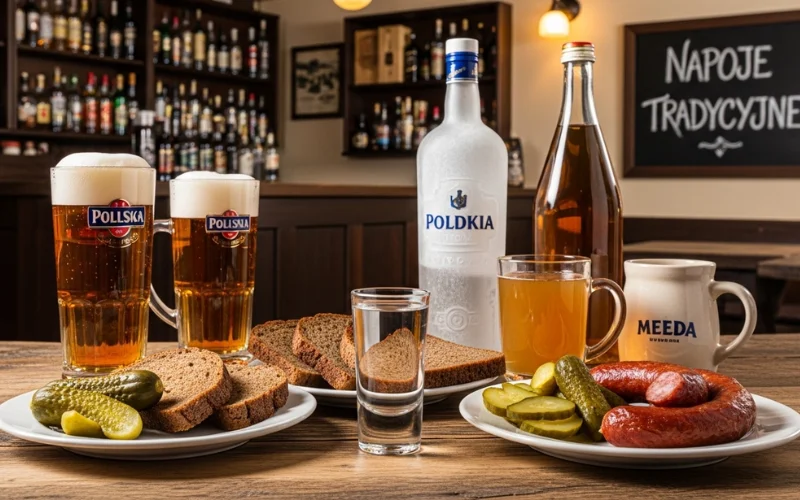
It is impossible to have a guide to Poland food and drink without discussing what is in the glass. Poland boasts of a long vodka history that is old enough to be considered older than most of the world, craft beer beer has just gone through a rapid expansion over the last ten years, and mead has tradition that dates back to the middle ages.
Vodka was first recorded in the Polish court records in 1405, in a Polish town called Sandomierz. Nowadays there are Polish vodka, such as Zubrkowska (infused with bison grass, and thus has a vanilla-coconut flavor), Zolownika Gorzaka (herbal), Chopin (potatoes), and Belvedere (luxury rye). There is a cocktail served, which is called szarlotka, a mix of Zubrowka and apple juice, which actually tastes like apple pie in a glass.
Beyond Vodka: Beer, Mead, and More
Most Polish beer (piwo) is of pilsner type, and such large brands as Zywiec, Tyskie, and Okocim. However, since around 2010 the revolution of craft beer has been colossal. Warsaw and Wroclaw in particular boast of fine craft bars. An ancient custom known as piwo z sokiem involves the addition of sweet raspberry or ginger syrup to lager and is refreshingly good as it may seem.
Delicate enough to be really ancient, vind miod pitny (Polish mead). It is categorized by the amount of honey used in it: the sweetest is poltorak, driest czwornak. And on the non alcoholic side, accompanying meals in milk bars are kompot (simmersed fruit drink), herbata (tea with lemon) which is the drink of the day, and on the side who likes the whisky infused desserts, will be delighted to find that Poles match thick liquor to sweet food.
Vegetarian Polish Food: Yes, It Exists (and It’s Great)
I know what you’re thinking. Meat and potatoes, all the Polish food is. It is a surprise to say the least, but Poland is in fact a country with a very strong tradition of vegetarianism with its Catholic background. During the historical meat-free days of fasting in religion, over 150 days a year were never meat-filled, and that formed a fine collection of dishes with plant-based ingredients.
Pierogi ruskie, pierogi sauerkraunt mushroom, all the sweet types of pierogi, placki ziemniaczane, kopytka, and buckwheat groats (kasza) with mushroom are, by definition, vegetarian and vegan. The whole Christmas Eve meal (12 dishes in total, none containing meat) is vegetarian and vegan. Warsaw is currently one of the most vegan friendly cities in the world and there are plant based restaurants in all the big Polish cities.
A Short History of Polish Cuisine: Where These Flavours Come From
It was not the food of Poland that grew in isolation. Leaving something on the plate was the contribution of every major influence in the Polish history. This knowledge will make you realize why the Polish food is the way it is and why some of the ingredients continue to appear.
In 1518, the Polish king was married by an Italian princess called Bona Sforza and Italian cooks were introduced into the Wawel Castle at Krakow. She added cauliflower, broccoli, leeks, lettuce and other vegetables which are still referred to as wloszczyzna by Poles meaning Italian stuff. That package of root vegetables is the foundation of just about any Polish soup up to the present.
Other Key Historical Influences
- Jewish (Ashkenazi): Polish culinary traditions depicted in gefilte fish, cebarlak flatbread, and the origin of bagel in 17th century Krakow all resulted from over 700 years of a culinary exchange.
- French: In 1646 Marie Louise Gonzaga came with French pastry-chefs, and the elegant methods of pastry-making became the rage among the Polish nobles.
- German/Prussian: Most powerful in the Silesian and Wielkopolska. Sausage production, curing and the breaded cutlet tradition (kotlet schabowy ancestor).
- Soviet period (1945 to 1989): Regional diversity was made easy with rationing and standardisation. The national kitchen bible was the cookbook Kuchnia Polska (1954). The traditional recipes survived mostly during the holiday meals.
- Modern renaissance (1989 to date): With the collapse of communism, the world opened ingredients. The New Polish cuisine chefs such as Wojciech Modest Amaro (the first Michelin star in Poland) now incorporate old recipes in the modern technique.
Polish Bread and Bakery Culture: Something Competitors Never Mention
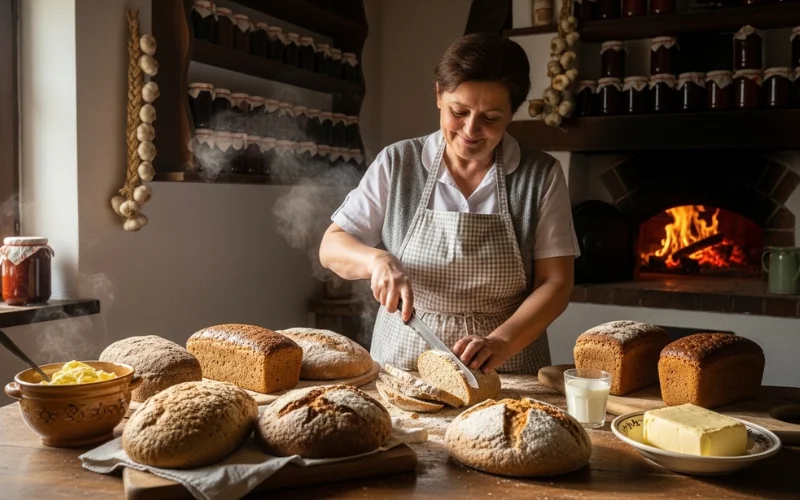
The bread is almost a sacral item in Poland. When you drop bread on the floor you take it up and kiss it. Disposing of stale bread is a waste that is deemed to be a sin. Bread and salt is the tradition of chleb i sol that welcomes newlyweds, honoured guests and dignitaries. It is an emblem of hospitality that the Polish culture food is deep rooted in.
Interesting fact: something that is to be referred to as chleb (bread) in Poland must include rye. Bulki (rolls) are made of pure wheat products. Producing rye is in the top 3 in the planet and sourdough rye bread (chleb zytni na zakwasie) is the key to the Polish diet. In case you love the history of baked goods, the histories of scones and griddle cakes have the same spirit of the regional baking pride.
Polish Food Culture: What Tourists Get Wrong
Here is one of the things that I should have known during my first visit. The Polish food in the tourist areas of restaurants is customized to impress tourists, yet it is not what the Poles consume on a daily basis. Tourist cuisines are based mostly on pierogi, zurek in bread bowls, and oscypk. All of them are great but that is a highlight reel, not the whole picture.
What do they eat in Poland on consume on an ordinary Tuesday? Pork patties (kotlet schabowy or kotlet mielony) and potatoes with a plain surowka. Zupa pomidorowa for the kids. Sandwiches for breakfast. Rosol on Sundays. Pasta, chicken breast, kebabs, and sushi are also highly consumed by the modern Poles. The cuisine is much more global than the tourist route implies.
Tips from Experience: How to Eat Like a Local in Poland
- Eat the milk bars (bar mleczny): these are the cafeteria style restaurants abandoned by the communist regime that are subsidised. The cuisine is home-cooked, unbelievably inexpensive, and really delicious. No English menus, and that is the business.
- Have obiad at an early time: The main meal is generally between 1 and 4 PM. Restaurants are not that busy and food is the freshest.
- .Have a taste of kompot: This stewed fruit beverage is sold at all the milk bars and is one of the foods in Poland that tourists do not pay much attention to but the locals adore.
- Don’t omit the surawska: The raw vegetable salad that is served with all main meals is not a garnish. It is supposed to be consumed and it compensates the heavier food.
- Go to Plac Nowy (in Krakow) at night: Zapiekanka through those small windows strikes various at midnight.
- Visit markets, not souvenir stores: In Warsaw, Hala Mirowska and in Krakow, Stary Kleparz are the places where locals shop. Real products, much better prices.
- Accept seconds: This is when you are asked to eat at a Polish house and they bring you more food, say yes. Saying no too often is unobtrusive incivility.
Errors To be avoided in trying Polish Food
- When ordering pierogi, it has to be a side dish: Pierogi is not a side, but a main dish in Poland. Have them as your main dish.
- Pacing fast food: Polish home cooking is Time. Bigos requires days, zurek fermented starter. Don’t rush it.
- Neglecting the soups: The greatest mistake tourists commit is to pass on the course of soup. The soups are not as much as half.
- Eating tourist menus: Take a walk a couple of blocks out of the center. The prices are lowered and the food becomes more authentic.
- Supposed to be all heavy: Summer food such as chlodnik, mizeria and fresh berry pierogi are not heavy and refreshing.
- Mispronouncing pierogi: It goes by pyeh-ROH-gee. And it is already plural, and therefore do not say pierogis.
- Memory lapse of the bread: Polish bread, particularly sourdough rye is of world standard and worthy of consideration.
Frequently Asked Questions About Polish Food
What is the most popular food in Poland?
When we speak about what Poles eat most frequently, we are likely to say kotlet schabowy (breaded cutlet of pork) with potatoes and salad. Speaking of the most renowned all over the world, pierogi comes out the winner. They are both the mainstays of the most popular Polish food culture albeit in varied ways.
What is Poland’s national dish?
There is no single national dish of Poland declared in Poland, but the vast majority of the citizens regard it to be either bigos (hunter stew) or pierogi. Bigos has a stronger historical argument since it was mentioned in the national epic poem of Poland, whereas pierogi is more widely known outside of Poland.
Is Polish food spicy?
Not really. Polish food is not hot but rich in flavour. Most dishes include black pepper, marjoram, dill and caraway seeds. Easter is the time of year when horseradish (chrzan) gives a kick and some individuals add some spiciness to their zurek. However, in most cases, Polish cuisine is savoury, tangy and earthly as opposed to spicy.
What do Polish people eat for breakfast?
An average meal of the Poles at breakfast (sniadanie) consists of open faced sandwiches with cold cuts, cheese, tomatoes and cucumbers. There are also Twarog (farmer cheese), scrambled eggs and tea with lemon. It is wholesome and meaty, no continental breakfast.
Is Polish food similar to German or Russian food?
It overlaps due to the similar history and location, but the Polish food has its own identity. Specific holiday traditions, the fermented rye flavours (zurek, chleb na zakwasie), the type of dumplings (pierogi, kopytka, kluski) are also unique to the Polish. Consider it as being similar to Italian and French food having some similarities but having very different flavors.
Can vegetarians eat well in Poland?
Absolutely. Natural vegetarian foods in the Traditional Polish food are numerous: pierogi ruskie, all sweet pierogi, placki ziemniaczane, kopytka, kasza with mushrooms and the entire Christmas Eve dinner of 12 meatless meals. Warsaw is also ranked among the vegan friendly cities in the world today.
What should I try first if I’ve never had Polish food?
Begin with pierogi ruskie (potato and cheese dumplings) and a bowl of zurek. Those two meals will provide you with the proper orientation in the flavors of traditional Polish food: the homeliness of handmade dumplings and the distinct taste of fermentation that is so characteristic of much Polish cuisine.
What food is Poland famous for internationally?
The popularity food exports of Poland are pierogi, kielbasa (sausage), paczki (doughnuts) and Zubrowka vodka. There are also bakeries in Polish communities scattered around the world, including Chicago, London and Toronto, where sernik, makowiec and traditional sourdough rye bread are sold.
How much does food cost in Poland?
Poland is great value food as yet compared to Western Europe. A complete meal in a milk bar is approximately 15 25 PLN (36 GBP). A sitting meal at the restaurant will include soup, main course, and drink and it costs between 50 to 80 PLN. Food sold on the streets such as zapiekanka or obwarzanek costs several zloty.
What is a milk bar in Poland?
A bar mleczny (milk bar) is a cafeteria type restaurant which dates back to the times of communism. The government subsidizes them, they offer classic Polish food such as pierogi, zurek, and kotlet schabowy at the most affordable prices, and they are popular with local people of all ages. No fancy, only real home cooking.
What food should I avoid in Poland?
No danger to be avoided, but some of the dishes are acquired. Flaczki (tripe soup) and kaszanka (blood sausage) are a test to many tourists. The next dish which comes in as a surprise is befsztyk tatarski (raw beef tartar). What I would do: I would at least give everything a try. You should be surprised that way.
When is the best time to visit Poland for food?
Each season includes its draws. Summer of plucky stews and Christmas markets. Easter feasts and spring and zurek. Cold soups, berry pierogi and grilling outside during summer. In the fall, in time of wild mushrooms and fresh forestall flavors. Paczki lovers can not miss fat Thursday (typically February).
Final Thoughts on Polish Food
The Polish food is among Europe which is underestimated. It is cozy, liberal, historical and has surprises beneath the pierogi. I believe that this guide will assist you in eating in a healthier way next time you come to Poland, or even prepare a Polish meal at home.
Each dish here is a narrative on a family, a region or a tradition dating back to generations. That is what makes food in Poland be worth experiencing, not only tasting, but knowing.
Read Next: How to Make Baked Cheesecakes