
Before I researched on Colombian food, I believed that I was familiar with Latin American cuisine. I was wrong. It is one of these food cultures that passes unnoticed yet is one of the most diverse ones on the continent.
Hence the following is my no-frills guide to Colombian traditional food. All the dishes, drinks and street foods that do matter.
Why is Colombia Food So Different than the Latin Cuisines?
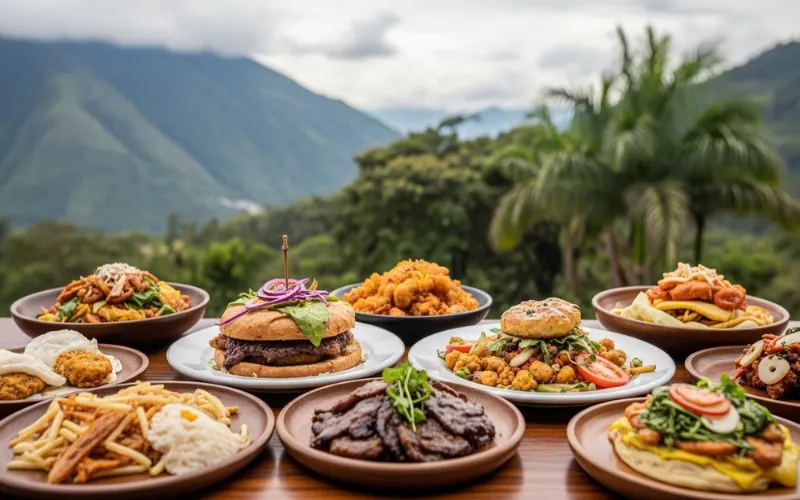
This is the mistake that most people make, Colombian food is not spicy. At all. You will be surprised in case you are expecting Mexican-style heat. These flavors are the result of slow cooking, piled-on seasonings and fresh ingredients as opposed to chilli peppers.
Geographic diversity is the true magic. Colombia is a country with Andes mountains, Caribbean coasts, Pacific coasts, Amazon forest and open plains. Both regions are entirely different in cooking. A plate in Cartagena has in common with a plate in Bogota very little. This is what makes the cuisine in Colombia so interesting.
The Colombian Dishes that You Must Know About.
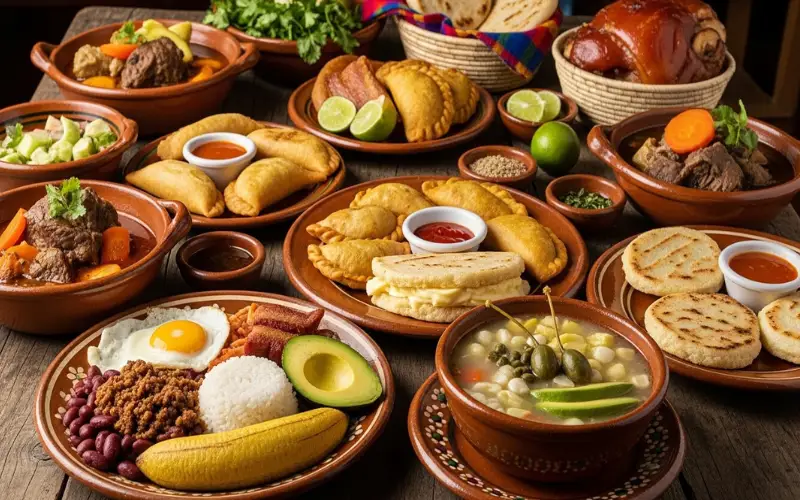
Let us move on to the big boys. These are the famous Colombian dishes that the natives are so proud of. No tourist traps, no overrated choices. These are the real ones.
Bandeja Paisa: The Unofficial Colombian National Dish.
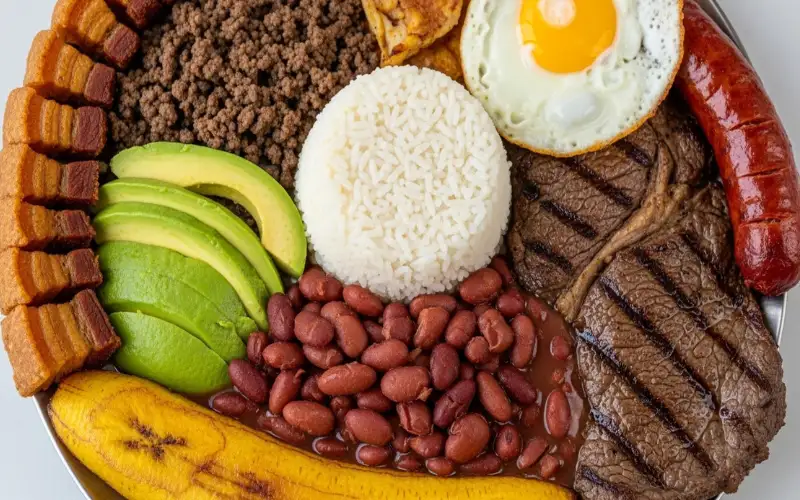
When someone offers me some information concerning what is the most popular food in Colombia, I will always say bandeja paisa. It is massive oval plate of red beans, white rice, ground beef, chicharron, chorizo, morcilla, fried egg, sweet plantain, arepa, hogao sauce and avocado. Up to 14 components on one plate.
This began as a lunch of the labourer in the costa coffee area of Antioquia. Serious fuel was required by the workers and thus they stacked it up. It appears to be overkill and it literally is. In my opinion, though, bandeja paisa may well be the sole meal that can be easily called a one-sitting experience of the Paisa food culture.
Ajiaco: Bogota Signature Soup
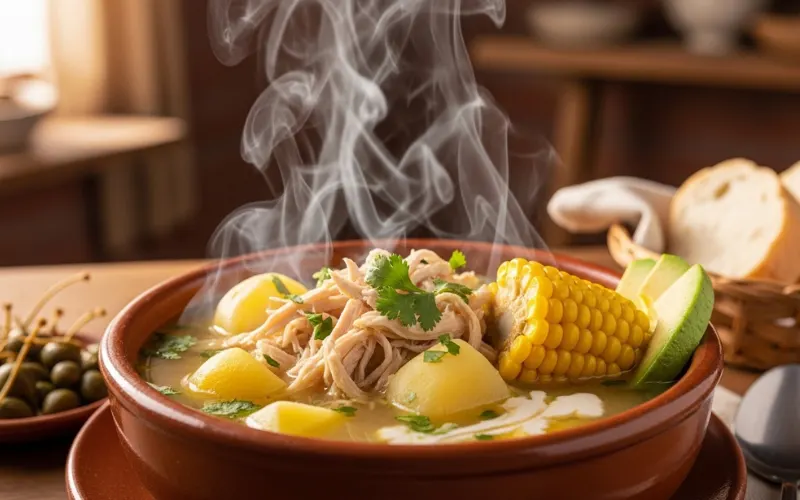
Ajiaco is the pride of Bogota. It is a hearty chicken soup prepared by use of three varieties of potatoes (including tiny yellow papa criolla which dissolve in the broth), corn on the cob, and herb that is known as guascas. Locals will not even refer to it as real ajiaco without guascas. No joke.
You serve it with capers, heavy cream and rice on the side. This soup strikes otherwise in cold Bogota climate (14C annually all around). It is comfort food at its finest and one of the most iconic foods in Colombia rightfully so.
Sancocho: The Communal Stew Every Region Claims
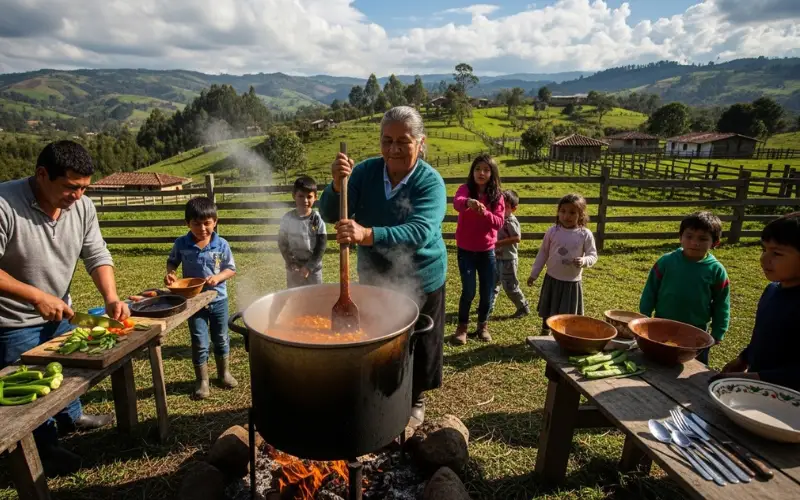
Sancocho is rather a social phenomenon than a recipe. It is a meat (chicken, beef or fish, depending on the area), yuca, plantains, potatoes and corn stew that is low and slow simmered. It is prepared in gigantic pots by families during meetings and festivals.
Caribbean coast version consists of fish. Andean versions contain chicken. The best one belongs to Valle del Cauca. It has even a trifasico one that has three types of meats. Question any Colombian what does Columbian eat at the family reunions and one will always say sancocho.
Lechona Tolimense: Roasted Pig the Right Way
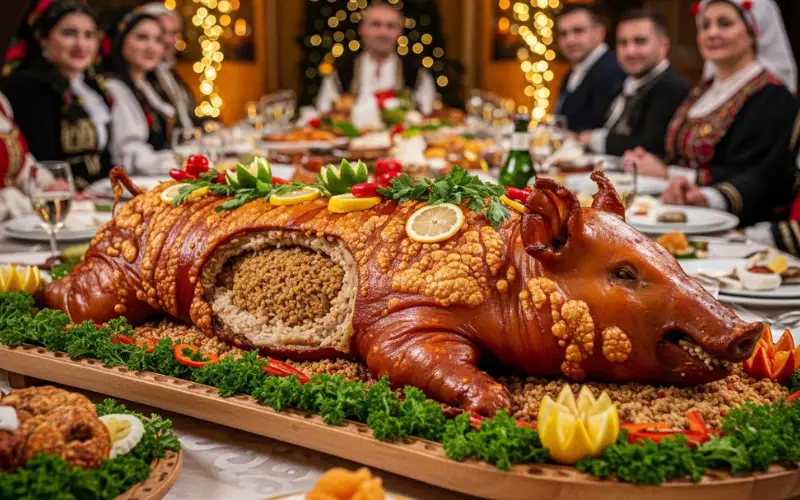
This one’s a showstopper. Lechona is a debone whole pig stuffed with its own meat combined with rice, yellow peas and spices and then slowly roasted in a brick oven over the course of 10-12 hours. The skin becomes entirely crackling.
It’s a celebration dish. Christmas, New Year, Independence. The entire pig (including the head) is served as a centre piece. A lechona is capable of serving 20 to 100 people. It is one of those famous Colombian dishes that you would not forget to see or taste.
The Tamales Colombianos: Not What You Think.
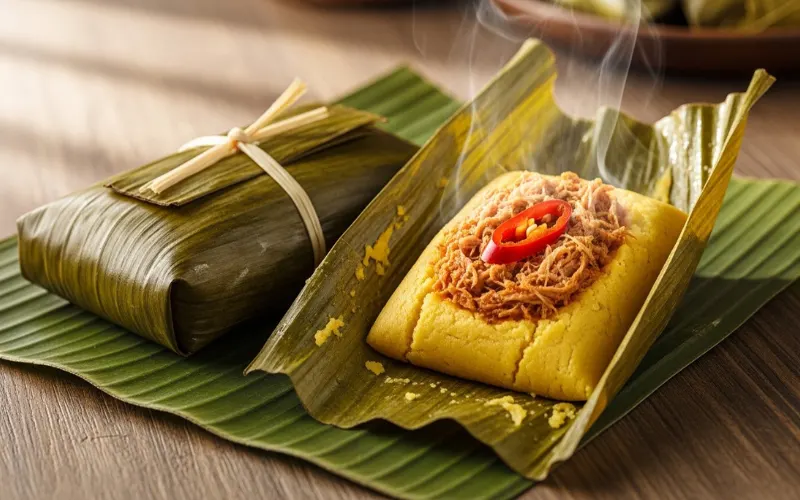
Colombian ones will confuse you in case you know nothing but Mexican tamales. they are wrapped in banana leaves (not in corn husks), are bigger, and of less taste. They are best of all tamales Tolimenses, stuffed with chicken, pork, carrots, potatoes, peas, rice, and hard-boiled egg.
Each family has its recipe. That is what is with the with traditional Colombian dishes. They’re personal. The recipe of tamales of your grandmother is a secret. Tamales Santandereanos are hotter, Tamales Llaneros are square-shaped. A whole world is served in a single dish.
Sobrebarriga and Other Must-Try Main Courses
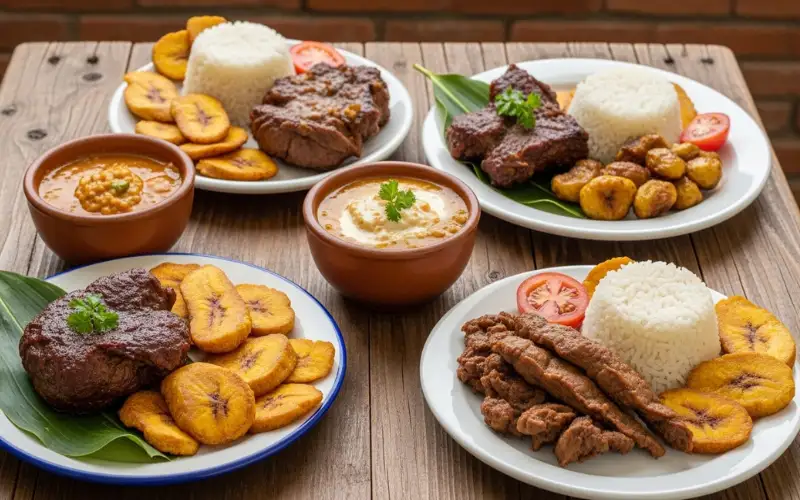
Sobrebarriga is slow cooked flank steak which disintegrates with a fork. Colombia has its version of the comfort rice, which is called arroz con pollo. A huge breaded cutlet made of pork in Cali is called chuleta valluna. Sudado de pollo is onion tomato-braised chicken. Everything good Colombian worth tasting.
Then there is the lomo al trapo, which is crazy. Beef tenderloin loin was covered with cloth, coarse salt and tossed into hot coals. It is rural (finca) custom and one of the most dramatic Colombian meals preparations that I have encountered.
Colombian Street Food That Honestly Hits Different
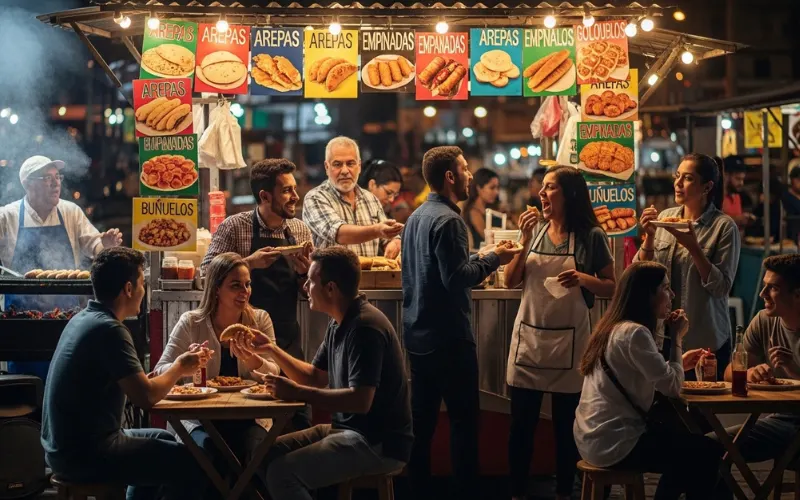
The Colombian street food is a whole new game. Forget fancy restaurants. The corner carts, market stalls, and road vendors are the best places to get the best bites. These are the Colombian food favorites that are available everywhere.
Arepas: The One Food Every Colombian Eats Daily
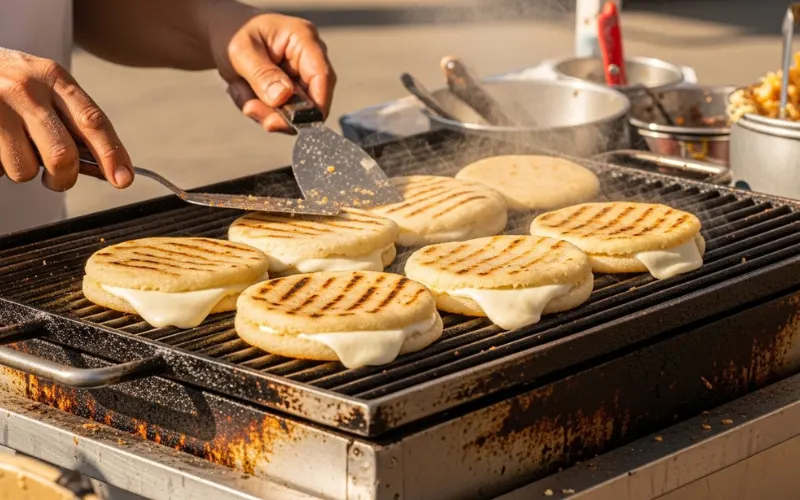
Arepas to Colombia is what bread is to France. Grilled, baked or fried flat corn cakes served at breakfast, lunch, and dinner. At least 42 variants are recognised. White and flat paisa arepas are cooked with butter and cheese. Arepa de choclo is thick and sweet corn. The huevo arepa of the coast is an egg fried.
The term is a product of Chibcha indigenous language. These were in existence predating the arrival of Spanish colonisers. In case you seem to be wondering what is Colombia’s food identity of Colombia can be in a single word, it is arepas. No question. They form the basis of all Columbian cuisine.
Empanadas: The Best Street Snack for Under a Dollar
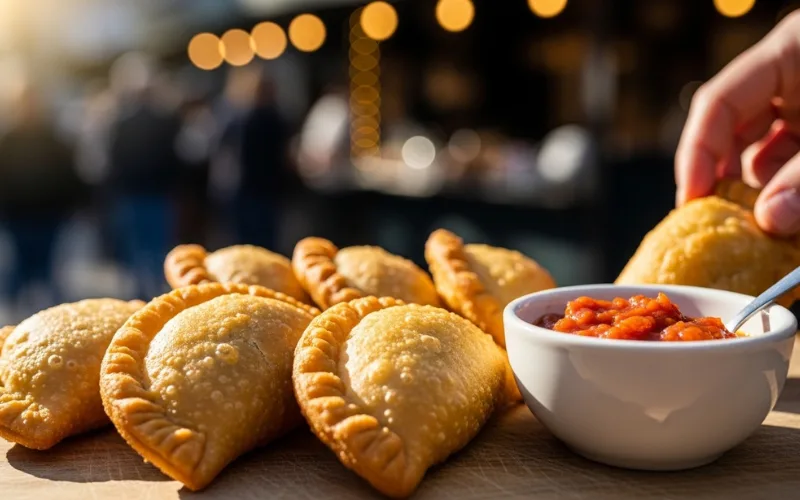
The Colombian empanada is deep fried (it is never baked), and cooked using yellow corn flour and stuffed with potato, seasoned beef or chicken. They cost about 1,200-3000 COP or 25 -70pence. At every single street corner.
Always served with aji sauce. The Colombian version is made with corn flour as opposed to the Spanish empanada and is fried at all times and provides the golden crunchy exterior. They are the food to go to in Colombia when you want something fast, inexpensive and good.
Patacones: Twice-Fried Plantain Perfection
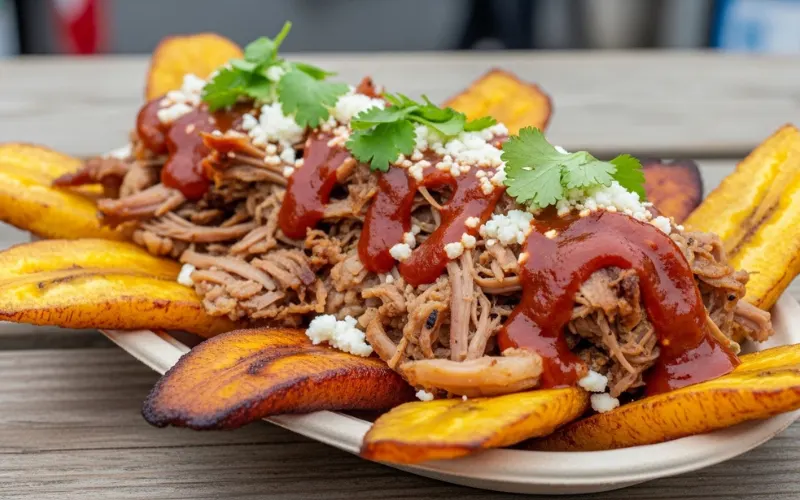
Green plantains Cut thick and fried once, and smashed flat and fried again till golden and crispy. That’s a patacon. Served as a side dish or topped with hogao, cheese or shredded meat. The coastal one is sparser and drier.
What is special about them is the twice-fry technique. First fry softens the inside. That crunch is made by second fry. And it is a plain idea, a brilliant outcome. Colombian food is said to be one of the most common and, at the same time, one of the tastiest.
Bunuelos and Pandebono: Colombia’s Cheese Bread Game
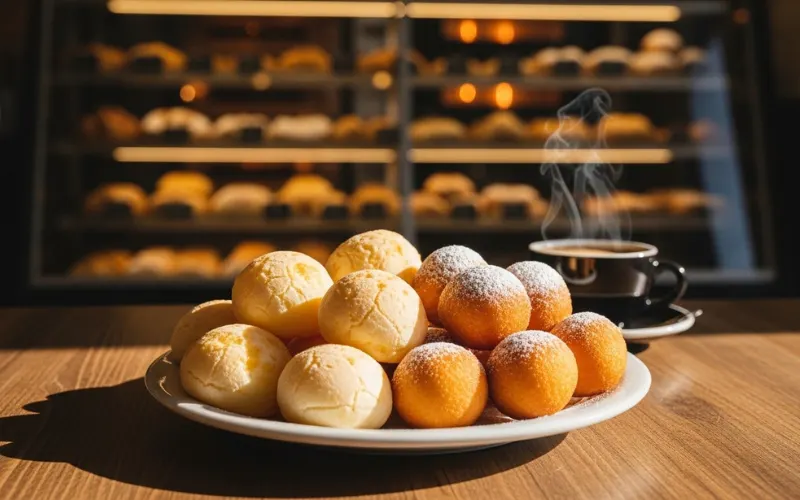
Bunuelos are fried cheese balls, which are spiced and then deep-fried. They are not sweet as it is in the rest of Latin America countries. Burnished on the outside, chewiness on the inside, and addictiveness. The natilla custard is eaten with them, and at Christmas particularly by the Colombians.
Pandebono is a cheese bread of Valle del Cauca prepared with cassava flour and queso fresco. It is gluten free, of course, allowing a nice bonus. You can also easily bake them at home and the outcome is justified should you like baking. Get acquainted with some basics of baking before you can try them. The two are crucial Colombian snack foods.
Obleas: Wafer Desserts Sold on Every Plaza
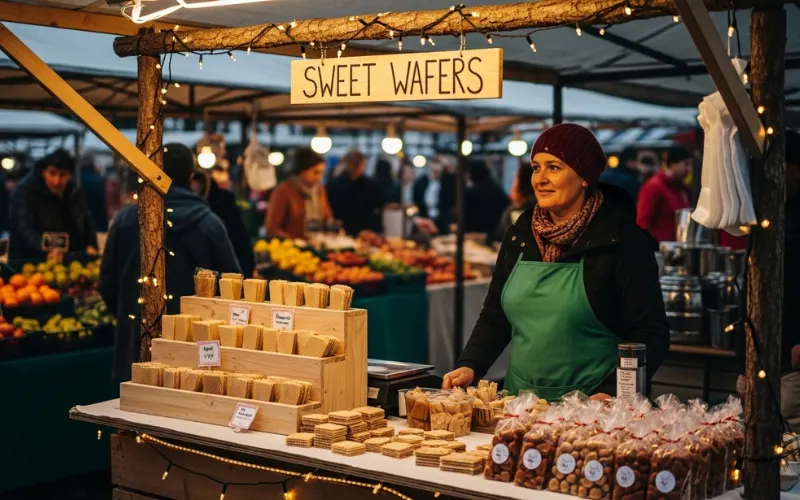
Sandwiches of two thin wafers, filled with arequipe (Colombian dulce de leche), occasionally jam, cheese or coconut. They are sold by vendors who are working in wooden boxes around plazas and parks. Basic, sweet and one of those foods from Colombia that is sentimental even though you may not have been raised there.
The arequipe is the star. It is fatter and denser than regular caramel. There are vendors that allow you to choose your fillings. What I would recommend: arequipe with grated cheese. Sounds strange, comes out superbly.
Fritanga: A Sharing Platter of All the Good Stuff
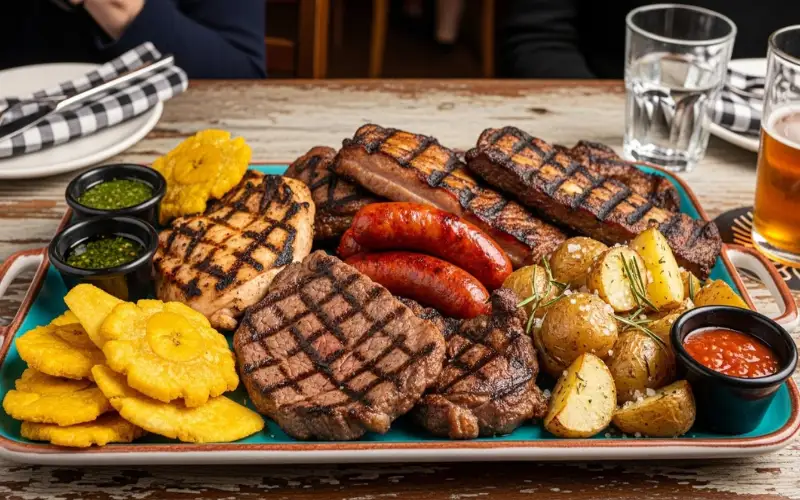
Fritanga is a mixture of grilled and fried meat: chorizo, chicharron, morcilla, and fried pig ears or not. It is accompanied by fried plantains, papas criollas, arepas and aji. The term is also used in describing the stalls (fritangerias) in the streets where they sell the stuff.
Imagine that it is the Colombian response to fast food, only everything is cooked in front of your eyes. It is among those popular foods in Colombia and are best eaten among friends and cold beer.
Hormigas Culonas: Yes, Colombians Eat Ants
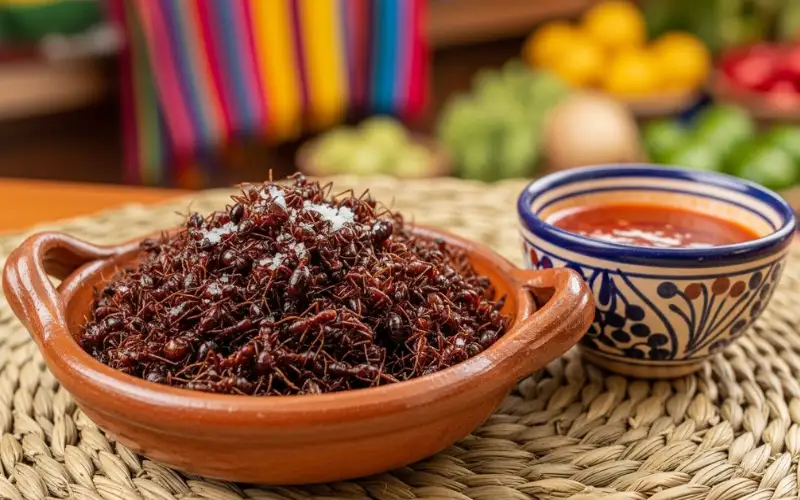
I know. But hear me out. Hormigas culonas translates to fat-bottomed ants and this is a delicacy in Santander. These are big leafcutter ants, which have been toasted or fried and salted. Their flavor is similar to a chocolate and peanuts. Seriously.
Guane people are indigenous and have consumed them in over 500 years. They are harvested at the time of rainy season (March to June) and they yield up to 52 percent protein on the dry weight. Villagers refer to them as the caviar of Santander. The strangest thing on any Colombian food list, perhaps.
Colombian Soups and Breakfast Dishes Most Guides Miss
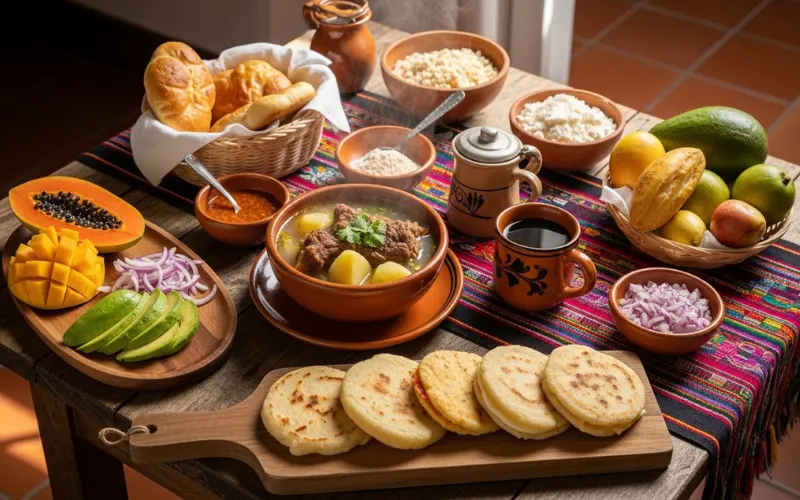
This is one of the things that struck me as unusual about what do people eat in Colombia: soup in the morning is perfectly usual. Particularly in the Andean highlands which are cool in the mornings. These are the foods that competitors hardly talk of but the Colombians consume on a daily basis.
Changua: Bogota’s Breakfast Soup
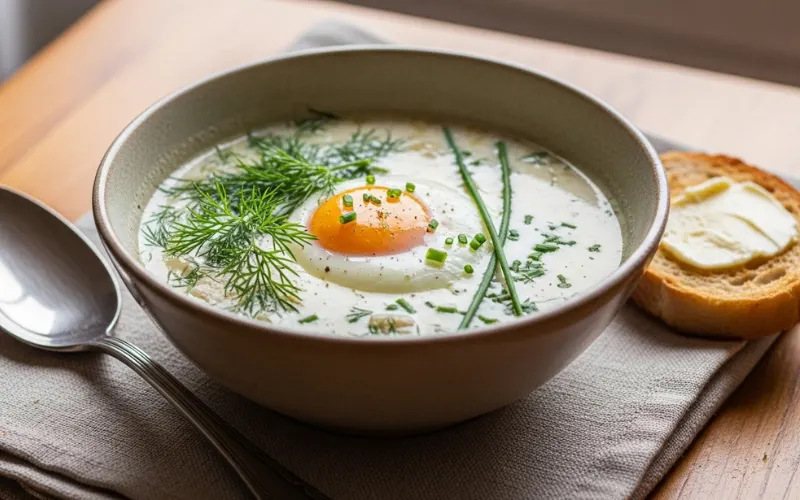
The dish known as changua is simple and is made with milk and water broth, with eggs poached in it, scallions, cilantro, and toasted bread on its surface. It is a Bogota traditional food that puzzles the tourist. Hot soup for breakfast? It is completely logical in the highland climate that is cold and icy.
This is among these traditional foods in Colombia that are considered to be traditional and are practically non-explicit to any food guide. But ask any one of the Bogotanian how they have been fed and changua is the first thing that comes to mind. It’s pure comfort. Not glamorous, just good.
Caldo de Costilla: The Beef Rib Breakfast Broth
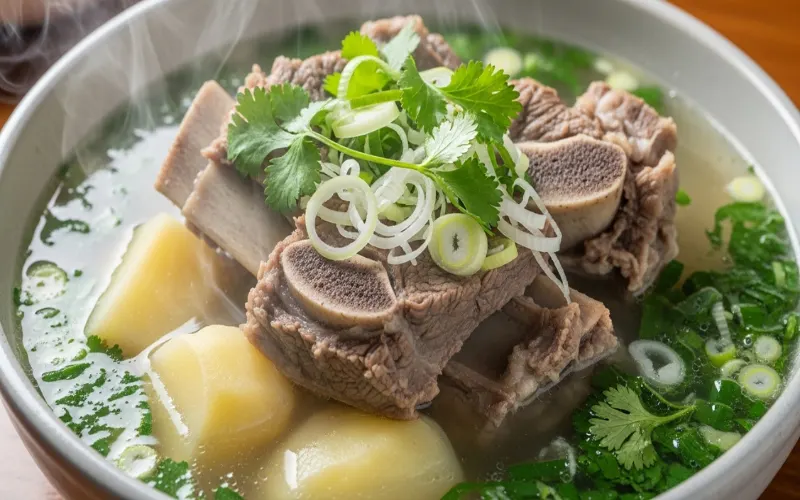
Simmer beef ribs with potatoes, onion, and garlic, and cilantro until the broth is golden. Served in hot sauce with an arepa on the side. This is what the Colombians have as a breakfast meal in Andes. Forget cereal.
It is also known as a remedy to hangover. Do you have too much aguardiente last night? Long potato soup in the morning. That’s just how it works. A good Columbian traditional dinner lasts the night before has to be followed by a good broth the next day.
Mondongo: Tripe Soup with Major Profundity
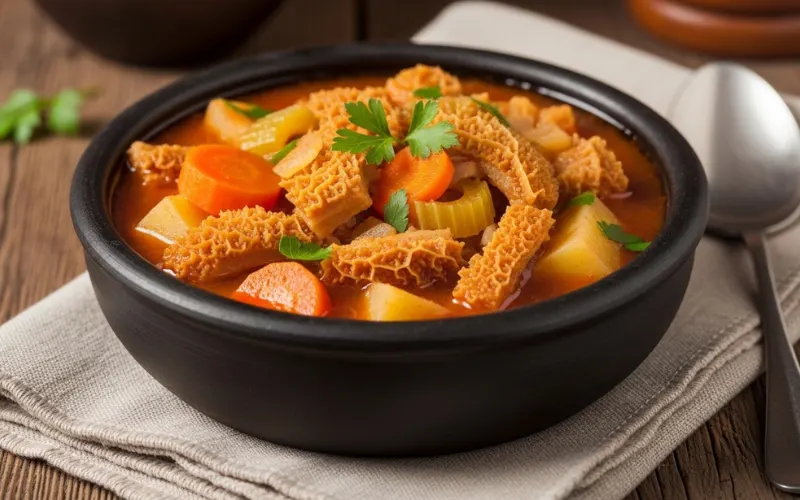
Mondongo is a stew of tripe and potatoes, yuca, corn and vegetables in a tomato stew. It is hearty, full and outrageously polarising. You either enjoy the feel of tripe or you do not. No middle ground.
It is popular in Colombia and more so in Antioquia. It is offered in Medellin restaurants as a special of the weekends. Similar to caldo de costilla, it is referred to as hangover fixer. It is one of the Colombian dishes that might be a reward to adventurous eaters.
How Colombians Actually Eat: Daily Meal Structure Explained
Knowing what type of food do Colombians eat is equivalent to knowing when and how they eat. Its meal organization is not similar to that of most of the Europeans or Americans. Here’s the actual breakdown.
| Meal | Time | What to Expect |
| Desayuno (Breakfast) | 6:00-9:00 AM | Changua, caldo de costilla, arepas with cheese, huevos pericos, hot chocolate, coffee, fresh juice |
| Almuerzo (Lunch) | 12:00-2:00 PM | The main meal. Corrientazo set lunch: soup + protein + rice + plantain/potato + salad + arepa + juice + dessert. About $1.50 to $5 USD |
| Onces (Snack) | 3:00-5:00 PM | Hot chocolate with bread, empanadas, bunuelos, pandebono. Like British afternoon tea. |
| Comida (Dinner) | 7:00-9:00 PM | Lightest meal. Arepa or bread with cheese and a hot drink, simple soup, or lunch leftovers. |
Much to the surprise, the most significant thing is lunch rather than dinner. A great number of Colombians continue to have two hour lunch breaks to have lunch with their family. The corrientazo (set menu lunch) is ubiquitous and it serves as the cheapest meal you will get in Latin America.
What do Colombians eat for dinner? Honestly, not much. It’s usually light. A arepa, with cheese, or some bread, and hot chocolate, or almuerzo leftovers. Low key in Colombian culture food is dinner.
Regional Food Guide: What to Eat Where in Colombia
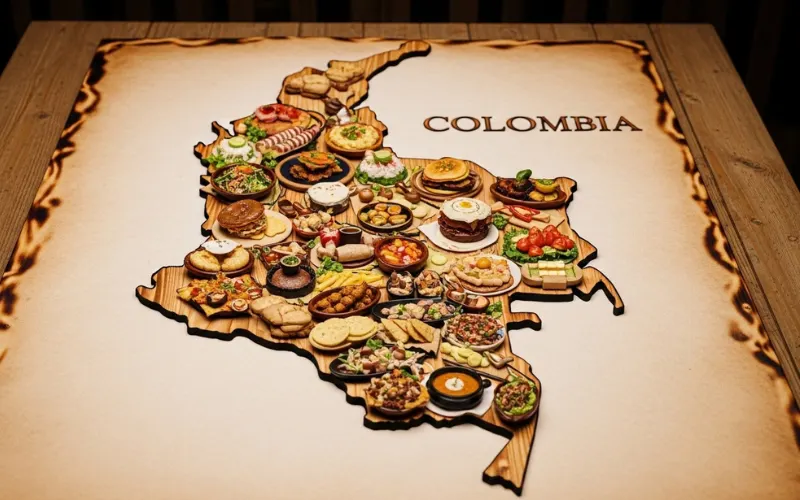
This is the area that most guides fail in. They have dishes listed without informing you on their origin. Different regions of Colombia produce completely different food traditions due to the geography. Here is your region by region Food Colombia.
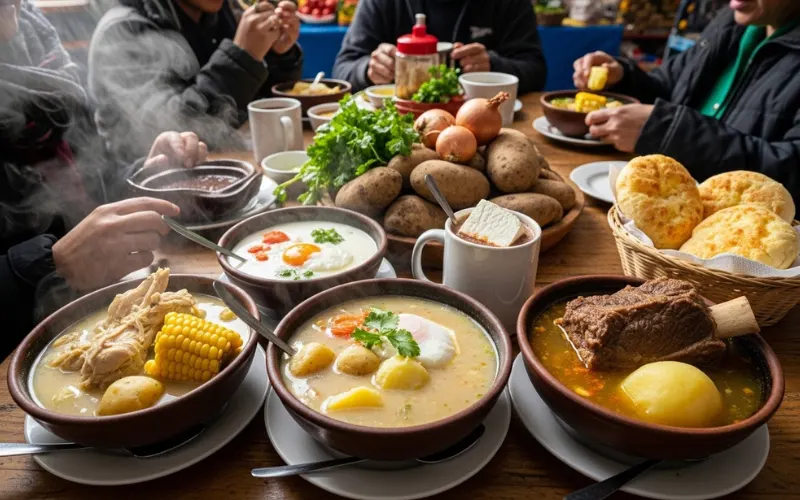
Cold weather implies the hegemony of soups. The stars are ajiaco, changua, caldo de costilla, and sobrebarriga. Colombia has a variety of more than 800 potato varieties and highlands exploit all of them. In the morning, there is the routine of almojaranas and chocolate caliente with cheese.
Paloquemao Market offers the cheapest and freshest food in the city. It is the most appropriate to have the typical food in Colombia without the tourist premium.
Medellin and Antioquia (Paisa Region)
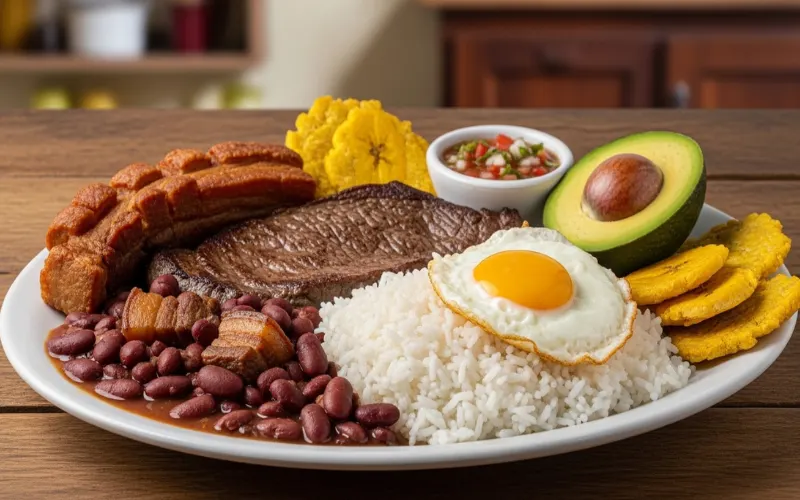
And this is the faintest Colombia her eating grounds. Bandeja paisa is king. Frijoles (bean stew) is a delicacy not much to be found elsewhere. After lunch, chorizo santarosano, chicharron and mazamorra with panela. It is all lavish and saturating.
The best aguardiente in the country is also referred to as the Paisa region. The market to visit is the Plaza Minorista. When a person poses a question regarding what is the most famous food in Colombia, he/she is likely to mention something Paisa.
Caribbean Coast: Cartagena, Barranquilla, Santa Marta
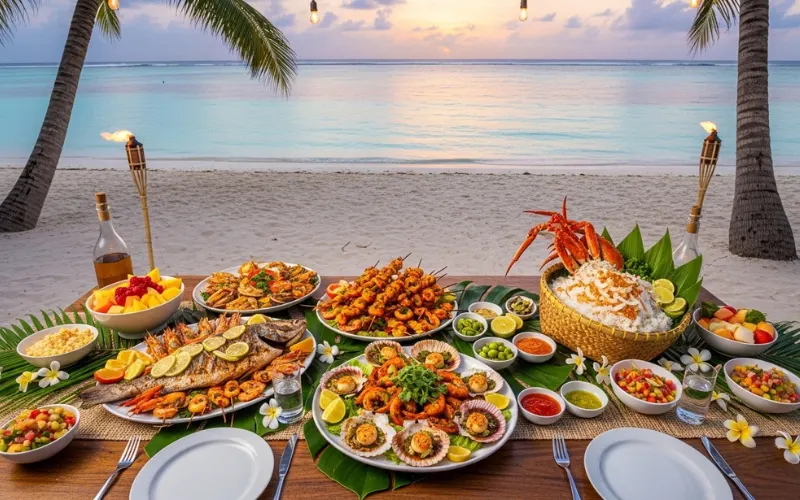
Here Africa and indigenous Tairona influences are very strong. Coconut is everywhere. Arroz con coco, cazuela de mariscos (creamy coconut seafood stew) arepa de huevo, pargo frito (fried snapper), and cocadas. The beach ambience transforms everything concerning foods in Colombia.
On San Andres island, one can find rondon: fish and snails in coconut milk. The street food business in Getsemani in Cartagena is global. The beach is where tasty Colombian food and the tropical taste collide.
Cali and Valle del Cauca
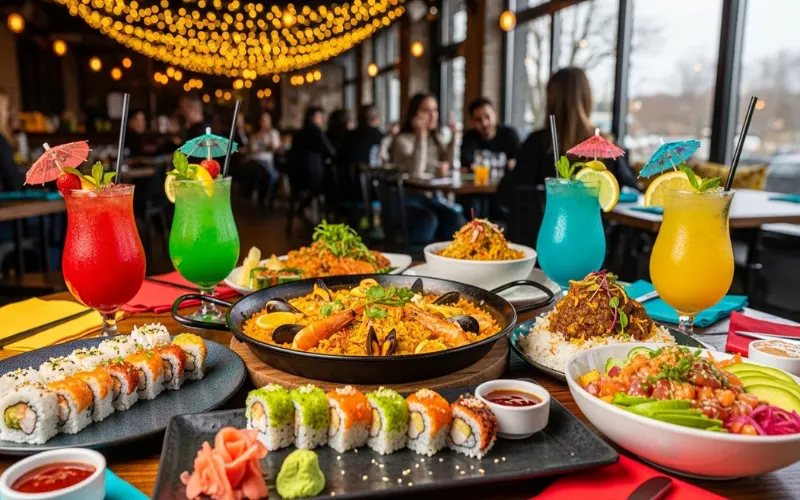
Cali is a mixture of highland and Pacific coast cuisine. Dishes: arroz atollado (thick rice with pork), chuleta valluna, pandebono (born here), and cholados (shaved ice with fruit). Champus is a special soft drink produced with the use of corn, pineapple, lulo, and panela.
The cali drink is lunada, which is made of lulo fruit that is mashed in lime and ice. It is impossible to have it so good elsewhere in the country. One of the most distinguished Colombia food and drinks.
Santander: Bold Flavours and Adventurous Eating
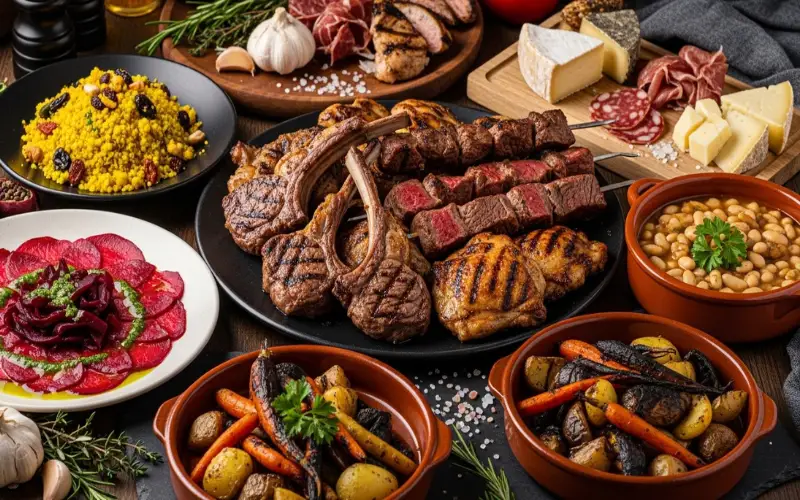
Santander is the place to get the most adventurous food in Colombia. Hormigas culonas, cabrito asado (roasted young goat), pepitoria (rice cooked in goat blood), and mute santandereano (a complex hearty soup). This is an area that does not take precautions.
Food capital in this is Bucaramanga. Savory rich in protein foods with strong indigenous Guane roots. It is the least renowned food area and it encompasses a typical Colombian dish that cannot be found elsewhere.
Pacific Coast (Choco): Afro-Colombian Soul Food
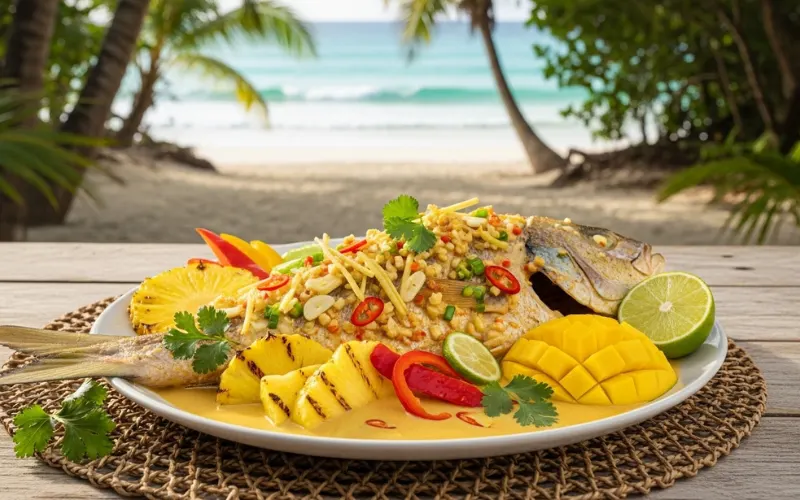
The greatest African influence on the culinary in Colombia is the Pacific coast. Coconut reigns supreme here, however the mode of cooking is more daring and more earthy. The signatures are encocado de pescado (fish in coconut sauce), tapao de pescado (steamed fish in banana leaves) and arroz tumbacatre.
Exceptional ingredients unavailable elsewhere: borojo fruit (so-called love juice due to its claimed properties), chontaduro (palm fruit sold in the street), and piangua (mangrove clams). In this region seasoning is done with “hierbas de azotea” (rooftop herbs). An absolutely other world of Colombia cuisine.
Llanos Orientales: Cowboy Country Cooking
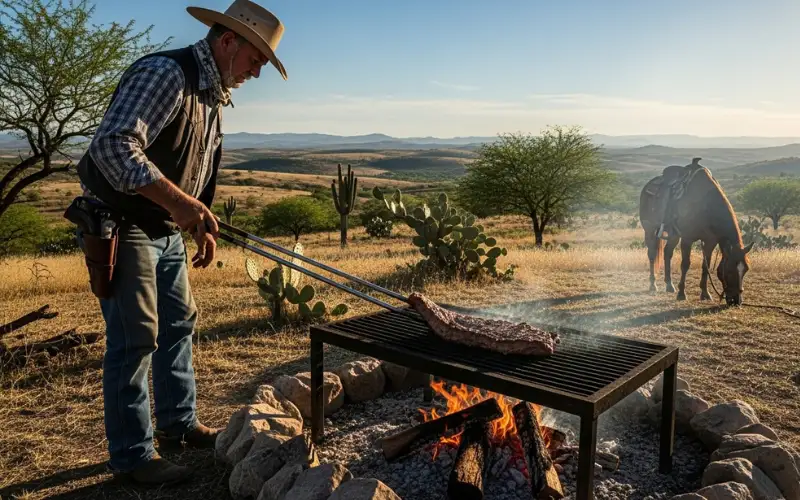
The expansive eastern plains are cattle country. This is where we get the finest beef in Colombia. It boasts of the signature meal as ternera a la llanera (or mamona): whole veal cooked in an open fire on long wooden poles. It is theatrical, savage and just delicious.
The llanero diet is completed by rice arepas, hallacas (rectangular tamales) and queso de mano (homemade string cheese). Here, rustic cowboy culture signifies huge fires, huge portions, and no pretension. One of the most sincere typical Colombian foods.
Amazon Region: Exotic and Indigenous
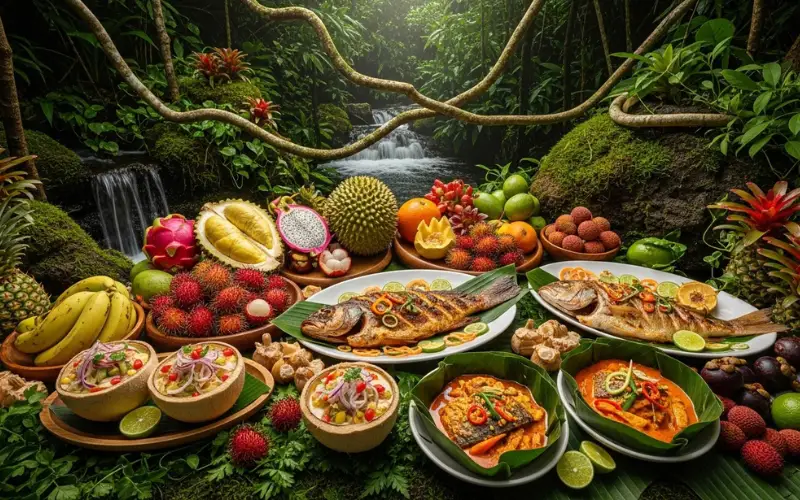
The Amazon is an alternate world of food. The dish that stars the protein is that of pirarucu, one of the largest freshwater fish in the world, either grilled or stewed. Mojojoy (larvae of palm grubs) is indigenous animal protein, which is nutty to eat when roasted. Not everybody, but captivating.
There are exotic fruits such as acai, camu camu and copoazu which thrive in the area. Cassava is refined into farina a toasted flour that accompanies all. This is the most wildest frontier of Colombia food dishes as it is done using the Indigenous methods such as smoking, fermenting and wrapping food in jungle leaves.
Quick Comparison: Coastal vs Andean Colombian Cuisine
| Feature | Caribbean Coast | Andean Highlands |
| Key ingredient | Coconut, seafood, plantain | Potato (800+ varieties), corn, chicken |
| Signature dish | Arroz con coco, cazuela de mariscos | Ajiaco, bandeja paisa |
| Arepa style | Fried, with egg inside (arepa de huevo) | Grilled flat white corn with cheese |
| Flavour profile | Tropical, sweet-savoury, coconut-rich | Earthy, hearty, soup-forward |
| Cultural influence | African, Indigenous Tairona | Indigenous Muisca, Spanish |
| Breakfast style | Arepa de huevo, carimañolas, juice | Changua, caldo de costilla, hot chocolate |
Colombian Drinks You Should Not Skip
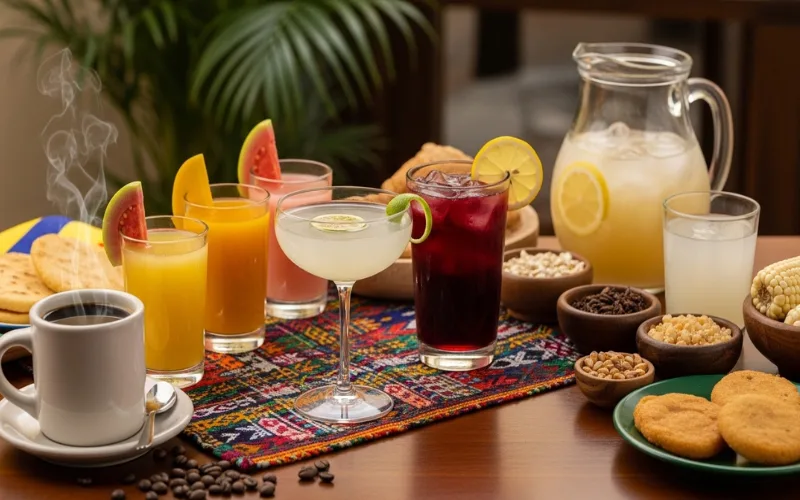
The Colombian culture of drinks extends way beyond coffee. Although it goes without saying that the coffee is unbelievable. These are the Colombia food and drinks.
Colombian Coffee: More Than Just an Export
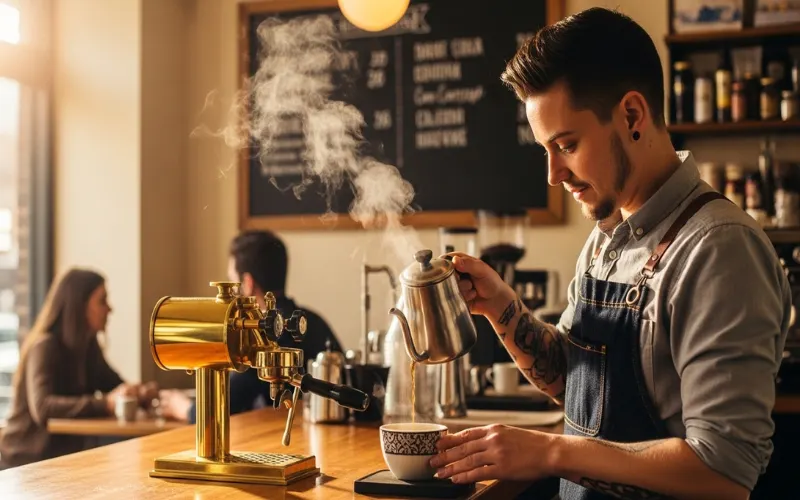
Colombia is the third largest coffee producer in the world and produces only the Arabica beans. Caldas, Quindio, Risaralda Coffee Cultural Landscape (Caldas, Quindio, Risaralda) is a UNESCO site. Majority of the Colombians actually drink Tinto, a small sweetened black coffee which is sold in the streets at a price of about 10p.
This is a contradiction itself. The best beans used to be exported and locals consumed Sello Rojo brand. This is currently changing with specialty stores coming up. In case you are a coffee lover who also prefers coffee flavors in baking, an item such as coffee cake will go well with Colombian beans.
Aguardiente: The Spirit of the Nation
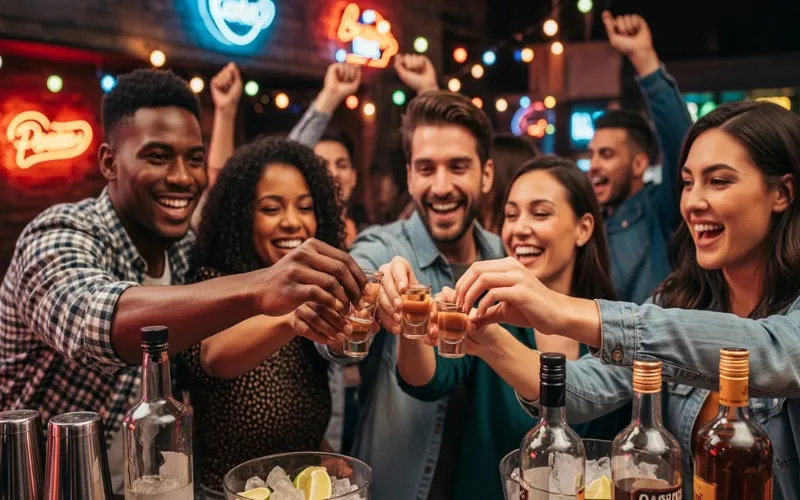
Anisado Aguardiente (distilled sugarcane flavoured with anise) is made with a distillation of sugarcane. It sells 24 to 29 percent liquor and brand loyalty is intense in each area. Antioqueno in Medellin. Cristal in Bogota. Nectar in the south. Approximately 74 million bottles are sold in a single month of December.
The chant is: Arriba, abajo, al centro, pa’ dentro! (Up, down, centre, inside!). It is supposed to be drunk in shots with friends. Declining to take a shot of guaro (the nickname) at a party is minorly rude. That is simply how the Colombian culture food and drinking goes.
Fresh Juices, Hot Chocolate and Aguapanela
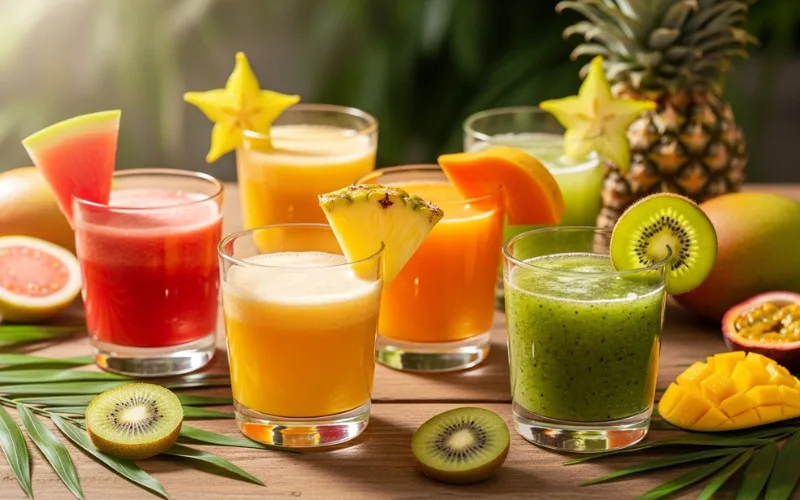
Aguapanela is the unrefined cane sugar in water. Hot, with cheese to warm the blood, or cold, with lime to cool the blood. Here hot chocolate is another thing. They boil a special pot known as a chocolatera and add cinnamon and drop a piece of cheese into the cup which melts. Sounds weird, tastes amazing.
Assuming that you like chocolate related foods, consider adding the chocolate flavour to something like hot chocolate cheesecake. Then there is the lulada of Cali (mashed lulo with lime), champus (fermented corn drink) and chicha (pre-Columbian ancient corn beer). Colombia is a state that operates on beverages rather than food.
Colombian Desserts and Sweet Treats Worth Knowing
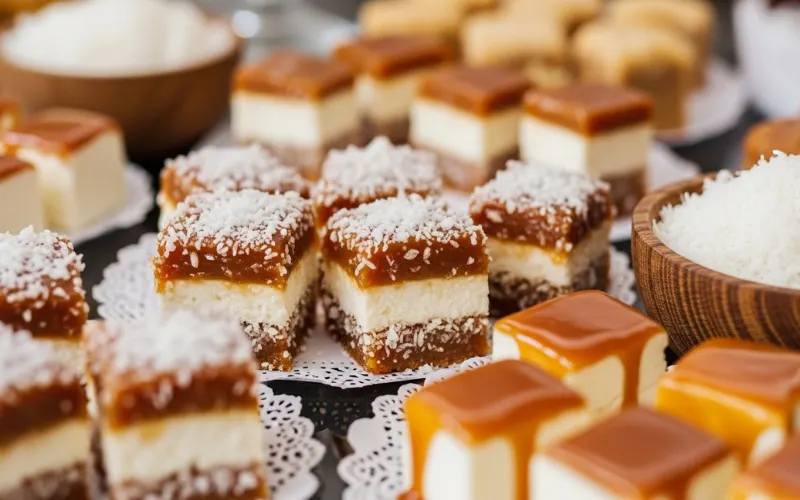
There is not enough attention paid to the dessert game. Colombian delicacies on the sweet side is truly unique. Here are the ones that matter.
Here everything sweet is founded on arequipe (dulce de leche). Cocadas are coconut sweets that are offered in the Cartagena plazas. Guava paste blocks are served with cheese (bocadillo con queso). Colombia has a variation of pavlova that is known as merengon: meringue, whipped cream, and fresh tropical fruit.
Natilla is the typical Christmas custard prepared with the use of milk, cornstarch, panela and cinnamon. Postre de natas is a product of boiled milk that has been skimmed over and over again. Fige con arequipe is the translation of figs filled with caramel. Huila Achiras are cheese biscuits that have geographical protection.In case you like sweets with coconut flavor, the same taste profile is reflected in a good coconut cake recipe.
Colombian Christmas and Holiday Foods
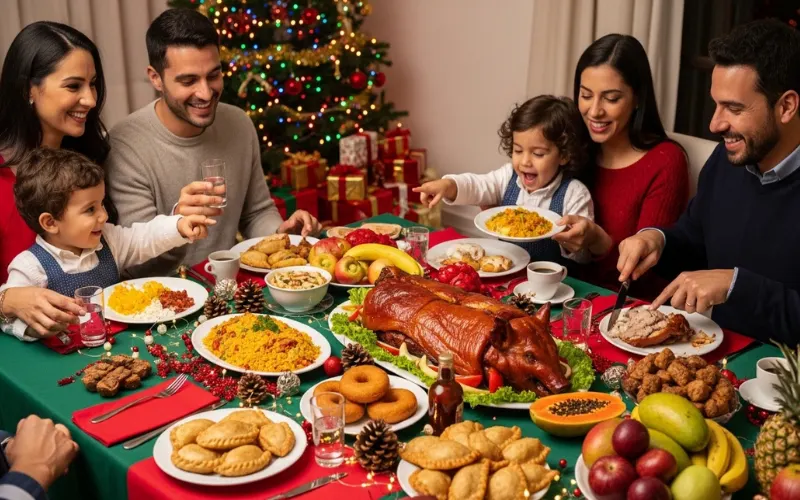
Colombian Christmas is a pure food affair. The families go every night between December 16 and 24 and do their Novena de Aguinaldos (nine nights of prayers) and the real star of this is the food eaten after that: bunuelos, natilla, empanadas, and pandebono.
The most important celebration is Christmas Eve (Nochebuena). The midnight feast includes tamales, lechona, ajiaco, hojuelas (fried pastry) and ajiaco. Semana Santa (Holy Week) implies a ban on red meat, in particular on Good Friday. Fish takes over entirely. The consumption of chicken in the season of December alone is approximately 99,554 tonnes. There is no other traditional food Colombia era that could compare with it.
Key Ingredients That Define Colombian Cooking
You cannot comprehend food of Colombia without knowing the building block. These are ingredients which appear almost everywhere.
| Ingredient | What It Is | Used In |
| Panela | Unrefined cane sugar in hard brown blocks. Colombia’s most common sweetener. | Aguapanela, natilla, chicha, coffee, sauces |
| Guascas | Subtle herb (Galinsoga parviflora) with artichoke-like flavour. Unique to Colombian cooking. | Ajiaco (essential, non-negotiable ingredient) |
| Masarepa | Precooked corn flour (PAN brand is standard). Foundation of corn-based cooking. | Arepas, empanadas, tamales |
| Aji | Fresh cilantro-based condiment. Tangy and mild, NOT spicy like Mexican salsa. | Served alongside empanadas, soups, grilled meats, everything |
| Hogao | Colombia’s “mother sauce” of tomatoes, scallions, garlic, and cumin. | Base for bandeja paisa, sobrebarriga, stews, grilled meats |
| Plantain | Green for patacones, ripe (maduro) for sweet side dishes, stuffed for aborrajados. | Nearly every Colombian meal as a side |
Colombian Food Names: Quick Reference Guide
Frequently, people become confused when they do not know the names of the Colombian foods when placing orders. This is a cheat card of the most significant words so that you do not look at a menu and look at it only once.
| Spanish Name | What It Is | Category |
| Bandeja Paisa | Massive multi-component platter with beans, rice, meats, egg, plantain | Main course (Antioquia) |
| Ajiaco | Chicken and three-potato soup with guascas herb | Soup (Bogota) |
| Sancocho | Hearty stew with meat, yuca, plantain, corn | Soup/stew (nationwide) |
| Arepa | Flat corn cake, grilled/baked/fried. 42+ varieties. | Bread/side (nationwide) |
| Empanada | Deep-fried corn turnover with beef/chicken and potato | Street food (nationwide) |
| Lechona | Whole stuffed pig, slow-roasted 10-12 hours | Celebration dish (Tolima) |
| Patacon | Twice-fried green plantain disc | Side/snack (nationwide) |
| Chicharron | Deep-fried pork belly with crackling skin | Side/snack (nationwide) |
| Bunuelo | Fried cheese fritter (savoury, not sweet) | Snack/Christmas (nationwide) |
| Corrientazo | Set lunch menu: soup + main + juice + dessert | Meal format (nationwide) |
| Aguardiente | Anise-flavoured sugarcane spirit | National spirit |
| Aguapanela | Panela (raw cane sugar) dissolved in water, hot or cold | Drink (nationwide) |
The Three Cultures Behind Colombian Food
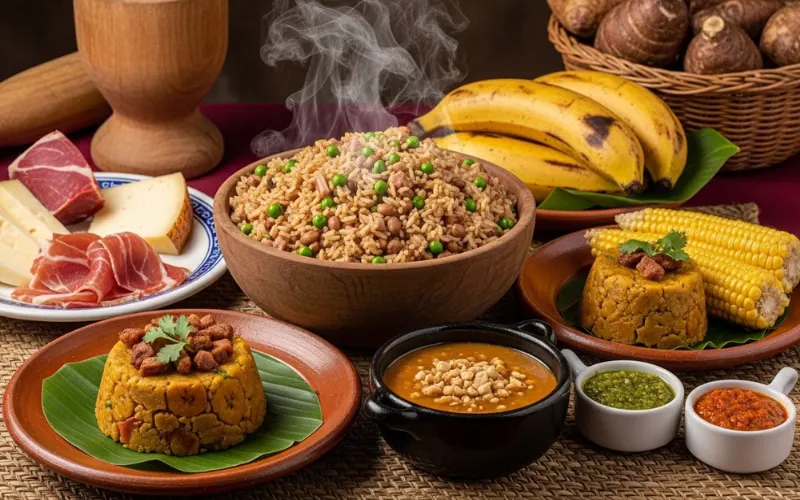
What is Colombian food cannot be understood properly without knowing the origin of it. Here the three streams of culinary collide the Indigenous, the Spanish and the African. All of them were leaving ingredients and techniques that are still applied by the Colombian people on a day-to-day basis.
Muisca and Tairona peoples were indigenous and added corn, potatoes, yuca, guascas, and wrapping food in leaves. Rice, wheat, livestock, frying methods, and dairy were introduced by Spanish colonisers. The African influences (most powerful along the coasts) brought about the idea of cooking with coconuts, heavy-handed seasoning, and one-pot stews. It is this three-way merger that contributes to the stratification of cuisine of Colombia and makes it so region-influenced.
Colombian Seafood Dishes from the Coast
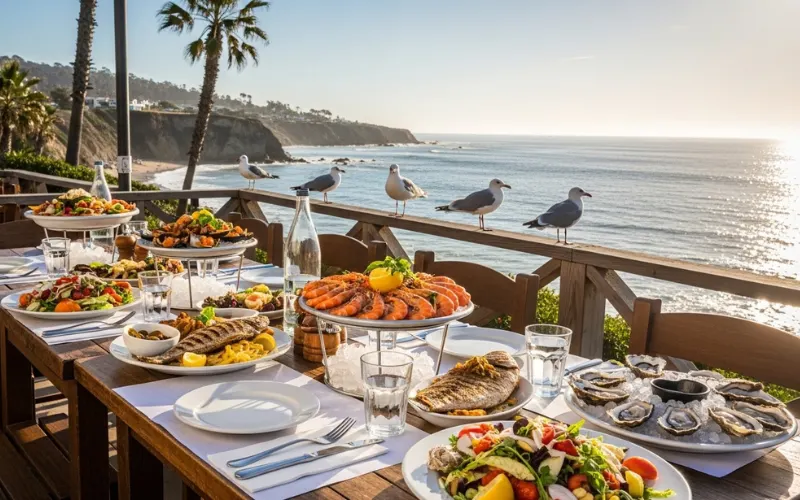
When you are in the Caribbean or the Pacific coast, the sea food is excellent. These are the famous Colombian foods that you will see only prepared well in the area close to the sea.
Cazuela de Mariscos: Creamy Coconut Seafood Stew
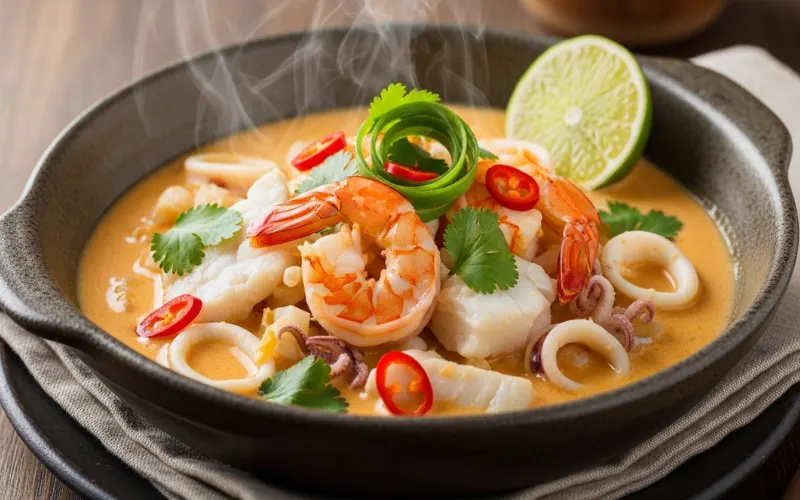
A thick, creamy stew full of shrimp, crab, octopus, fish, and squid, and is simmering in coconut milk with sofrito. Hotly served in a clay pot. This is the flagship seafood dish of Cartagena and it serves like the Caribbean in a bowl.
Its coconut milk renders it smooth without being thick. Each restaurant at the coast has its version. To my taste the ones that are close to Bazurto Market are better than the posh tourist attractions. Colombia popular seafood dish.
Ceviche Colombiano: Not What You Expect
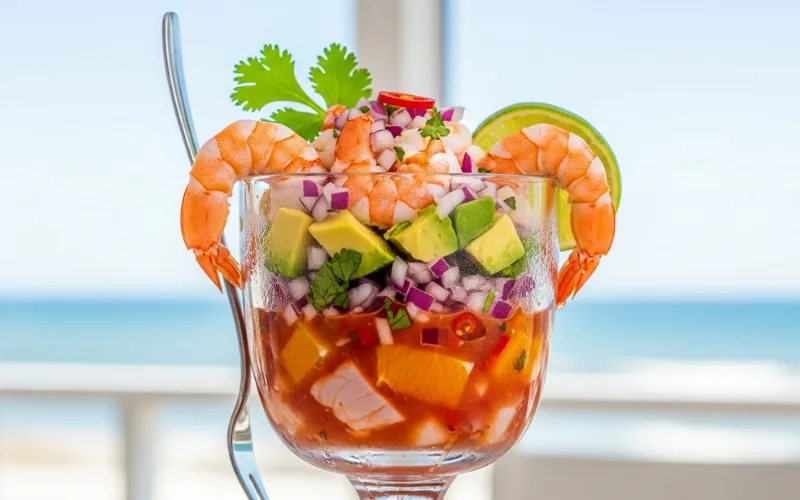
Colombian ceviche is not Peruvian ceviche. The shrimp is not raw, but cooked, and is thrown in a lime, tomato, and ketchup based sauce with onion and cilantro. Sounds weird but it works. It is taken cold in a cocktail-glass, and occasionally with patacones accompanying it.
This is where the difference is the most evident in case you compare Colombian food to Peruvian. Peruvian ceviche This is cured with citrus raw fish. Colombian ceviche is more of a shrimp cocktail with a bitey taste. Both magnificent, completely different.
Arroz con Coco: Coconut Rice Done the Colombian Way
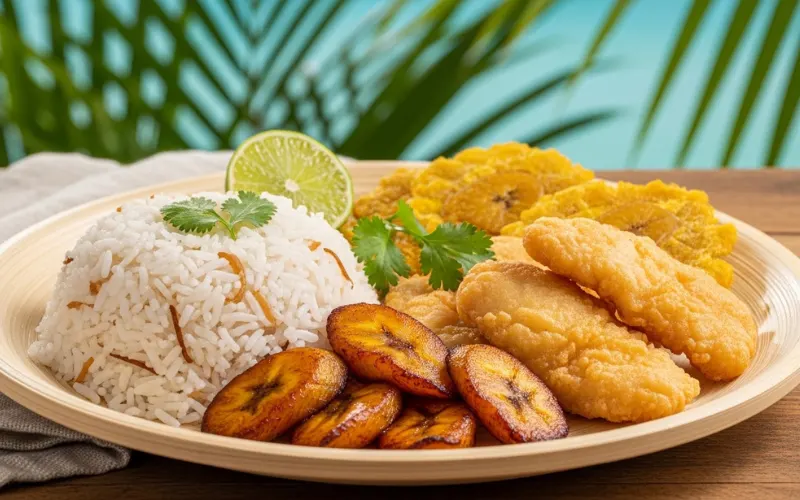
The arroz con coco is meant to be cooked until it forms the so-called titote, the caramelised pieces of coconuts that appear on the bottom of the pot. That’s the prize. The rice itself is sweet savoury with flaked coconut in it. It is accompanied by fried fish and patacones.
Each abuela on the coast has her way. The key is patience. Slowly your coconut milk is simmered, till the oil is separated, and the solids are a golden brown. Then you add the rice. Rush it and you lose the magic. One of the pillars of the Colombian traditional dishes.
Where to Eat in Colombia: Restaurant Types Explained
It is easier to place orders knowing what kind of restaurant it is. Colombia has a certain system and once you learn to understand it, you will be able to eat better at a lesser cost. The brief description of the locations of some of the more popular dishes in Colombia follows.
| Restaurant Type | What It Is | What to Order |
| Corrientazo | Set-meal restaurant. Fixed price lunch with soup, main, juice, dessert. | Just pick your protein. Everything else comes automatically. |
| Asadero/Parrilla | Grill house. Charcoal-grilled meats, chorizo, chicken. | Pollo asado (roast chicken), picada (mixed grill platter). |
| Piqueteadero | Rustic fried-food spot. Casual, loud, family-style. | Fritanga platter, chicharron, papas criollas, chorizo. |
| Fruteria | Juice bar. Fresh tropical fruit juices and smoothies. | Jugo de lulo, maracuya, guanabana. Ask for “en agua” (water) or “en leche” (milk). |
| Panaderia | Bakery/cafe. Bread, cheese breads, pastries, coffee. | Pandebono, almojabanas, bunuelos, tinto (black coffee). |
Most Colombians have their lunch in the corrientazo. Find signs written in hand that indicate the existence of little restaurants such as almuerzo or corrientazo. The meal systems are never different: a lunch of soup, followed by your protein in rice, potato or plantain, a little salad, an arepa, juice, and a little dessert. All for a few dollars. This is what the experience of what to eat in Colombia is all about.
Tips From Experience: Eating Well in Colombia
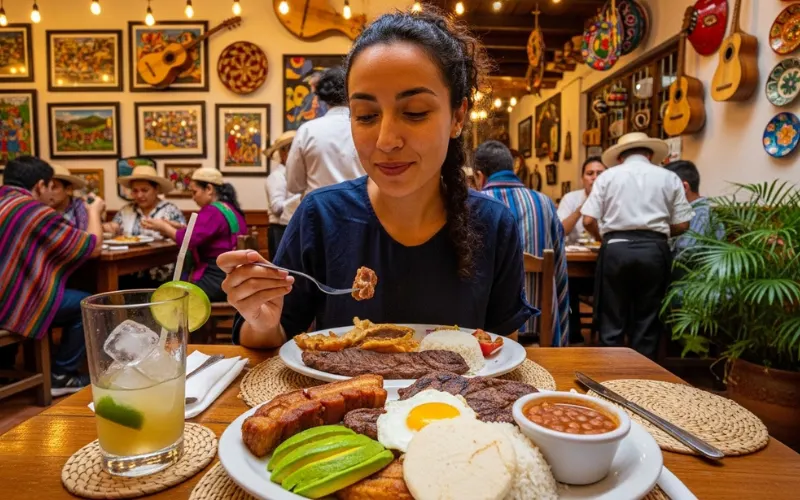
Get the corrientazo (set lunch) at the local restaurants. Best value meal: Full meal 1.50 to 5 USD.
Learn the restaurant types. Corrientazo = set meal. Asadero = grill house. Fruteria = juice bar. Piqueteadero = fried-food bar. Panaderia = bakery.
Eat the foods to eat in Colombia in the street vendors, but not in the tourist restaurants. The cart empanadas tend to be superior and half the price.
Ask them to bring aji sauce with it all. It is free in the majority of locations and does have a real impact.
The purest, the cheapest food experience can be found in Bogota as Paloquemao Market and Medellin as Plaza Minorista.
Tip etiquette: A tip (usually 10% voluntary service charge) is usually added. Employees will request whether to be included or not. Say yes. It matters to them.
Don’t skip the soups. The actual local cuisine in Colombia includes breakfast soups such as changua and caldo de costilla.
Mistakes to Avoid When Trying Colombian Food
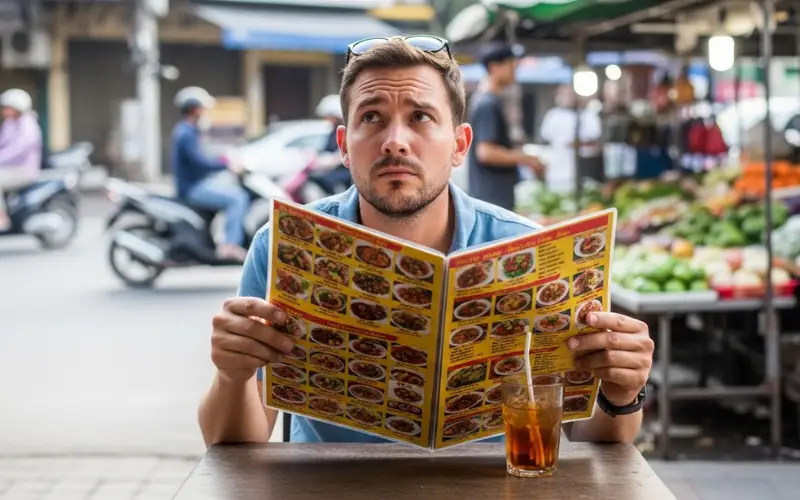
Expecting spicy food. Colombian cuisine is not spicy but tasty. Aji is mild. Adjust your expectations.
Skipping lunch for dinner. Almuerzo is the main meal. Dinner is light. You will not eat the best food by eating European.
Only eating in tourist areas. Local neighborhood places are the best place to find best Colombian food, as opposed to the restaurants of the Cartagena walled city.
Comparing it to Mexican food. It is an entirely different cuisine. Corn is employed differently, the amount of spices is different, and techniques are varied.
Ignoring the drinks. Aguapanela, lulada, chicha and fresh juices are half way the experience of Colombia cuisine.
Failure to sample local delicacies. Dining in Bogota will deprive one of the coastal dishes of coconuts, Paisa bean stews, and the adventurous plates of Santander.
Wrapping Up
Colombian traditional food is among the least celebrated food culture in the world. Its diversity in taste and regions, the richness of flavor, and sheer generosity of the portions make it special.
In case you have an opportunity to have a bite in Colombia, go. Your stomach will thank you.
Frequently Asked Questions About Colombian Food
What is the most popular food in Colombia?
Bandeja paisa is generally referred to as the most popular food in Colombia. It is a huge tray of the Antioquia area that consists of beans, rice, beef, chicharron, chorizo, egg, plantain, arepa and avocado. More than all regions, arepas are the most widely consumed food.
Is Colombian food spicy?
No. This is the greatest myth about the Colombian cusine. The food is spiced and tasty although it is not hot. Aji, the typical condiment is spicy and sweet with cilantro and lime. It is not like Mexican hot sauce.
What is a typical Colombian breakfast?
In Bogota breakfast may begin with soup (changua or caldo de costilla). Colombian breakfast all over the country consists of arepas (with cheese), huevos pericos (scrambled eggs with scallions and tomatoes), hot cheese-dipped chocolate, fresh fruit juice, and coffee.
What should I eat in Cartagena?
Cartagena is everything related to the flavours of the coast. Pay attention to arroz con coco, cazuela de mariscos, arepa de huevo, pargo frito (fried snapper), cevada, and cocoa. The Getsemani neighbourhood and Bazurto Market are the finest locations in the coast of Colombia where one can find authentic famous food.
What is the difference between Colombian and Mexican food?
Wholly divergent cuisines. Colombian food employs corn to make arepas (no tortillas), empanades are made of corn and fried (no wheat and no baked), aji is mild (no fiery). Colombian cuisine is based on soup, low-stewed meat, and tropical fruits instead of chillies and salsas.
What do Colombians eat for lunch?
The largest meal of a day is lunch (almuerzo). The majority of Columbians take a corrientazo: a fixed price meal consisting of soup, a protein (chicken, beef, or fish), rice, potato or plantain, salad, an arepa, fresh juice, and a small dessert. It typically costs $1.50 to $5 USD. These Colombian dishes are value defying.
What are traditional Colombian Christmas foods?
Colombian Christmas foods are: natilla (custard), bunuelos (cheese fritters), tamales, lechona (stuffed roast pig), hojuelas (fried pastry), and torta negra (dark fruit cake). The families come together to spend nine days of Novena prayers where food follows each day.
Is Colombian street food safe to eat?
Generally yes. Always stick to vendors that have high turnover (the food is fresher). Colombian street foods such as empanadas, arepas and bunuelos are prepared on-demand in hot oil, which eliminates bacteria. Common sense, when the stall is clean and the queue of locals is long, you are all right.
What is bandeja paisa made of?
Bandeja paisa is made of red beans cooked with pork, white rice, ground beef, chicharron (pork crackling), chorizo, morcilla (blood sausage), fried egg, sweet plantain (maduro), arepa, hogao sauce, and avocado. There are those versions that come accompanied by mazamorra. It can have up to 14 components.
What fruits should I try in Colombia?
Colombia has splendid exotic fruits. Taste lulo (tart, citrusy), guanabana (soursop), maracuya (passion fruit), pitaya (dragon fruit), curuba (banana passion fruit), and tomate de arbol (tree tomato). The majority of them exist in the form of fresh juices (jugo en agua or jugo con leche). Food in Colombia is best in terms of the fruit variety.
What is aguardiente and how do you drink it?
Colombia has a national spirit called aguardo (aguardiente, or guaro): liquor made of sugarcane flavoured with anise and with a content of 24-29% alcohol. You use it in taking shots with your friends. The toast is as follows: arriba, abajo, al medio, pa dentro. There is a brand of the region. Sale of approximately 74 million bottles per month in December.
Can vegetarians eat well in Colombia?
It takes some effort. Meat is a favorite in typical Colombian cuisine, although arepas, patacones, empanadas de queso, fresh fruit juices, rice and beans, soups (please no meat), and pandebono are all good options. Bogota and Medellin are two cities that are experiencing an increase in vegetarian restaurants. Smaller towns are harder.
Read Next: Nicaraguan Food: 30+ Traditional Dishes, Drinks and Desserts Worth Trying