
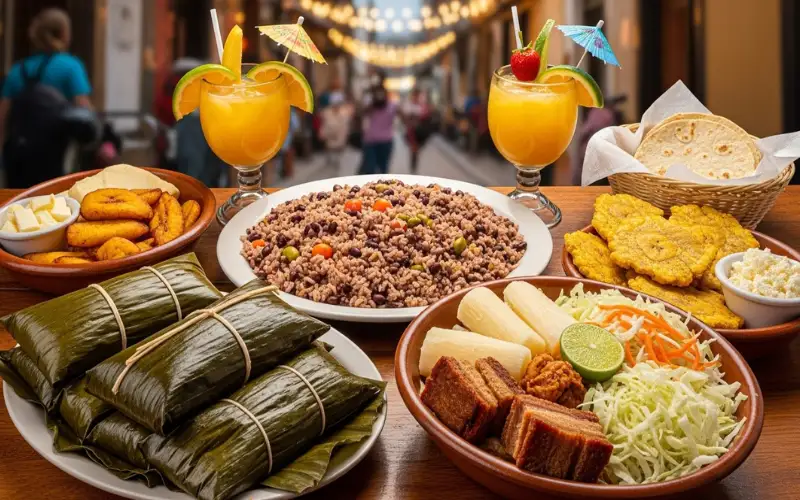
The first meal that made me addicted to Nicaraguan food was a good nacatamal I had on a Sunday morning. It was a mess, wrapped in a gigantic banana leaf, and one of the best things that I have ever tasted in my mouth.
It includes all that you need to know on the national food of Nicaragua to snacks that can only be found at the roadside of fritangas. I am referring to 30+ dishes, drinks, and desserts that make the Nicaraguan cuisine one of the best secrets of Central America.
The Reason Why Nicaraguan food is So Special
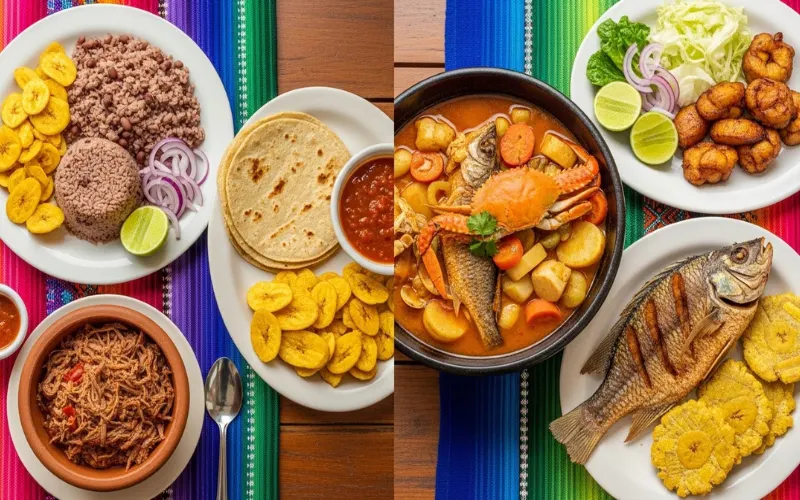
This is what came as the biggest surprise to me about food in Nicaragua: it is not a single cuisine. It is fundamentally two totally different food worlds sewn together with the borders of one country. On the pacific side, they cook using corn, beans and beef. Coconut, seafood, and spice are the driving power behind the Caribbean coast.
The division thereof renders Nicaragua food infinitely more compelling than many might assume. You can have a plate of gallo pinto breakfast in Granada and next evening fly to Bluefields and have coconut bread and spicy rondon. None of the other Central American countries yank off that kind of range.
Indigenous and Colonial Roots That Shaped the Food
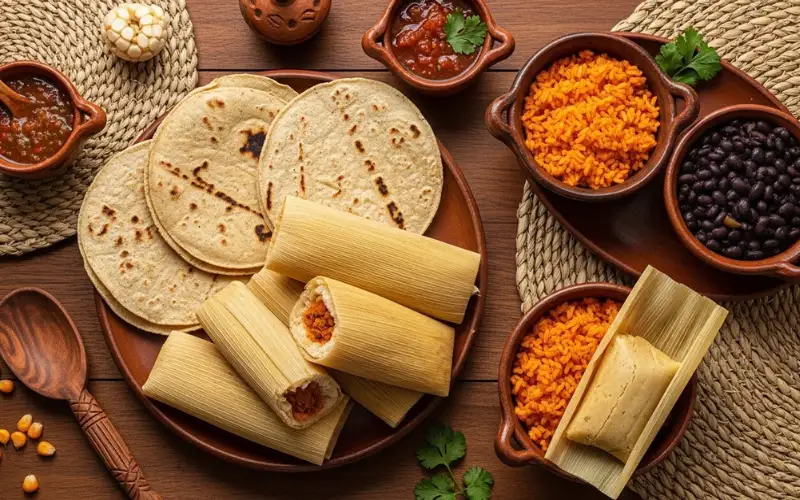
This area had the Chorotega and Nicarao peoples, who had been cultivating corn more than 4,000 years before the arrival of the Spanish in 1522. Nicaraguan people mean when they say that they are children of corn (Somos hijos del maiz) and they are not being a joke. Tortillas contain corn, the tamales, the drinks and even the desserts.
Spanish colonists introduced rice, pork, beef and dairy. In 1640, African slaves who had shipwrecked in the Miskito Coast brought about coconut cooking and what is currently known as gallo pinto.
The influence of British colonialism on the Caribbean side included meat patties and sugar based sauces. All these layers were piled up and what we today refer to as traditional food in Nicaragua.
The Pacific vs Caribbean Divide
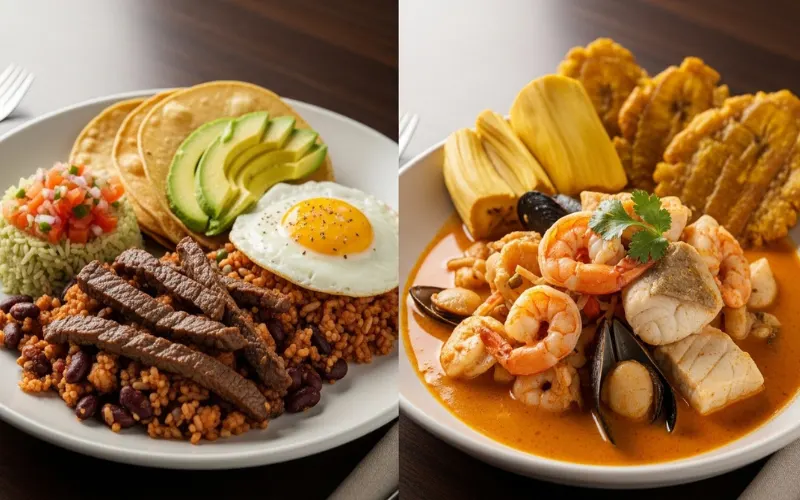
Nicaraguan food in the Pacific coast is lean and hearty. Imagine grilled meat, red beans, plantains, and corn tortillas. The Caribbean coast is audacious in using coconut milk, scotch bonnet peppers, and fresh seafood. Pan de coco is used instead of tortillas there and that too shocked me the first time I sighted it.
More than 1,060 dishes, drinks, desserts and breads were recorded by the Nicaraguan Institute of Culture in the country. That number is still growing. That amount of gastronomic diversity is quite impressive to say the least, considering the size of the nation (approximately 7 million people).
Gallo Pinto: The National Dish Everyone Argues About
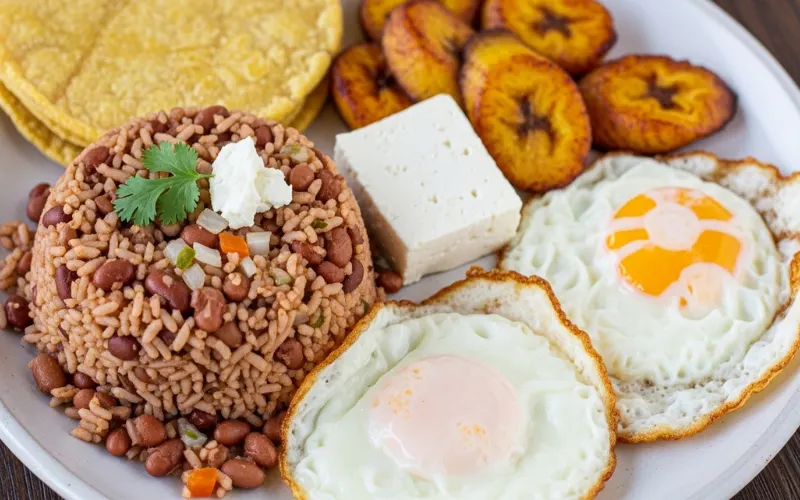
When you inquire of what is the most popular food in Nicaragua, they will always say gallo pinto. Always. The name translates to spotted rooster as the white rice is punctured when it is mixed with colored beans. This is eaten by Nicaraguans at the breakfast, lunch and dinner. It forms the foundation of any meal.
The dish has Afro-Caribbean origins and it was first discovered within the banana plantation workers on the coast. It is so easy on the paper, rice, red beans, onions, oil, salt. But the technique matters. You must have day-old rice, and the beans must also be cooked in the same pan with the rice, till all is that characteristic color.
The Nicaragua vs Costa Rica Rivalry
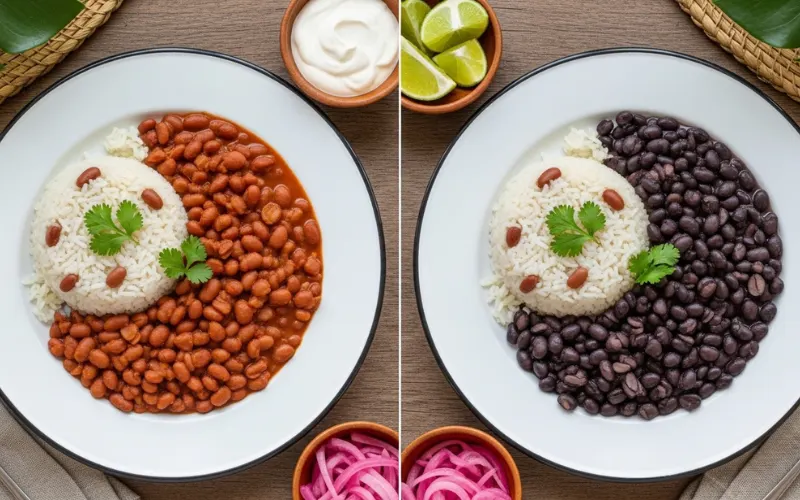
Gallo pinto is considered to be a national dish in both countries and the truth is that the beef between the two is a little humorous. Costa Rica also prepared approximately 1,000 pounds of food in 2003 to a Guinness book of record. Nicaragua retaliated with 1,200 pounds. Costa Rica became nuclear and served 51,000 individuals at a single sitting by 2009.
The real difference? Nicaragua uses red beans. In Costa Rica, black beans are used and Salsa Lizano is added. Being a person who has already tried both variants, I will tell that Nicaraguan style strikes somewhat different. It is less complicated and leaves the flavor of the beans to speak.
How Gallo Pinto Changes by Region
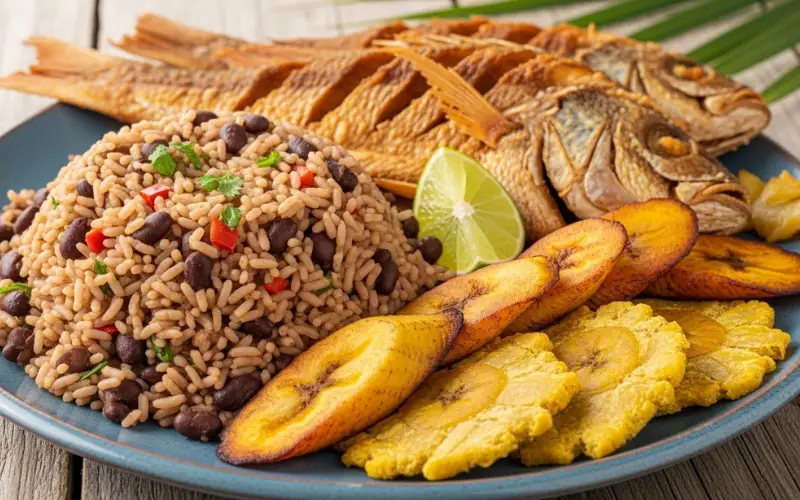
In the Caribbean coast, the cooks prepare gallo pinto using coconut milk in place of plain oil. It also adds a mild sweetness to the rice that compliments fried fish quite unexpectedly well. You will have it served in Managua and Granada, served with fried cheese and scrambled eggs, maduros and thick corn tortilla.
Nicaraguans refer to themselves as Pinoleros (named after pinolillo, the national drink) though the true representation of the identity of the people is gallo pinto. By passing on this meal, you are not trying a real meal of authentic Nicaraguan food.
Must-Try Main Dishes That Define Nicaraguan Cooking
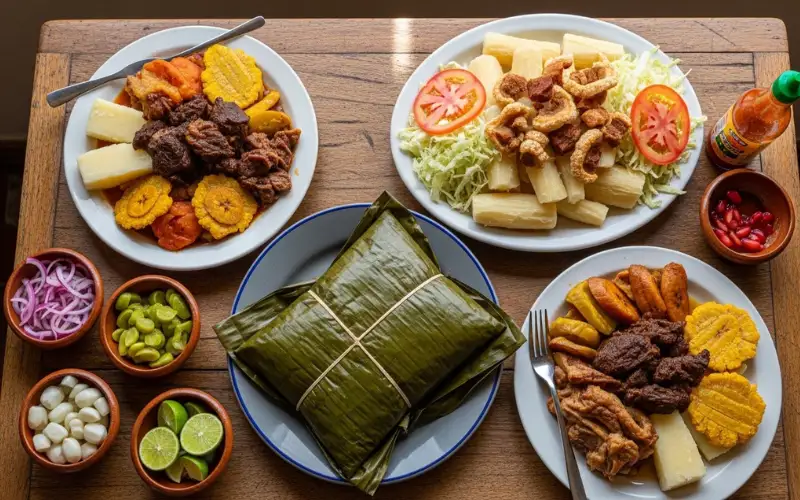
In addition to gallo pinto, the popular foods in Nicaragua is biased towards slow cooking, wrapping in banana leaves, and aggressive seasoning involving achiote and sour orange. These are actually the Nicaraguan dishes that are the source of excitement by the locals.
Nacatamal
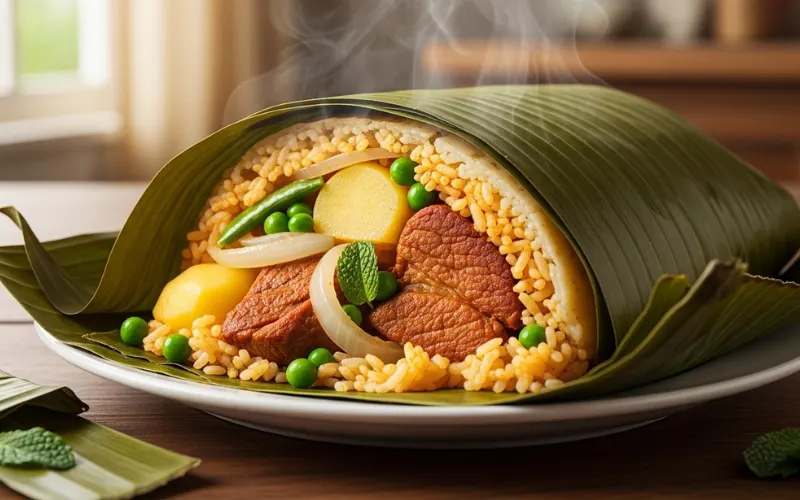
Gallo pinto being the daily bread, the feast on the weekend is the nacatamal. It is called by the Nahuatl: nacatl (meat) and tamalli (tamale). This is something that existed before the Spanish Conquest and it is huge in comparison to a Mexican tamale. It is corn dough full of pork or chicken, rice, potatoes, tomatoes, onions, olives, and occasionally raisins.
All is rolled into banana leaves and it is steamed away. They are prepared on Friday or Saturday in the family and on Sunday morning you will notice signs of HAY NACATAMAL outside the houses selling fresh batches. The buried chile congo pepper is a family game: the first to bite into it is roasted by the rest at the table.
Vigoron
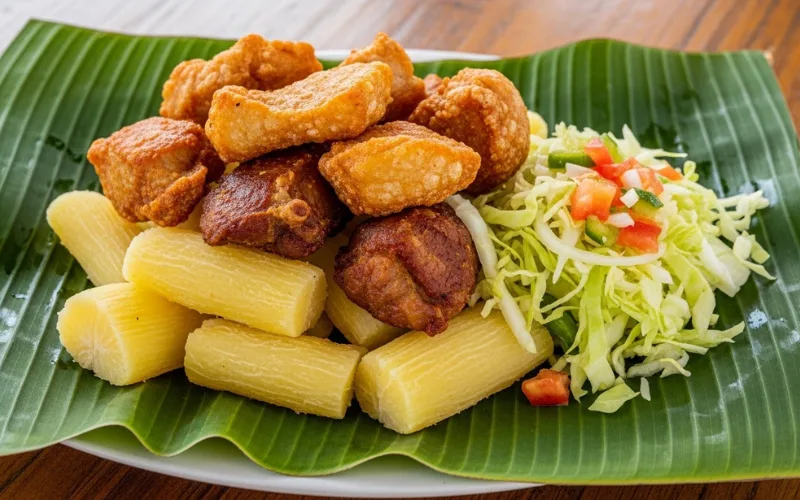
This was painted in Granada, in 1914 by a lady known as Maria Luisa Cisneros Lacayo, who was better known as La Loca. It was named after a medicinal tonic advertisement that she had read, one of the best of all Nicaraguan traditional food origin stories. It consists of boiled yuca, crispy chicharrones and a vinegar-cabbage salad with vinegar and mimbro (sour cucumber tree fruit).
This is street food at its best, being served on a banana leaf in the main square of Granada. The well known sellers all have nicknames: El Gordito, La Pelona, La Perla, La Abuela. However, in my opinion, the best introduction to the traditional food of Nicaragua is vigoron.
Indio Viejo (Old Indian)
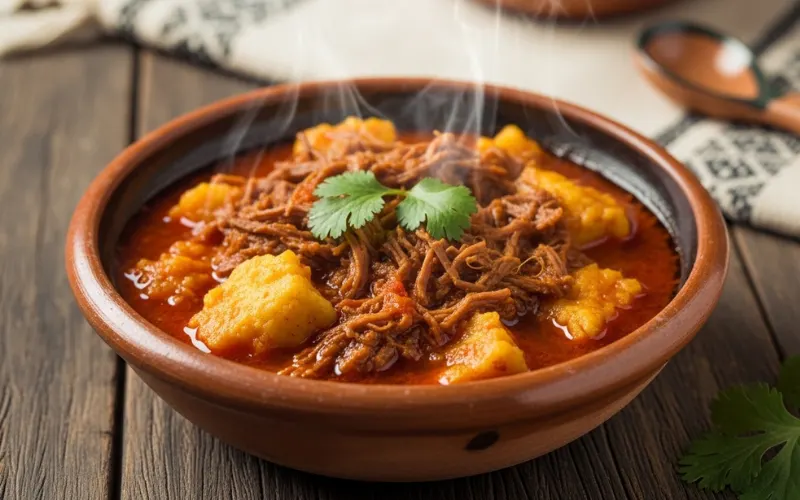
It is one that comes with a legend. When Spanish conquistadors arrived in one of the native villages and inquired of the village leader what was cooking, the village leader replied that it was an old Indian who died yesterday. The terrified Spaniards fled away as the whole tribe burst into laughter and drank their corn stew undisturbed.
The real one is shredded beef or chicken cooked into a thick corn masa base in a combination of onions, garlic, tomatoes, sweet peppers, achiote (to give it the orange look) and sour orange juice.
It boils down to porridge-like consistency which is far more gratifying than it may appear. The cities that are known to make the best version are Jinotepe and Diriamba.
Baho (Vaho)
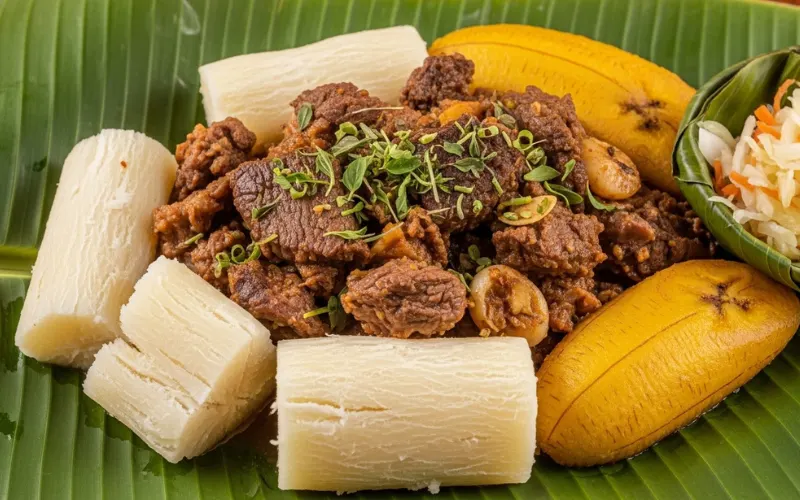
Baho translates to steam or mist in the Nicaraguan slang and this is precisely the way it is cooked. Beef with saltation is marinated in bitter orange and piled over with green plantains, ripe plantains and yuca in a pot lined with banana leaves. The entire process is cooked between four and eight hours. It is a day-long cooking project no joke.
It is the traditional Sunday lunch meal and also doubles up as a legendary hangover remedy. Diriamba prepares the baho which most people find to be the best. Everything is bound together by the pickled cabbage-tomato salad in the top. It is among the Nicaragua famous dishes that tourists usually overlook due to the time taken to prepare it.
Rondon (Run Down)
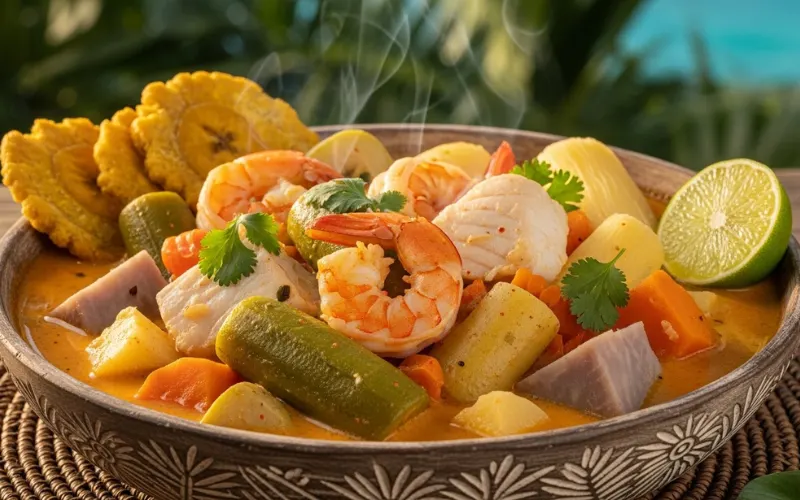
Rondon is Caribbean coast cooking at its finest and it is not even the slightest idea of what can be found on the Pacific side. The name is derived in English (run down), whatever the cook can run down and put in the pot.
It was originally prepared using green sea turtle (which this time is primarily crab, lobster, fish, or shrimp), but cooks in coconut milk and includes yuca, plantains, breadfruit and a local herb known as nargan.
Bluefields, the seat of rondon, is its spiritual home and the one that is best of all is made with small seabob shrimp (known as chacalines). This is the place to begin, should you wish to get acquainted with the Nicaragua local cuisine in the Caribbean side.
Other Main Dishes Worth Knowing
| Dish Name | What It Is | Where to Find It |
| Chancho con Yuca | Fried pork marinated in sour orange and achiote, served with boiled yuca and cabbage salad | Everywhere, especially Managua fritangas |
| Sopa de Mondongo | Colonial-era tripe soup slow-cooked with vegetables and herbs | Masatepe is the traditional home |
| Arroz Aguado | Soupy rice with chicken or pork, flavored with yerba buena (mint) | Home kitchens and comedores nationwide |
| Carne Asada | Grilled beef, often called the king of Nicaraguan street food | Every fritanga in the country |
| Pescado a la Tipitapa | Fish in a rich tomato-wine sauce, named after the town of Tipitapa | Tipitapa restaurants and upscale Managua spots |
| Sopa de Queso | Thick cheese soup with corn dumplings, a must during Lent | Nationwide during Easter week |
| Arroz a la Valenciana | Nicaraguan paella, also called “arroz de pinata” at birthday parties | Birthday celebrations and family gatherings |
Nicaraguan Street Food and Fritanga Culture
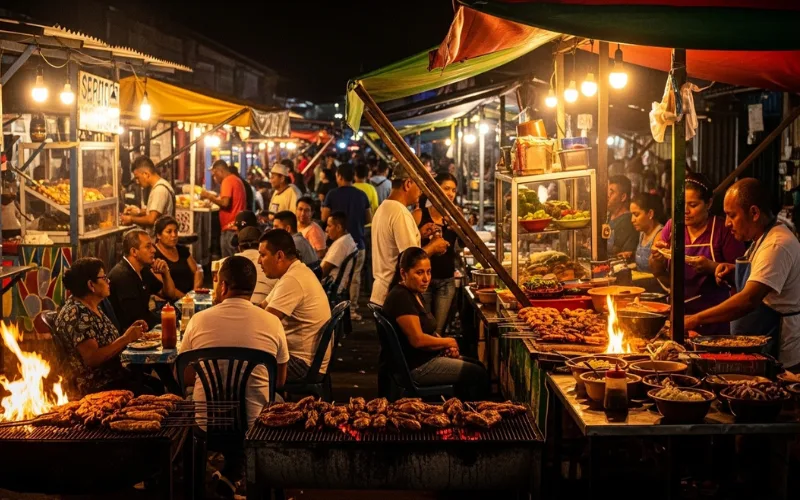
Going to the sit-down restaurants is not important, in case you actually want to know what do Nicaraguans eat on daily basis. Hit up a fritanga. This is the spirit of popular Nicaraguan food , and it is almost free of charge.
What Is a Fritanga?
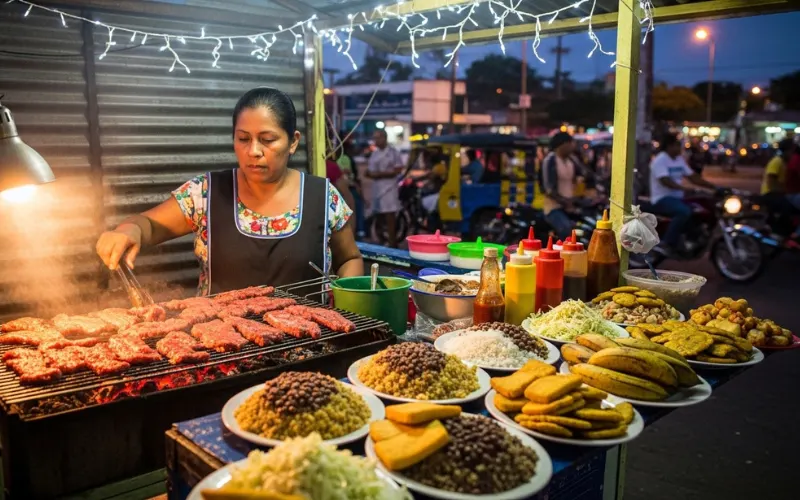
A fritanga is some street food booth, some sort of an open air barbecue, some sort of an outdoor neighborhood hangout. The name is a Spanish origin word, frito (fried), although it is only in Nicaragua that the term is applied to mean both the food and the location where it is consumed. At night women build small charcoal grills and prepare carne asada as well as queso frito.
The entire arrangement can be dated back to the Managua earthquake of 1931, when people were forced to cook on the streets to survive. It has become the heart of the food culture in Nicaragua.
One plate of a fritanga costs you between 1 and 3 dollars. It was even the subject of a love song written by the band La Cuneta Son Machin titled, Amor Fritanguero.
Quesillo
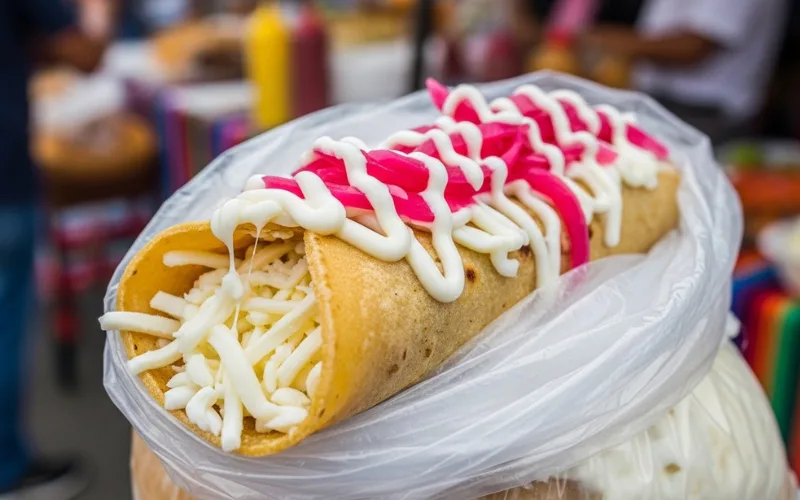
Two towns dispute about the inventor of the quesillo, La Paz Centro and Nagarote, which are between Managua and Leon. It is a hot tortilla with stretchy white cheese of the Chontales dairy area, pickled onions and a liberal measure of sour cream. The entire thing is in a plastic bag which is awkward until you attempt to consume it in any other manner.
The drink to accompany the traditional dish is the tiste which is to be served in a gourd cup. Peddlers that pass by buses and the market are singing Quesillo, quesillo! and truly that sound is an extension of the musical accompaniment of any trip to Nicaragua. It is among those famous foods in Nicaragua that is almost free and yet serves huge.
Guirila
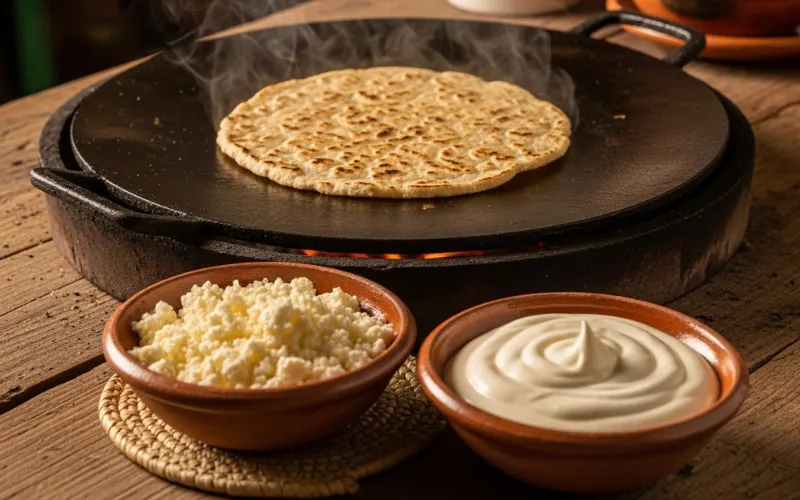
Guirila is a sweet tortilla prepared of young white corn, cooked in banana leaves on a comal which is a flat griddle. It originates in the north highlands and particularly in Matagalpa. It is served with cuajada (fresh cheese curd) and a spoon of sour cream at the top.
The texture is in complete contrast to a normal tortilla. It is creamy, a bit sweet and its mild corn taste is the perfect match with salty cheese. This is the most comforting Nicaraguan food.
More Street Eats Worth Trying
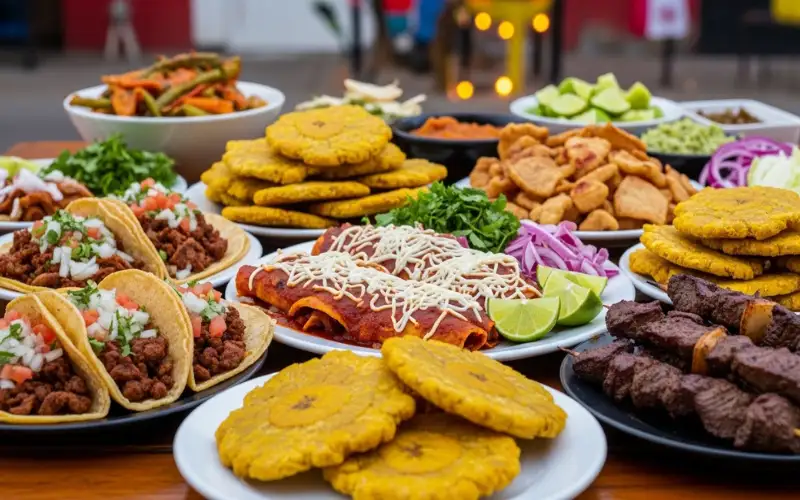
Nicaraguan tacos and enchilada are by no means similar to the Mexican ones. Enchiladas are Nicaraguan dishes that are basically meat-filled, deep-fried stuffed corn tortillas along with rice and chili.
Nicaraguan tacos are fat rolled tortillas that are stuffed with shredded meat and fried to a crisp topped with cabbage and sour cream. Tajadas (sweet fried ripe plantain slices) and tostones (green plantain that has been fried twice) are present at every fritanga.
Fried balls made of yuca-flour and filled with cheese and sprinkled with the cinnamon honey syrup. They are a weekend and holiday indulgence which I sincerely imagine about too frequently. The last in the street food selection is carne pinchada (meat on a stick, in other words, Nicaraguan kebabs).
Nicaraguan Desserts and Sweets
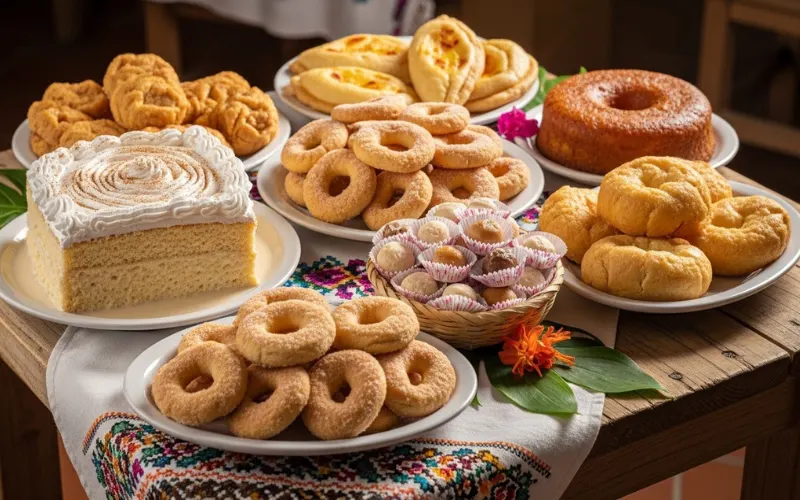
Nicaraguans are very sweet and the dessert competition here is far much deeper than most people think it is. This part of Nicaraguan food names will attract your attention in case you are fond of baking or simply eating sweet things.
Tres Leches Cake
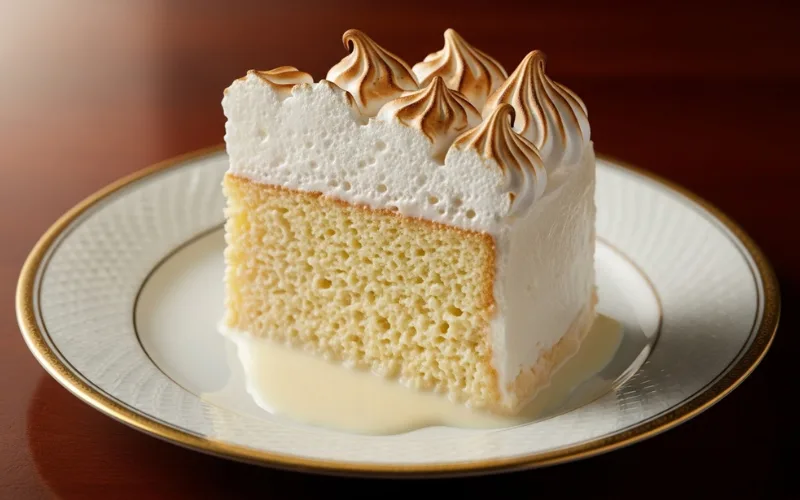
Nicaragua has been credited with the invention of tres leches cake by most sources and I personally believe it. It is said that the original recipe was originally printed on cans of condensed milk sold in Central America.
It immigrated into the US via the exiles of the US by Nicaraguan immigrants such as the Somoza and Wong families who established Los Ranchos steakhouse in Miami.
It is a sponge cake dipped in evaporated milk, condensed milk, heavy cream and meringue, which follows. It is wetly, impossiblely, moist. Tres leches has become one of the best cakes in the world, and when one tries it in Nicaragua it is a completely different experience to the bakery ones abroad.
Pio Quinto
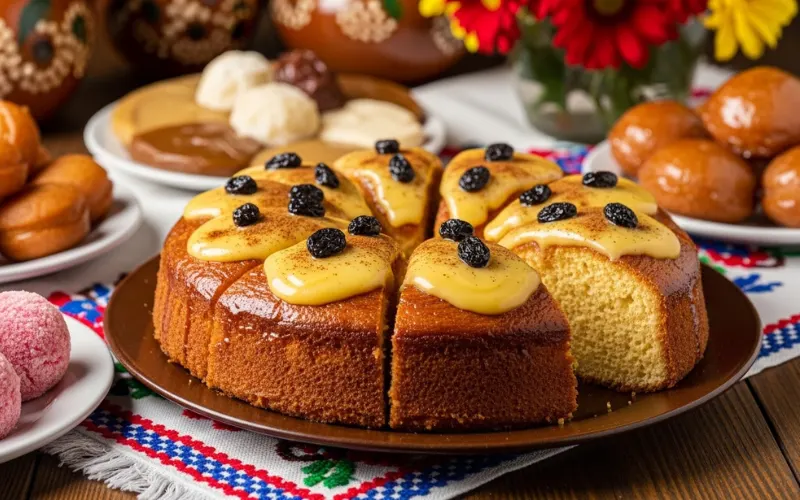
It is the dessert that competitors continue to miss and possibly the most unique sweet in Nicaragua. The Christmas cake of the country is called Pio Quinto named after Pope Pius V. Rather than milk (such as tres leches), the sponge is moistened with rum and batter is made with both flour and pinol (toasted white cornmeal), a consistency that is found nowhere else.
It is crowned with atolillo custard, raisins, prunes, cinnamon.
The version of Dona Pinita in Managua is what everybody is talking about. When you finally have a chance to taste one popular Nicaraguan food dessert, it is better to be this one.
Rosquillas
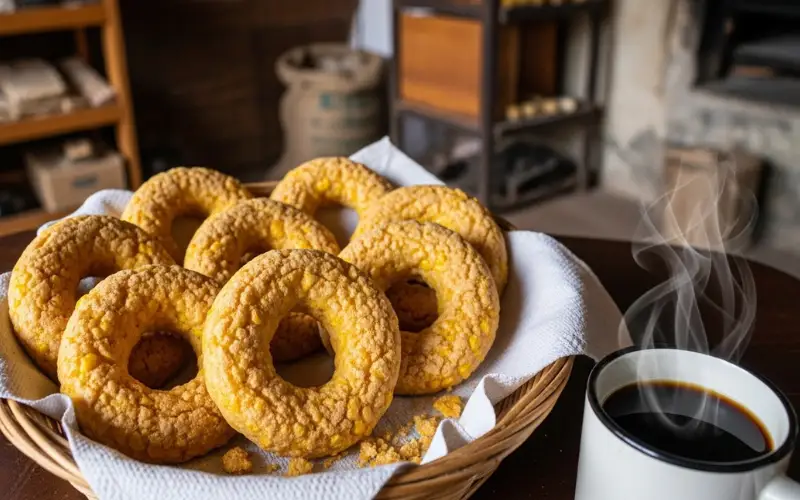
The capital of rosquillas is Somoto and there are more than 35 factories where these type of crackers consisting of rings and filled with corn and cheese are made.
One woman called Maria Luisa Nolasco was the first to invent the process of producing coal-fired ovens which give them their famous crunch. The filling is plain: masa harina, curd cheese, butter, and milk.
This is to put them in coffee and leave them in it between 20 and 30 seconds. The resulting effect of that quick dip is that they are no longer crunchy; instead they are this soft-crispy hybrid.
Semana Santa is baked in large quantities, and they are one of the traditional foods in Nicaragua that everyone in a family has a view about. When you like baked goods of other cultures, they will be placed side by side with desserts that start with N all over the world.
Cajetas and Other Sweets
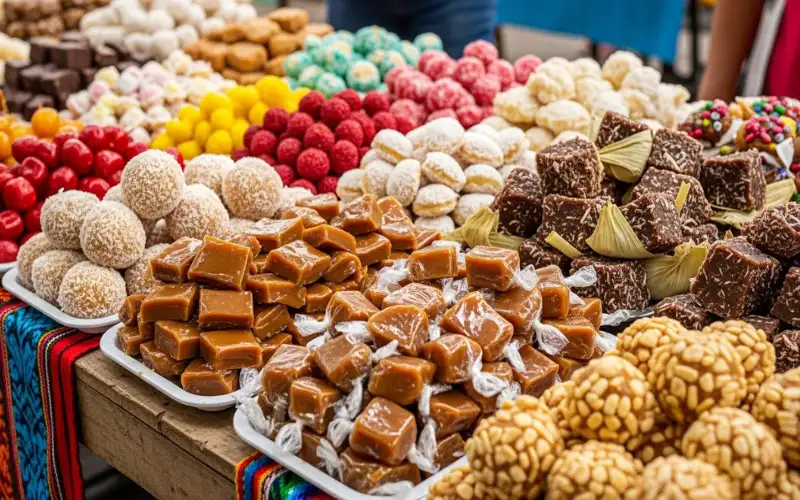
Cajeta de leche is milk caramel candy and cajeta de coco is a ball of coconut fudge that is coated with grated coconut. They both belong to the Masaya and Diriomo region. In case you are a fan of coconut-based desserts,, the cajeta de coco will be your dish.
One of the La Purisima traditions is ayote en miel (squash cooked in honey syrup). Gofio bars are prepared out of corn, ginger, and sugar powder. Perrerreque is a cheese and corn cake which Leon says she owns. And sopa borracha (drunk soup) is a rum cake and is in essence the wild cousin of Pio Quinto.
Nicaraguan Drinks and Beverages You Should Not Skip
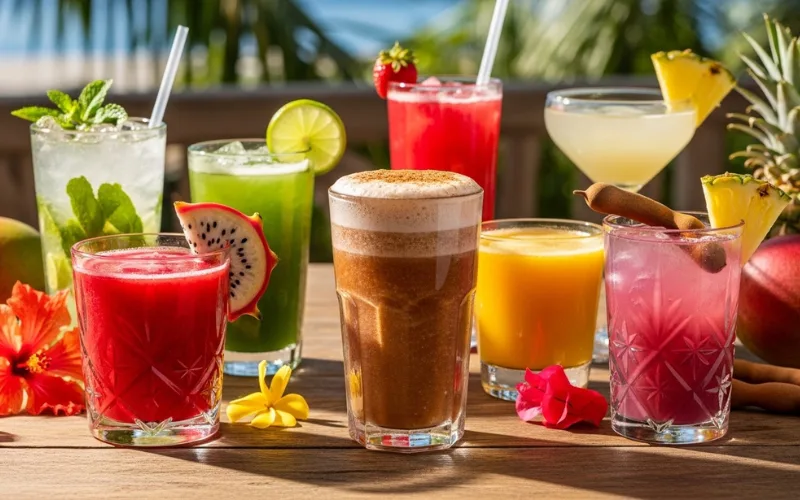
The omission of this section is found in nearly all of the competitor articles, and that is a travesty. The food is equally interesting as the drinks of Nicaragua. A few of them are world-class, some of them are ancient, and some are weirdly wonderful.
Pinolillo: The National Drink
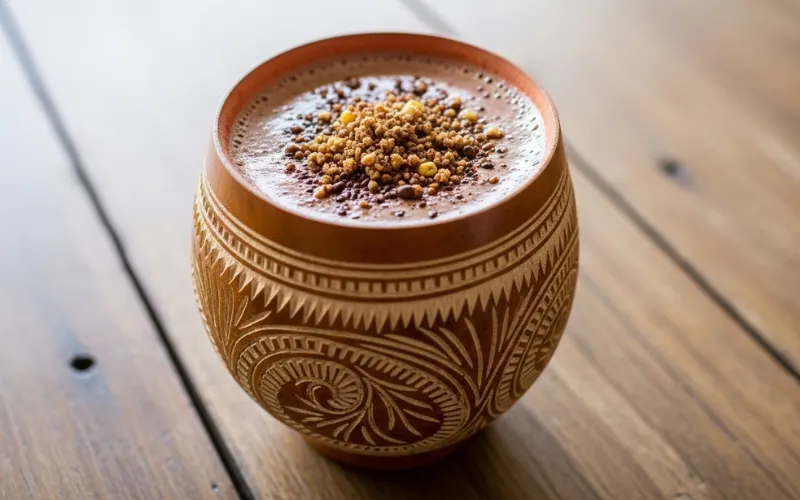
Toasted corn, cacao, cinnamon and occasionally cloves or allspice stirred with water or milk. The texture is rough and requires a time to get used to, nevertheless, once you are inside you are inside. It is customarily presented in jicaro gourd shells, which complete the entire experience.
Nicaraguans identify themselves as Pinoleros and call the expression Soy puro Pinolero, Nicaraguense por gracia de Dios! is, in a word, a statement of national identity. Associated with a form of chocolate-based foods that can be traced thousands of years in the area is the cacao in pinolillo.
Flor de Cana Rum and the Macua Cocktail
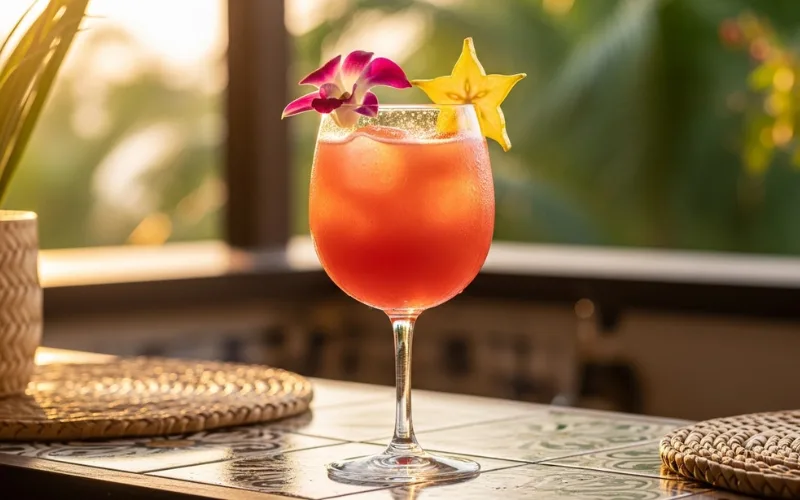
Flor de Cana is world class. It is made in San Cristobal volcano (the tallest volcano in Nicaragua) by the Italian immigrant Alfredo Francisco Pellas Canessa and distilled 5 times and kept in bourbon barrels covered with plantain leaves up to 25 years. In 1980s Sandinista Revolution, production accumulated stocks since they could not export them. By 1990 the largest store of old rum in the globe was in Nicaragua.
In 2006, a pediatrician, Dr. Edmundo Miranda Saenz, of Granada, invented the cocktail which became the national cocktail of Nicaragua, the Macua. His recipe of white rum, guava juice, lemon juice, orange juice, and simple syrup was found to win a Flor de Cana competition. Named after the macua bird. It is cool, and very comforting and perilous to consume. Flor de Cana also opens a world of rum-soaked confection in case you are a fan of the spirit-infused treats.
Coffee Culture
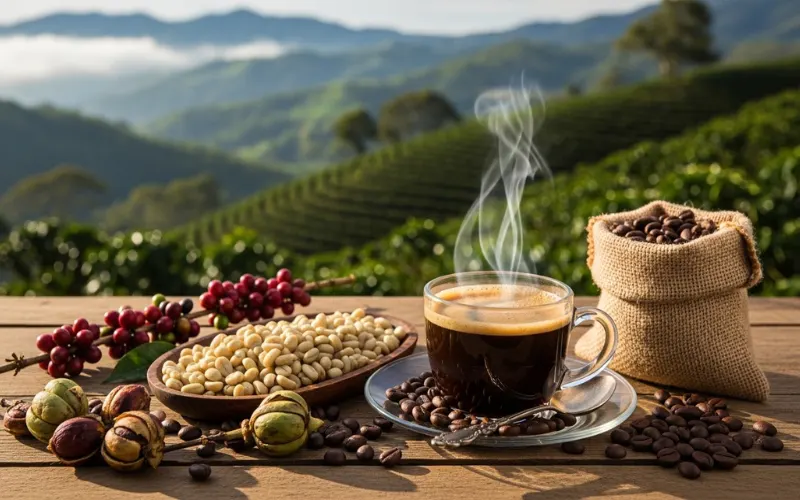
Nicaragua ranks as the 12 th largest coffee producer in the world and it is 100 percent Arabica. The three largest parts of the growing regions are Jinotega (approximately half the production), Matagalpa (also referred to as the Pearl of the North), and Nueva Segovia (with the highest altitude, with floral notes). The flavor profile is balanced in medium-to full body and chocolate/caramel.
At each and every meal, coffee appears and declining a cup when one has one is inconspicuous. This is the simplest form of hospitality in Nicaragua.
The combination of local coffee with a coffee walnut cake would really be a dream. Various varieties of the Maragogype, the Elephant Bean, is cultivated in Jinotega and yields large beans that have a better and smooth flavor.
Frescos, Chicha, and Everything Else
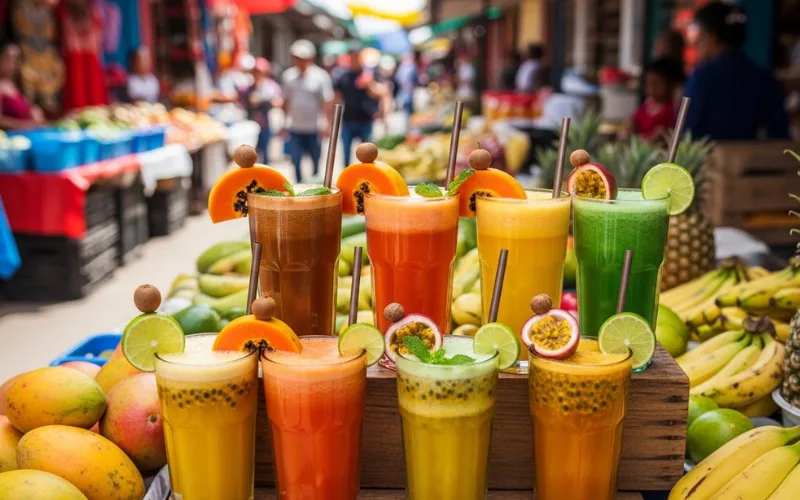
there are frescos naturales (natural fruit drinks), tamarind, papaya, melon, guanabana, pitahaya, passion fruit. Tiste is also thicker than pinolillo and it is usually served with quesillos. The drink is chicha, a fermented drink made of corn and a potent, more boozy version of the drink is known as chicha bruja. Cususa is Nicaraguan moonshine corn whiskey at approximately 48 percent alcohol.
In the Caribbean coast, wabul is prepared using boiled smashed plantains and coconut water. The most popular beer is Tona (a light golden Lager) and Victoria is its immediate sister. Semilla de jicaro is an acidic nutritious beverage prepared with toasted jicaro seeds in milk. The menu of drinks is enough to demonstrate why Nicaraguan food should receive an even greater publicity than it receives.
What Nicaraguans Eat in a Typical Day
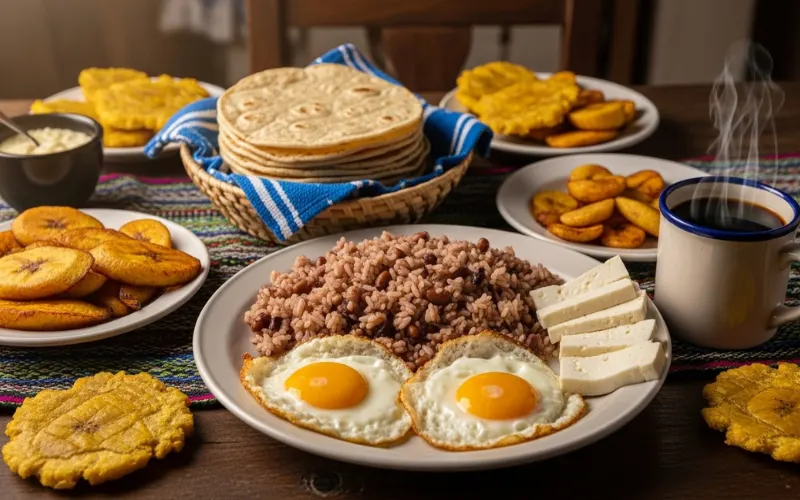
Knowing what do Nicaraguans eat on the regular day can get you an idea of how all these meals are interconnected. It is not random. Nicaragua meals have a definite rhythm which is based on the presence of the gallo pinto, corn and what is fresh in the market.
| Meal | What You Will Typically Eat | Notes |
| Breakfast | Gallo pinto, fried or scrambled eggs, queso frito or cuajada, maduros or tostones, corn tortillas, coffee | Sundays: nacatamales with bread and coffee |
| Lunch | Grilled meat or chicken, gallo pinto, cabbage slaw, tajadas or maduros, tortillas | The main meal of the day. Baho on Sundays. |
| Dinner | Lighter: grilled fish, soups like sopa de queso, vegetables with tortillas | Often from a fritanga in the evening |
| Snacks | Quesillos, tajadas, guirilas, raspados, rosquillas with coffee, bunuelos | Fresh jugos naturales throughout the day |
Weekend eating is different. Saturday is the prep day of nacatamal, and morning on Sundays are spent eating them with the family. Sunday lunch is commonly baho and this is cooked slowly but surely as the family relaxes.
It is not so much about the classy eating but more about sitting around the table where food that has taken hours to prepare is served. It is that meekness that has made typical food of Nicaragua so unique.
Regional Food Guide: Where to Eat What in Nicaragua
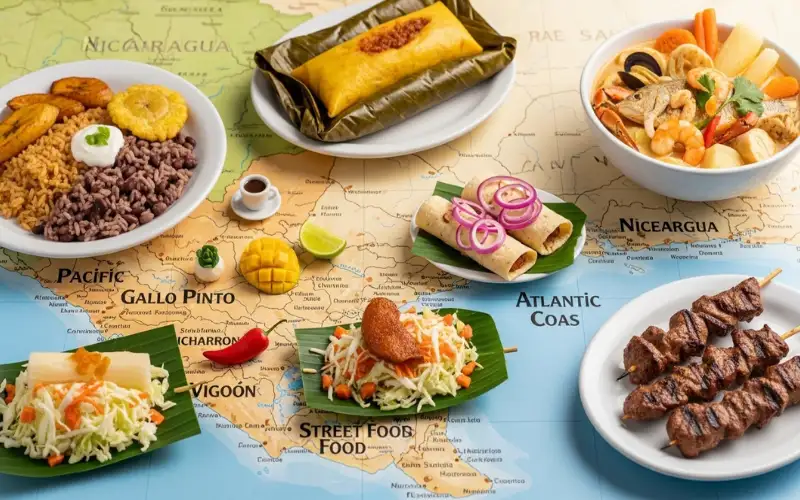
The absence of a regional breakdown is one of the largest missing components of most articles on food in Nicaragua. The fact is that, it is not so much what you eat, but where you eat that counts. The following is a city by city description of the top food in Nicaragua.
Pacific Coast Favorites
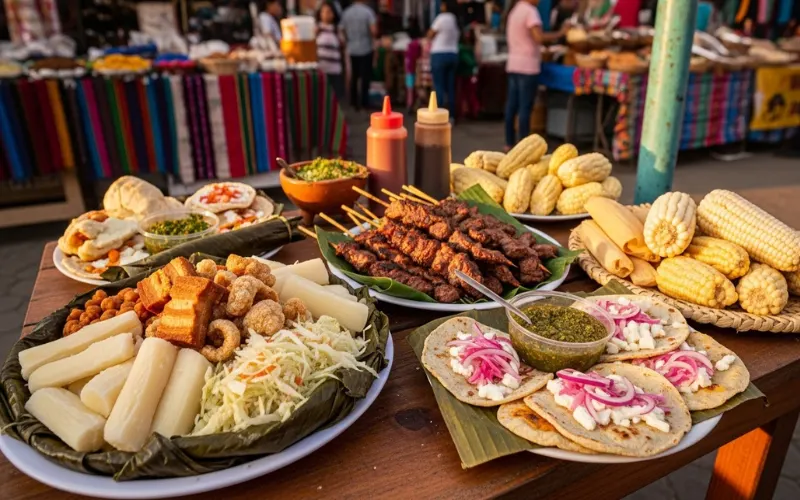
The capital of vigorons is Granada. Go to the central square and find the stand of El Gordito. Restaurant El Zaguan offers murderous conventional food and is renowned in steak food. Leon is the place of quesillos, perrerreque and street food in the market. Go to Mercado Central to get the real deal. They go to Masaya to find corn pastries, cajetas and chicha.
Managua is fritanga heaven. Rotonda Bello Horizonte is famous in having the traditional late-night fritanga stands where mariachis sing to you as you consume carne asada.
Diriamba is generally regarded as the place of the excellent baho. There are more than 35 rosquillas factories of Somoto. These are not only tourist traps but places of popularity of food in Nicaragua which locals visit.
Caribbean Coast Specialties
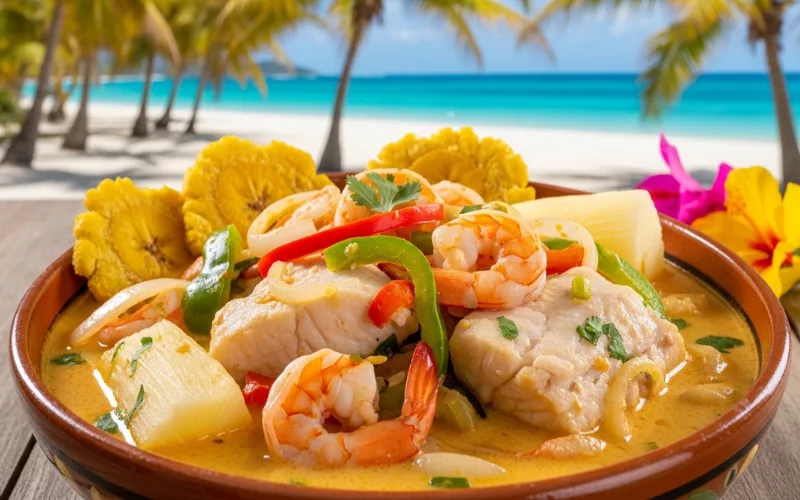
The capital of vigorons is Granada. Go to the central square and find the stand of El Gordito. Restaurant El Zaguan offers murderous conventional food and is renowned in steak food.
Leon is the place of quesillos, perrerreque and street food in the market. Go to Mercado Central to get the real deal. They go to Masaya to find corn pastries, cajetas and chicha.
Managua is fritanga heaven. Rotonda Bello Horizonte is famous in having the traditional late-night fritanga stands where mariachis sing to you as you consume carne asada. Diriamba is generally regarded as the place of the excellent baho. There are more than 35 rosquillas factories of Somoto. These are not only tourist traps but places of popularity of food in Nicaragua which locals visit.
Northern Highlands
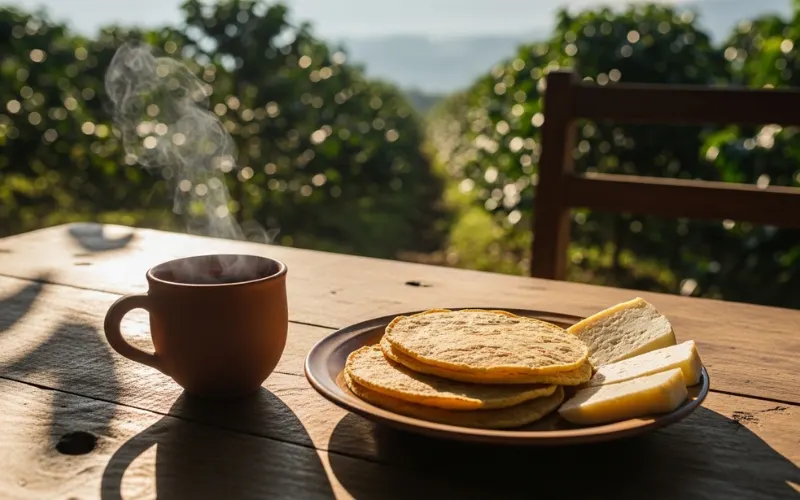
Matagalpa is a guirila land and the place of the Nicaraguan coffee. Selva Negra Ecolodge has seed-to-cup coffee tour and food based on the German settler traditions of the area. Esteli is a developing cafe environment with cafes such as Mocha Nana Cafe. Chontales is dairy land and the people here say that the rivers are milk and the rocks are curd.
The highlands have beef stews with yuca, fresh cheese at every meal, and local variations of tamales that you will not be offered anywhere. Nicaragua traditional dishes such as Montucas (chicken in banana leaf), Paco (masa with mashed green plantain and honey in fig leaf), and Tamuga (only found in Masatepe) are all omitted in most travel guides.
Nicaraguan Food Festivals and Holiday Traditions
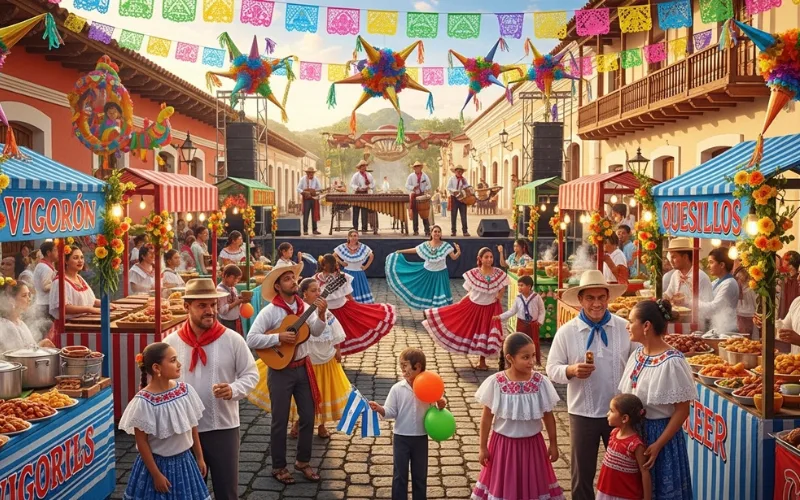
In Nicaragua there is no food and celebration. Nicaragua has some of the most interesting traditional foods that are only served during certain holidays and without them one would have missed much of the culture.
La Purisima and La Griteria (December 7)
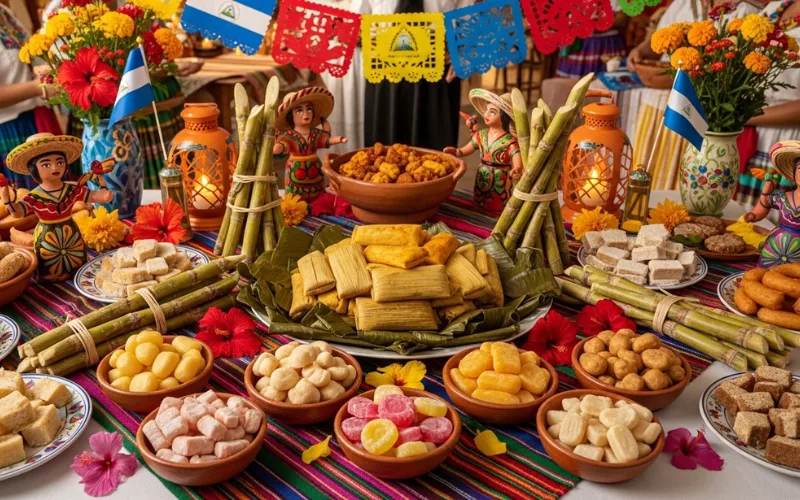
This is the largest holiday of Nicaragua and is all about food. The families celebrate the Immaculate Conception during nine days before the day of December 7. At 6pm, the 7th, groups go door to door. Somebody makes a call of Quien causa tanta alegria? and the answer is La Concepcion de Maria! Then the host presents traditional gifts in form of food known as “gorras.”
These gorras are gofio, cajeta de leche, chicha, ayote en miel, espumillas, sugar cane as well as nacatamales. All year round, families save in order to afford the spread. It started in the 18 th century in Leon where the monks were using candy and fruit to lure the believers. There is nothing in any other Central American county that comes near it.
Semana Santa, Christmas, and Palo de Mayo
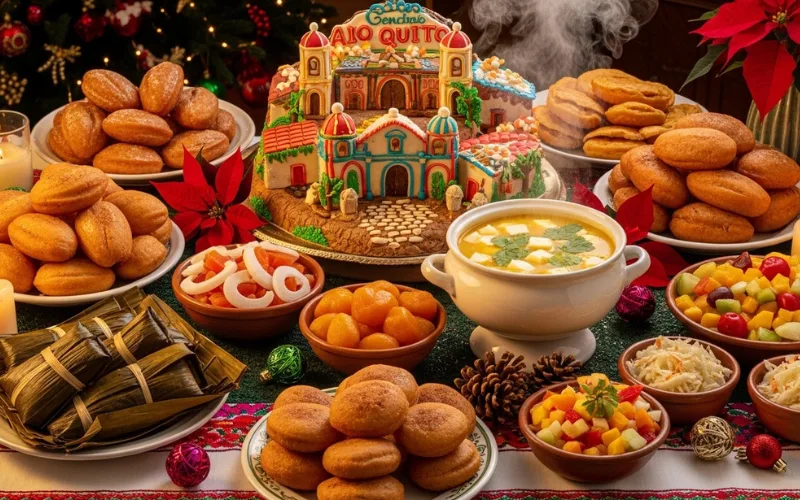
The highlight during the Easter week is sopa de queso. Observant families can no longer eat meat, thus cheese soups, gaspar fish soup, almibar (candied fruits) and bunuelos are the stars of the meal. Leon invents beautiful sawdust carpets known as Alfombras Pasionarias on the streets in this period.
Pio Quinto, almibar, nacatamales, stuffed chicken, and sopa borracha are some of the foods that come with Christmas. Palo de Mayo in May, a one-month festival in Bluefields, involves rondon served in roadside stands, reggae and Creole culture in full blast. In October, there is the Fiesta del Maiz, an event that celebrates the harvest of corn and offers cooking lessons and recipes.
Nicaragua Food Names at a Glance
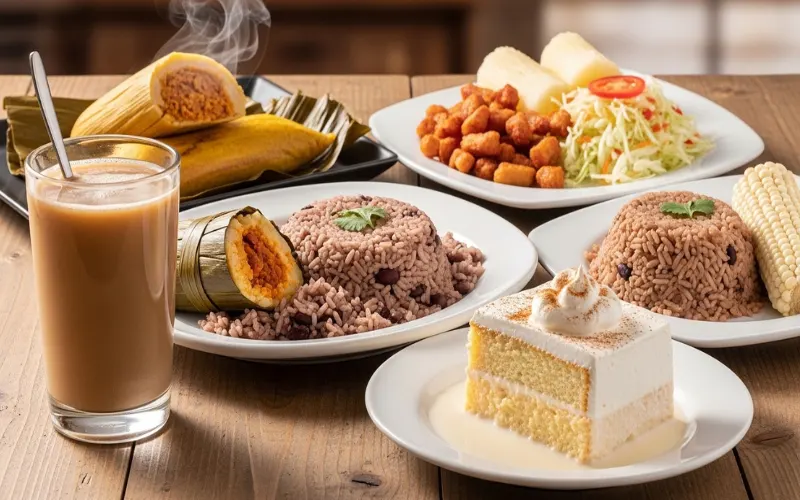
This is a rapid guide of the important names of food in Nicaragua along with their names, categories and descriptions so that you know what to order.
| Name | Category | Quick Description |
| Gallo Pinto | Main | Rice and red beans fried together, the national dish |
| Nacatamal | Main | Giant banana-leaf wrapped tamale with pork, rice, and vegetables |
| Vigoron | Street Food | Boiled yuca with chicharrones and vinegar cabbage slaw on banana leaf |
| Indio Viejo | Main | Thick corn masa stew with shredded meat and achiote |
| Baho | Main | Banana-leaf steamed beef with plantains and yuca |
| Rondon | Main | Caribbean coconut milk stew with seafood and root vegetables |
| Quesillo | Street Food | Tortilla with stretchy cheese, pickled onions, and cream in a bag |
| Guirila | Street Food | Sweet young corn tortilla with fresh cheese and cream |
| Tres Leches | Dessert | Sponge cake soaked in three milks, topped with meringue |
| Pio Quinto | Dessert | Rum-soaked sponge cake with cornmeal, custard, and cinnamon |
| Rosquillas | Snack | Crunchy ring-shaped corn and cheese crackers, best dunked in coffee |
| Pinolillo | Drink | Toasted corn and cacao drink, the national beverage |
| Macua | Cocktail | National cocktail: Flor de Cana rum with guava and citrus juices |
| Flor de Cana | Spirit | World-class aged rum from the base of San Cristobal volcano |
| Tona | Beer | Nicaragua’s most popular light golden lager |
Tips from Experience: Eating Your Way Through Nicaragua
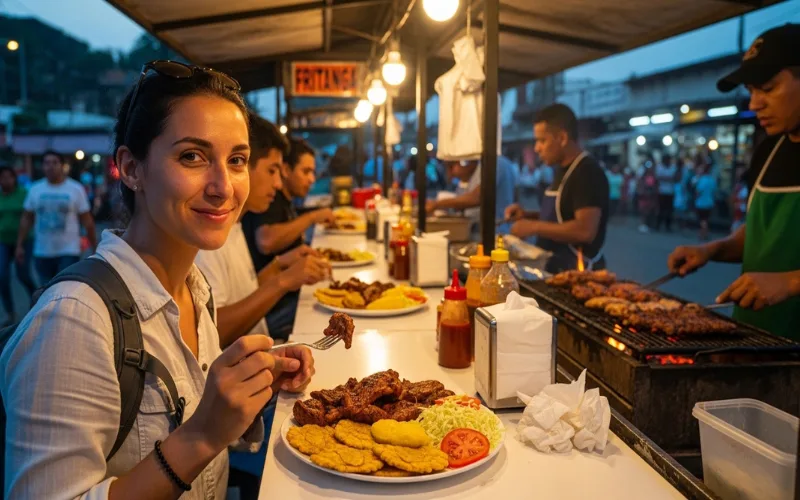
There are practical tips that do have a bearing after having delved deep into the Nicaraguan foods and where to get the best of them.
- Eat where locals eat. When there is a line of Nicaraguans at a 7pm fritanga that is your place. The restaurants in Granada which serve tourists sell half the taste at triple the price.
- Learn the Sunday rhythm. In the morning, nacatamales, at lunch bago. They are not there on a daily basis and hence plan around the weekend.
- Taste it all on a banana leaf. Vigoron, baho, guirilas. The foliage is not mere ornament. It gives food a mildly earthy taste and maintains its heat.
- Carry small bills. Large notes hardly ever find a taker in Fritangas and street venders. Maintain smaller denominations of cordobas.
- Do not be afraid of the market. The Mercado Oriental in Managua is an anarchy but the cuisine is fantastic. Always take a local with you and carry your valuables with you.
- Ask for chile on the side. The food of Nicaragua is not spicy per se. Hot sauce and chile congo are served on the side to ensure that you determine the degree of hotness.
- Dunk your rosquillas. It is okay to eat them in a dry state but 20 seconds to drown them in coffee is the trick. This all the Nicaraguan will say.
Mistakes to Avoid When Trying Nicaraguan Food
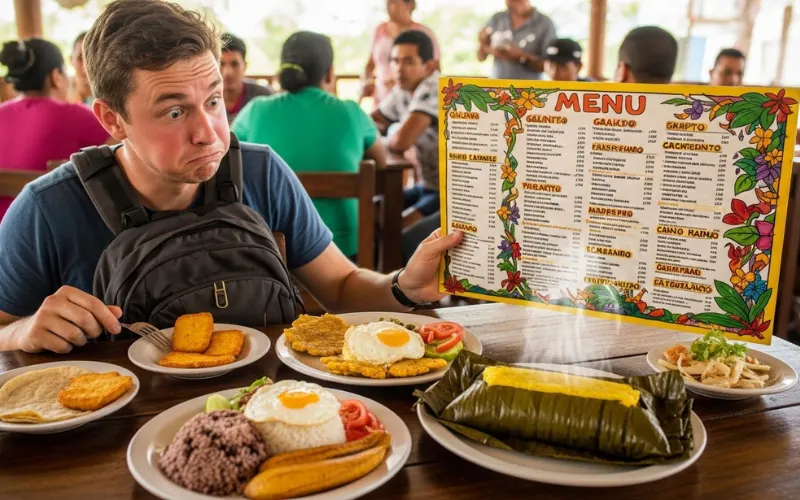
I find the same mistakes being reiterated again and again. Spare yourself the hassle and evade these usual pitfalls in venturing into foods of Nicaragua.
- Leaving the Caribbean coast out of the reckoning. Majority of the tourists remain in Granada and Leon. Thou hast lacked rondon, pan de coco, pati, and a whole new taste of the world.
- Mexican food, comparison to everything. Nicaraguan tacos, enchilada, and tamales are totally different. Come in new expectations.
- Only visiting tourist restaurants. Fritangas, home kitchens, and market stalls are the best sources of the Nicaraguan food. The fancy spots tend to be most artificial.
- Ignoring the drinks. Pinolillo, tiste, chicha, frescos naturales. It is not the mere drinks, but the cultural experiences.
- Going on a weekday and asking who has the nacatamales. They are a weekend food. Saturday prep, Sunday eating. Plan accordingly.
- Not attempting to go to Pio Quinto at Christmas. When you are in the country in December, this rum-spiked cake is the season dessert. Do not leave without it.
Final Thoughts
The Nicaraguan food lacks appreciation on the international level. It is a cuisine whose heritage spans the corn-based foods of the Pacific all the way over to coconut dishes of the Caribbean coast, and it is a cuisine that is worth the effort of one who is ready to go well past the common Central American stereotypes.
You are either planning a trip or you are simply curious of what is Nicaraguan food all about and I hope this guide will provide you with a true picture of what is on the table. Head away and find yourself a fritanga.
Frequently Asked Questions About Nicaraguan Food
What is the national dish of Nicaragua?
The national dish is called Gallo pinto. It consists of rice and red beans fried and served with almost all the meals. This is referred to as spotted rooster since the rice is spotted with the bean broth. It is shared by both the Nicaragua and Costa Rica with the former using red beans whereas the latter uses black beans.
Is Nicaraguan food spicy?
Not really, no. In comparison to Mexican food, majority of the Nicaraguan meals are spiced and not spicy. Hot sauce and chile congo peppers are never added in advance in order to add some heat. The Caribbean shore is more likely to make use of pepper than the Pacific one and even there it is not as spicy.
What is a fritanga in Nicaragua?
The term fritanga refers to a food type and the outdoor food kiosk where the fritanga is prepared. At night women put charcoal grills at dusk and grill meats, queso frito, gallo pinto, tajadas and tostones. It is the most genuine and cheapest method to dine in Nicaragua and most of the products are priced between 1 and 3.
Is Nicaraguan food similar to Mexican food?
Both dishes are very dissimilar and use some of the same ingredients such as corn, beans and tortillas. In Nicaragua, tamales are prepared much larger (nacatamales) and are covered not with corn husks, but with banana leaves. Nicaraguan tacos and enchilada are not tender, but deep-fried. There are no refried beans. The taste profiles are less intense and the shoreline of the Caribbean gives it a coconut-seafood flavor that Mexico lacks.
What do Nicaraguans eat for breakfast?
Breakfast A typical breakfast (desayuno tipico) consists of gallo pinto (fried or scrambled eggs), queso frito or cuajada cheese, fried or roasted plantains, corn tortillas, and coffee. Instead, families eat nacatamales on Sundays accompanied by bread and coffee.
What is pinolillo and why do Nicaraguans call themselves Pinoleros?
Pinolillo is a beverage that is composed of toasted corn that has been ground with cacao and cinnamon blended with water or milk. It is crunchy and tastes like deep corn-chocolate. In their national pride, the Nicaraguans refer to themselves as Pinoleros and the statement Soy puro Pinolero is simply the Nicaraguan way of stating that this is who I am.
What is the best Nicaraguan dessert?
The most well known is tres leches cake but I would choose Pio Quinto because it is more interesting. It is a rum sponge cake prepared with cornmeal and it is topped with custard, and it is a traditionally Nicaraguan one. Another dish to be tried is rosquillas in coffee.
Where should I eat in Nicaragua for the most authentic food?
The fritangas is the most traditional one in every city. At the main square of Granada, one can taste vigoron. There are legendary fritanga stalls in the Rotonda Bello Horizonte in Managua. In Bluefields, rondo is available in family-run restaurants. Other good markets include Mercado Oriental in Managua, Mercado Central in Leon.
What is the difference between Nicaraguan food on the Pacific and Caribbean coasts?
Corn, beans, beef, and mild flavors are cooked in the Pacific side. Coconut milk, seafood, scotch bonnet peppers and breadfruit are used in the Caribbean coast. The coast also substitutes tortillas with pan de coco. Rondon (seafood stew made of coconuts) is the Caribbean delight. They are closer to two cuisines within one country.
Is it safe to eat street food in Nicaragua?
Yes, with basic precautions. Eat in stalls that have high turnover (where you see many customers then the food is fresh). Do not eat raw salads or unpeeled fruit in case your stomach is weak. Eat cooked things at fritangas. Consume bottled water or closed drinks. Majority of the travelers have no problems eating the street food.
What is the most underrated Nicaraguan dish?
I would say baho. It is a time-consuming process and therefore you find it mostly on Sundays. Slices of salted beef, plantains and yuca are steamed in banana leaves until all fall-apart tender. The majority of the tourists never get to taste it as they did not know when the right day to taste it is.
Can I find Nicaraguan food in the US or UK?
Yes. There is a huge Nicaraguan diaspora in Miami, as well as a number of authentic restaurants. The Washington DC region, Los Angeles, and Houston also contain communities of Nicaraguan, which have restaurants and firangis. In the UK, it is more of a challenge to discover specifically Nicaraguan restaurants, although the Latin American restaurants may occasionally include gallo pinto or Nachtmaals (on menus).
Read Next: Wedding Cake Designs Every Modern Couple Should Try