


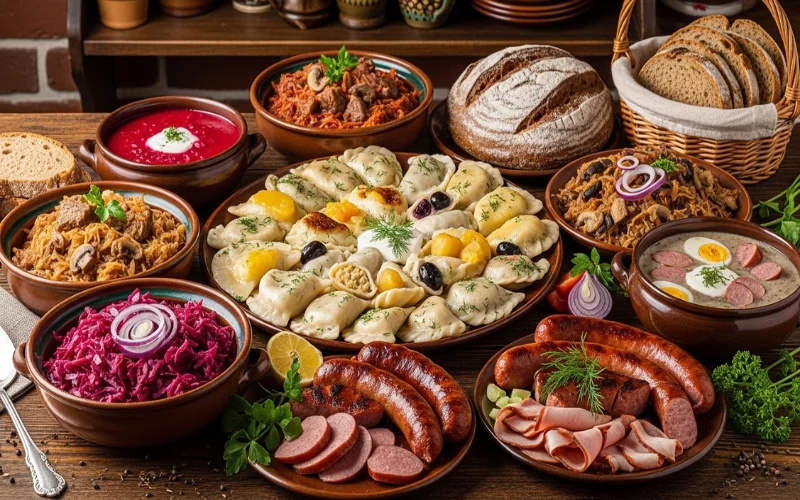

When you believe that Polish food begins and ends with pierogi, then you are in a world of surprise. The Polish cuisine is substantial, and the soups, smoked sausages, feasts at Christmas and pastry can only be dreamed of by a baker in France.
This guide is assembled after a gustation tour of Warsaw, Krakow, and the Tatra Mountains. And here is what you actually should know about the Polish cuisine.
What Is Polish Food? A Quick Look at Poland’s Cuisine
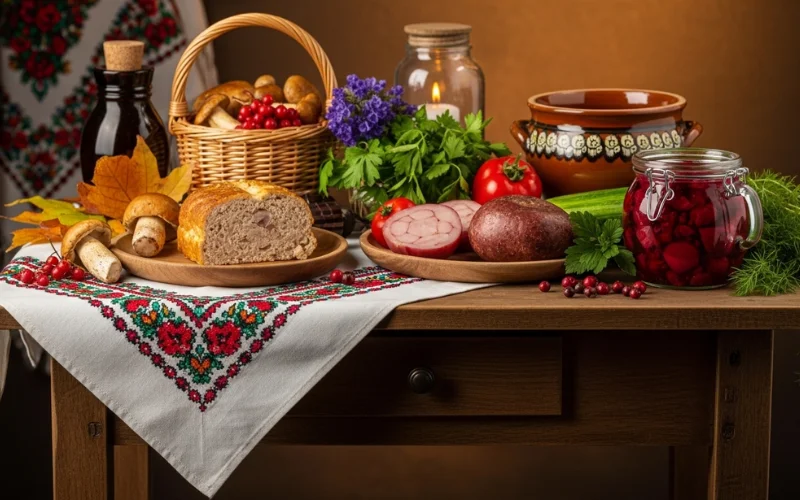
Then what is Polish food? Fundamentally, its comfort food was based on potatoes, cabbage, pork, rye bread and sour cream. But to designate it simple would be an injustice. Polish cuisine is full of historical layers in each plate, and each dish has an Italian queen, Jewish baker, or French chef.
Typical Polish food is based on what is in season. Winters bring with them heavy stews and dumplings. In summers, there are cold mountain-produced soups, fresh berries, and grilled cheese. It all is about home meals, family recipes and the fact that you should never go out hungry.
The National Dish of Poland: Is It Bigos or Pierogi?
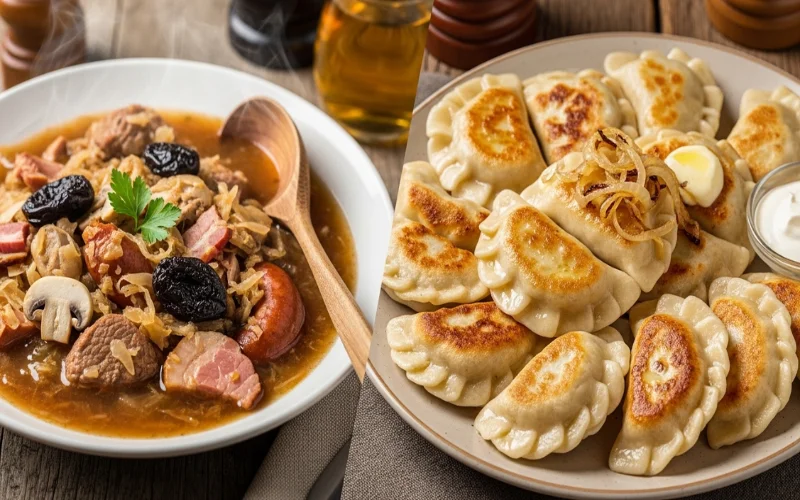
Ask ten Polishers, what the national dish of Poland is and you will have a good enough argument. It has no official answer but two dishes compete to win the title: bigos and pierogi. Both are the embodiment of the classic Traditional Polish food, but very differently.
The more well-known export is Pierogi. The whole of Chicago to London knows those fat little dumplings. But bigos has deeper roots. It was glorified by Adam Mickiewicz, the greatest poet of Poland in his national epic. It is a slow roasted stew of sauerkraut, fresh cabbage, mixed meats, and dried mushrooms that is good to eat every time it is reheated.
So Which One Is the Polish National Dish?
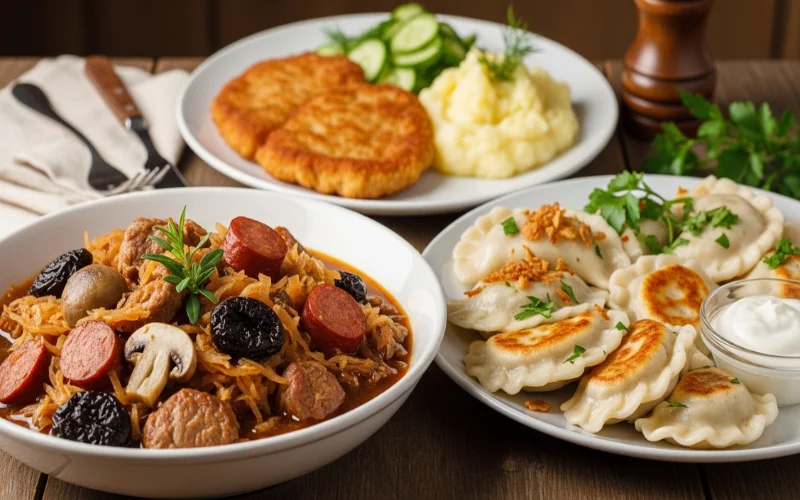
Honestly? Both. Pierogi is the image of the Polish food the world. At home the center of it is bigos. Had to choose only one national dish in Poland, I would choose to pick bigos, as nothing in this world smells like it. Pierogi has relatives all over the world, such as Ukrainian varenyky or Russian pelmeni.
But there are enough Poles who would not agree with me, and that is half the fun. The third competitor is kotlet schabowy (the breaded pork cutlet) that unobtrusively takes an almost daily popularity victory, as most Polish families consume it at least once a week.
Traditional Polish Soups That Start Every Meal
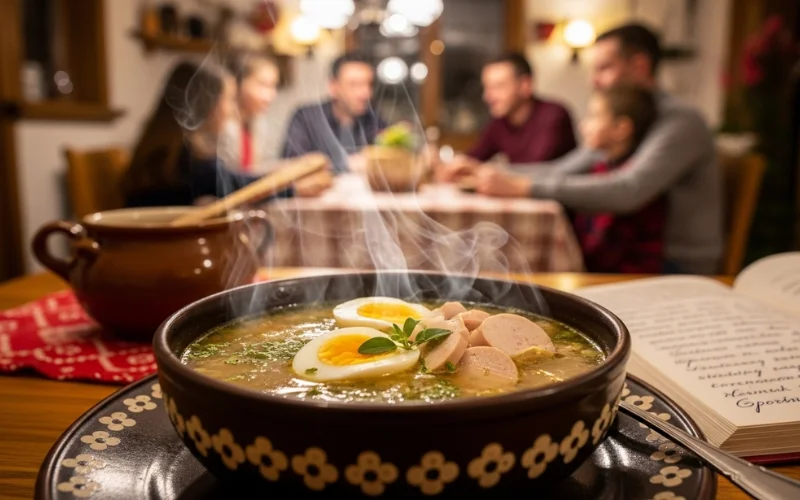
This is something that most tourists are not aware of: food in Poland, soup is almost always the first type of food. It’s not optional. During a classic Polish obia (main meal), a guest would feel very lost without the soup dish. There are dozens of recipes of soups in Poland, and it is a domestic matter in families as a state secret.
Soups play a very significant role in Polish culture food that even it has a saying; a Pole without soup is a sad Pole. I would have assumed that to be an exaggeration. I understand it fully after a week of Polish diet.
Zurek: The Sour Rye Soup Everyone Talks About
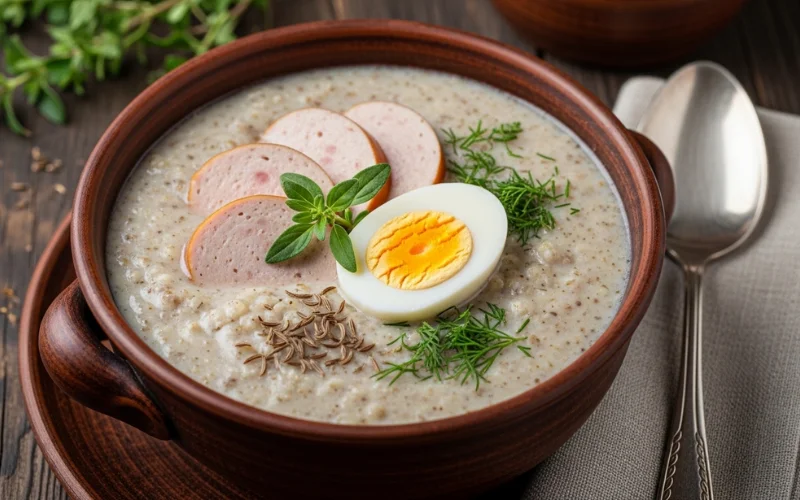
Zurek may be the most Polish of things that you are ever going to eat. It is made on zakwas, a rye flour starter which is fermented to provide the soup with a sour base with a tangy flavor. Put in pieces of white sausage, hard boiled eggs and potatoes and you have what sounds weird but tastes fantastic.
You can take zurek in a loaf of bread that has been hollowed out in tourist hangs around Krakow. That is good, but the real thing is a good bowl in a milk bar or at the kitchen table of some one. It is the centrepiece of the Polish traditional food spread of Easter and I believe it is the most under-rated soup in the entire of Europe.
Barszcz Czerwony: Poland’s Iconic Beetroot Soup
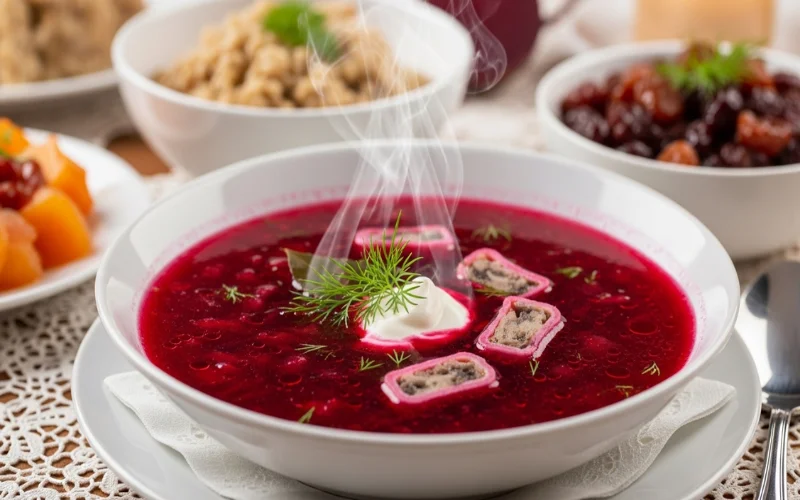
When the notion of famous Polish food soups comes to mind, most individuals visualize barszcz. It is a beetroot broth of rich ruby red color and it does not resemble any other broth. The Christmas Eve edition is made of crystal clear and it is accompanied by uszka, small ear shaped mushroom dumplings that float in the bowl.
The daily one is creamier and usually served with a slice of boiled egg or a topping of sour cream. Anyhow, barszcz is a dish that is good to grow on you in Poland. Initial taste may come as a surprise. By the third, you’re hooked.
Rosol: The Sunday Chicken Broth
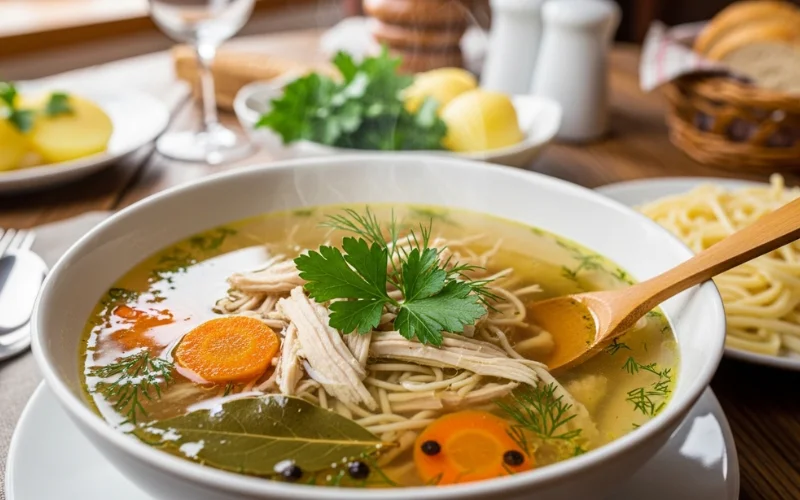
Each family in Poland has its own recipe of rosol which they insist is the best. It is an oro golden, gradual simmered chicken soup together with slim egg noodles. Imagine it was the Polish version of chicken soup but they take it much more seriously than most cultures do their broths.
Rosol appears everywhere, at all wedding receptions, at all Sunday family dinners, at all times when people are getting a cold. It is unobtrusive, yet possibly the favorite among the popular Polish foods. You miss it and you have missed something with regard to the way Polish people really eat.
Other Polish Soups Worth Trying
| Soup Name | What It Is | When to Try It |
| Chlodnik | Cold beetroot and buttermilk soup | Summer only (June to August) |
| Kapusniak | Sauerkraut soup with kielbasa | Winter and Lent |
| Grochowka | Thick split pea soup (army soup) | Cold weather, mountain lodges |
| Flaczki | Tripe soup with marjoram | Late night at weddings (4 AM tradition) |
| Zupa ogorkowa | Dill pickle soup | Year round, home cooking staple |
| Zupa pomidorowa | Tomato soup (made on chicken broth) | Weekday family favourite |
| Zupa grzybowa | Wild mushroom soup | Autumn and Christmas Eve |
| Krupnik | Barley soup with root vegetables | Winter comfort food |
Best Polish Main Dishes You Have to Try
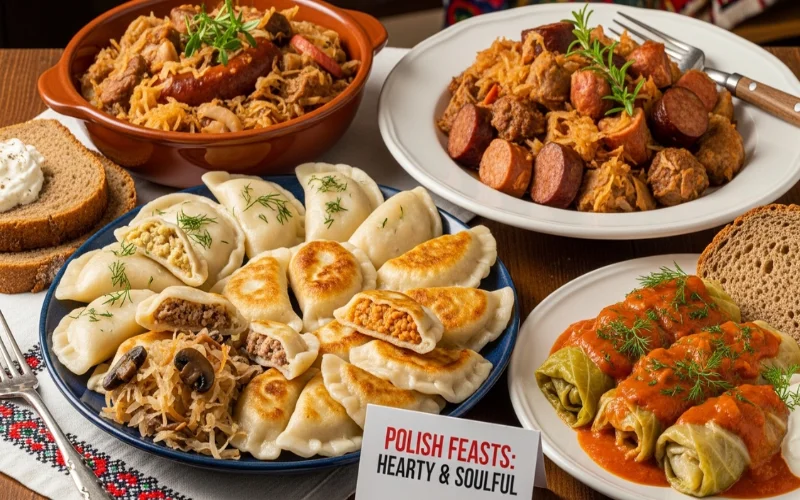
Now we are coming down to the big hitters. Polish dishes has no hesitation with serving. Its main dishes are very hearty, meaty, and will allow you to keep warm throughout the cold winter in Poland. These are the ones that you must start with in case you are wondering what to eat in Poland.
The majority of these traditional Polish dishes are available in the restaurant menus all over the nation. However, the best ones I have had were always at a kitchen table of some one or in a milk bar with no frills and cooks who have made the same recipe over the last 30 years.
Pierogi: Poland’s Most Famous Dumplings
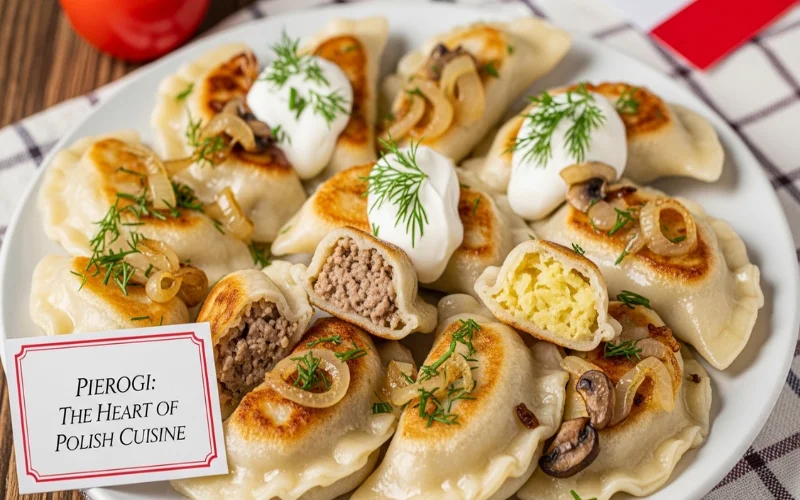
It is impossible to discuss the Polish food without mentioning pierogi. They are half moon shaped dumplings, stuffed with everything, ranging between potato and cheese to wild mushrooms to fresh strawberries. Pierogi ruskie (filled with potato and twarog cheese) are the traditional one, and the name is also related to the historical territory of Red Ruthenia, rather than Russia.
The special thing about pierogi lies in the fact that they unify all occasions. The blueberry sweet ones appear at summer tables. Mushroom pierogi and sauerkraut are indispensable at Christmas Eve. Pan fried and crispy onions with a scoop of sour cream? That’s a Tuesday night dinner. Pierogi is the plural form, by the way, and does not need further pluralization. One dumpling is a pierog.
Bigos: The Hunter’s Stew
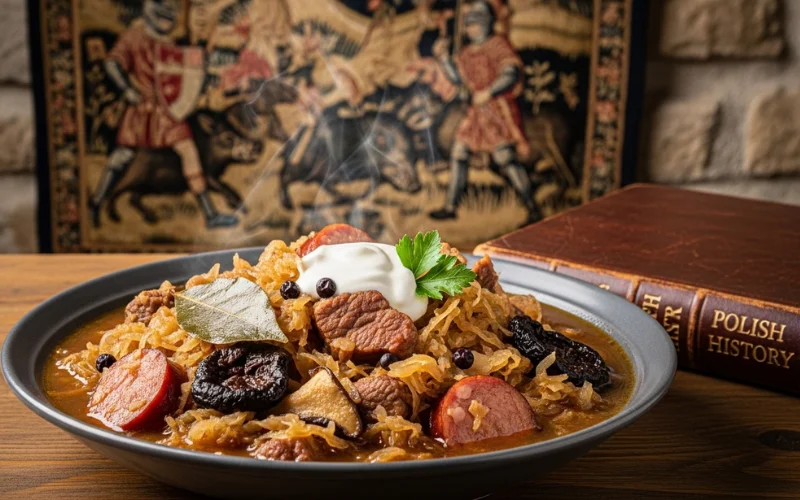
When the face of the favourite Polish dishes is pierogi, the background belongs to the bigos. This stew is a slow cooked dish with sauerkraut, fresh cabbage, various types of meat (pork, beef, sausage, and in some cases game), dried mushrooms and prunes. The magic trick? The more you reheat it, the better. There are families that cook a pot and spend three or four days consuming it.
Bigos is an ancient tradition that was glorified by a famous poet by the name Adam Mickiewicz. Preparation of good bigos is a slow process. You can’t rush it. The flavours require time to blend in and the time lag is what distinguishes the good bigos and life changing one. It is the only best Polish food I have ever had in my money.
Kotlet Schabowy: The Breaded Pork Cutlet
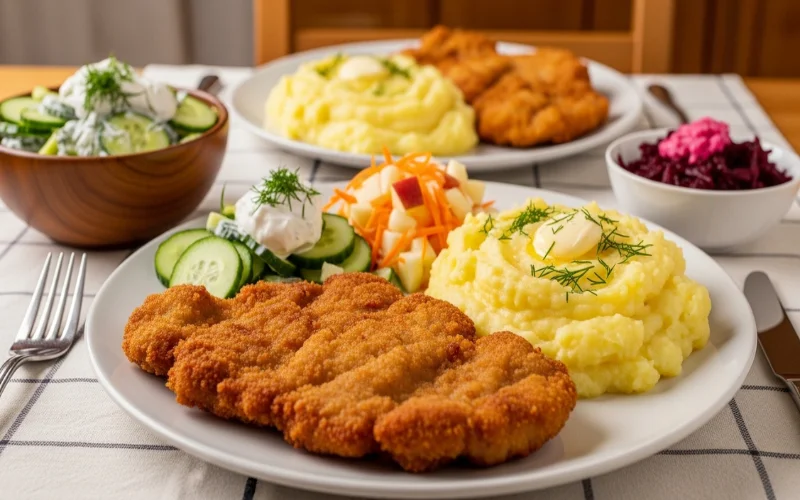
In case you are interested in knowing what Polish people eat during a normal week night dinner, it is kotlet schabowy. A fatted pork loin chop is pounded thin, battered with egg and breadcrumbs and pan fried. It is accompanied by muted potatoes and surowski (raw vegetable salad). Every. Single. Time.
Just imagine it is a Polish interpretation of a Wiener schnitzel, only Poles will argue you a lot about who is the first to be invented. On Sundays afternoons the banging of meat to make schabowy would be heard in apartment buildings. It is one of the common Polish foods that are like a hug on a plate.
Golabki: Stuffed Cabbage Rolls
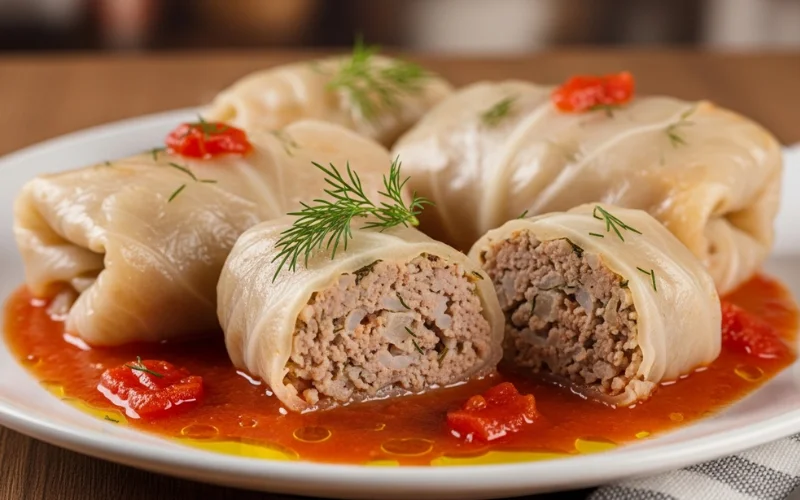
Golabki, the word translates to little pigeons, a very cute name to use in reference to such a roll of blanched cabbage, filled with minced pork, rice, and onion. They are cooked in a tomato sauce until all the components become soft and the flavours combine. According to my friends of Polish origin, their grandmothers always prepared too much, and no one ever raised any objections.
These are among the Polish dishes popular and familiar enough to have tasted stuffed cabbage anywhere in Eastern Europe. However, the Polish variant has its identity, particularly when the tomato sauce is home-made and with a little tanginess. They also freeze wonderfully and therefore, Polish mums take them home by dozens and serve them to their children.
Kielbasa: More Than Just Sausage
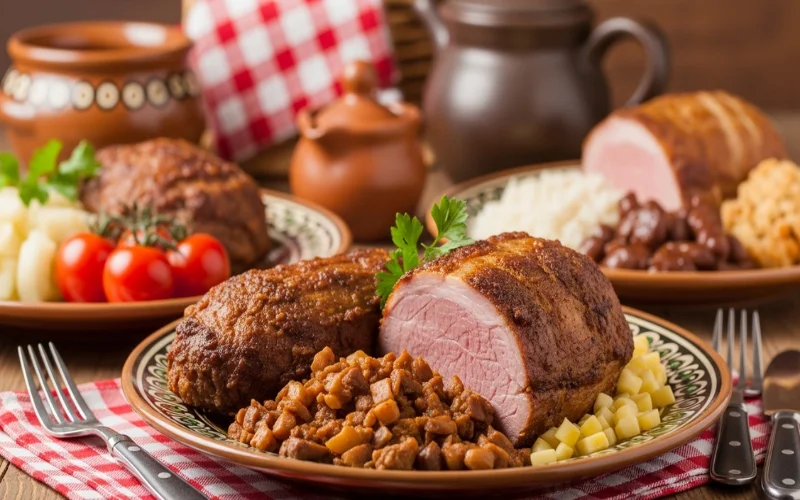
It is like calling kielbasa a sausage simple, as wine a grape juice. There are dozens of types of regional sausages in Poland, including the garlicky kielbasa krakowska or the smoked kielbasa podwawelska or the white sausage (biala kielbasa) that are required at Easter. A recipe, a method of smoking, a fierce pride belongs to each region.
Kielbasa will be at any family party, grilled on summer barbecues, sliced on breakfast plates, and packed into zurek. It also happens to be one of those Polish foods that are travel worthy. The regional varieties are provided in the Polish delis across the world, and after having tried a well-smoked Polish sausage, the stuff in the supermarket is no longer acceptable.
More Classic Polish Main Courses
| Dish Name | What It Is |