



Peruvian food does not hit the same. I understand that this sounds like something that everybody says about his or her favorite food, but with Peru? It’s actually true. We are talking about a nation where you can have ceviche, freshly caught, on the shore one day and then the following day you can have the slow-roasted guinea pig in the Andes.
It is a list of the best Peruvian food that you must be aware of, including the mainstays such as ceviche and lomo saltado, but also the snacks and desserts that are not covered anywhere on most lists. You are going on a trip or simply want to know what food Peru is famous with, continue reading.
What Makes Peruvian Cuisine So Special?

The point that most people do not know about is that Peru is home to 28 of the 32 climate zones in the world. Twenty-eight. It translates to the fact that they cultivate quinoa that grows at high altitudes as well as tropical fruits in the same nation. The assortment of ingredients is insane in itself.
Nevertheless, it is not only the ingredients. The Peruvian cuisine is an amalgamation of the Inca, Spanish, African, Chinese and Japanese cuisine which you can truly never stumble upon. Peru has already won the World Travel Awards as the Best Culinary Destination 12 times and in 2025, Lima ranked four restaurants in the 50 Best list. That’s not a fluke. The food is just that good.
A Brief History of Food in Peru
You can not appreciate food in Peru without knowing what caused it to get here. History has been cooked into every dish. Now then, I will tell you the brief.
Inca Roots and the Spanish Shake-Up

The Incas had the cultivation of more than 4,000 varieties of native potatoes way before the arrival of the Spanish. Four thousand! They consumed quinoa, corn, kiwicha and raised cuy (guinea pig) as the source of protein. Marinating fish in fermented fruit juices was a practice in coastal communities, which researchers think was the original form of ceviche.
The next source of food was the colonization of Peru by Spain in the 1500s which introduced rice, wheat, citrus, garlic, and livestock. As a substitute to the fermented fruit, citrus juice was used in ceviche and boom, the modern version was created.
In the mean time, colonial convents turned into such strange dessert laboratories where nuns invented desserts that are eaten by Peruvians even now. The African people, who came as slave workers, added anticuchos, tacu tacu and picarones to what is now known as Criollo cuisine. So yeah, the history runs deep.
Chifa and Nikkei: How Asian Immigrants Shaped Peru’s Kitchen

This segment shocks the minds of people. Since the year 1849, the Cantonese immigrants entered Peru as contract workers. They introduced a wok cooking, soy sauce, and stir-fry cooking techniques. Chifa is literally translated as Cantonese: chi fan which means to eat. Today?
There are more than 6,000 chifa restaurants in Peru. That is why it is the most popular food in Peru in terms of restaurants. You have already experienced Chinese influence without the slightest idea in case you have ever tried lomo saltado.
The Japanese immigrants arrived in 1889 and their cuisine blended with Peruvian cuisine to form Nikkei cuisine. The resulting hybrid led to tiradito (sashimi with ceviche, essentially) and made Lima’s Maado restaurant to be ranked as the 1st among the 50 best in the World in 2025.
Peru has the second largest Japanese diaspora in Latin America of approximately 90,000 individuals, with the impact being evidenced in every plate.
Traditional Peruvian Dishes You Absolutely Have to Try
Now, it is time to dive into the realm of the real traditional Peruvian dishes which make this food so iconic. These aren’t tourist traps. They are what people in the area consume on a daily basis. This is what do they eat in Peru in case you are asking.
Ceviche

Ceviche is the national dish of Peru and frankly speaking? It is worthy of such title. Raw fish (usually, sea bass, or corvina) is cooked (usually in lime juice), and mixed with red onion, aji limo chili, cilantro, and salt.
Guacamole on sweet potato and crispy cancha corn. The remaining marinade, leche de tigre, is drunk out of the bowl. Local people claim that it cures a hangover.
One of the rules you should learn: Peruvians have lunch, nearly never dinner, and eat ceviche. Cevicherias will shut down at approximately 4 PM since fish is a morning catch. Locals will stare its serving ceviche in the face if it is being served at 9 PM somewhere. Go early. Order it fresh. And please don’t add ketchup.
Lomo Saltado
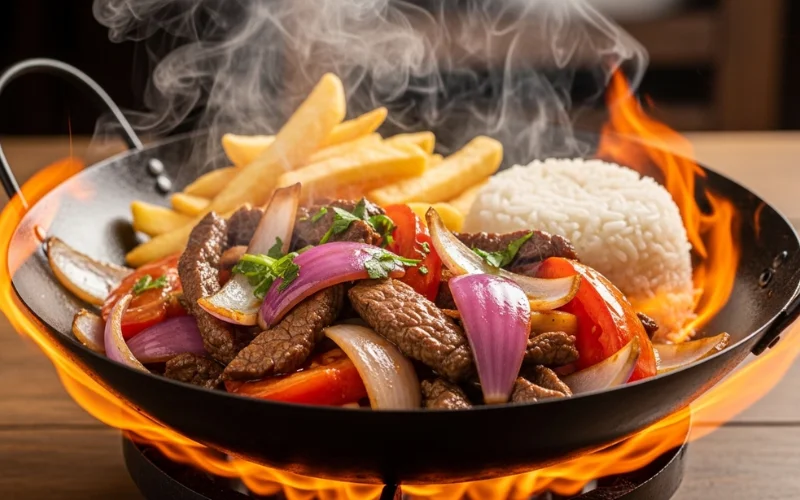
The most popular dish in Peru would definitely be lomo saltado which eloquently demonstrates the fusion DNA of Peru. Beef strips, tomatoes, red onion, and aji amarillo peppers are then stir-fried using soy sauce and vinegar and served over rice simultaneously with french fries. Carbs on carbs. That’s just how Peru does it.
Each family has its recipe. Each restaurant is unique. You will find it in Splendid Lima establishments and in small lunch-counters in Cusco. It is Chifa pure wherein Chinese wok style is combined with Peruvian foods, and it is absurdly good. It is comfort food at the extreme level.
Aji de Gallina
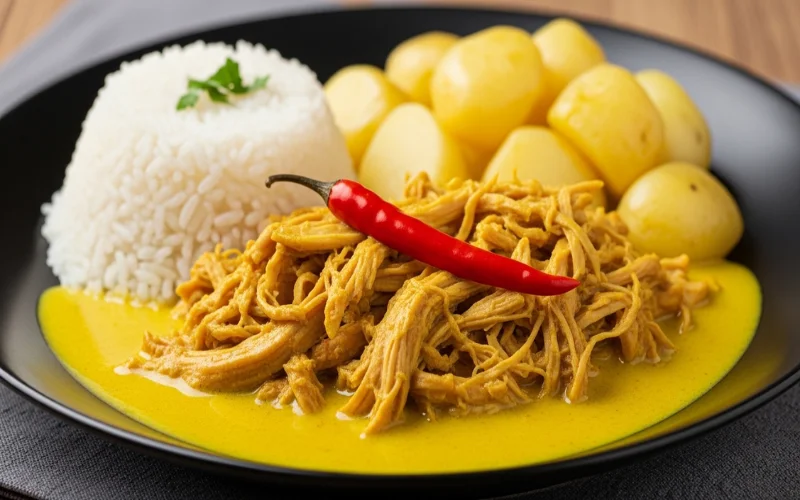
Aji de gallina is chicken stew in this creamy thick yellow broth prepared with the use of aji amarillo peppers, walnuts, bread, Parmesan and evaporated milk. It is served on rice with boiled taters, a hard boiled egg and black olives. There is a slight touch of spiciness, nutness, and deep savoryness in the flavor.
It is the type of traditional Peruvian food sold in family lunches and neighborhoods all over. Nothing flashy of it, yet always good. This is a good place to begin in case you are a newcomer in Peruvian cuisine and need to take a delicate bite.
Causa Limena
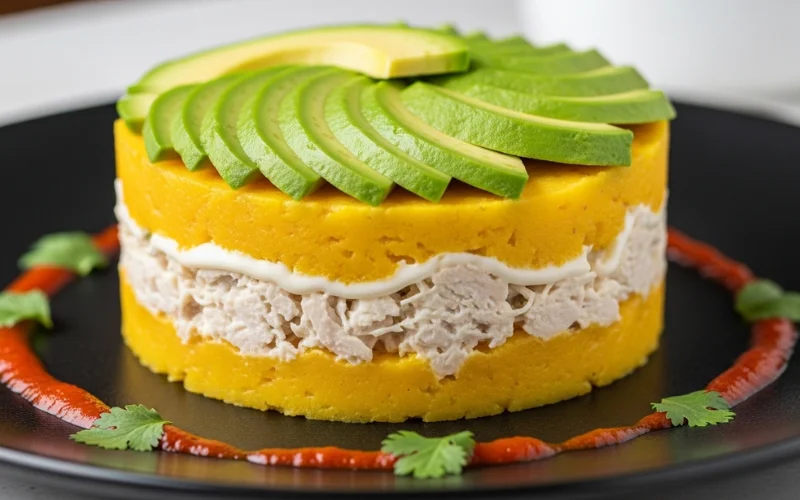
Causa is chilled, stratified, abnormally enamoring. Mashed yellow potatoes with lime juice, aji amaranto and filling such chicken salad, tuna or avocado. Restaurants present it in towers carved in sculpture to appear almost too beautiful to consume. Almost.
The texture play is what I like a lot about causa. Mashed potato over creamy stuff, creamy sometimes, with some huancaina or a few olives on top. It is one of those peruvian appetizers that tourists just can not help falling in love with.
Pollo a la Brasa

Rotisseries chicken in Peru, and I cannot be apologetic because it really kills all the other versions in the market. Pollo a la brasa is marinated in soy sauce, cumin, paprika, garlic, vinegar and herbs, and roasted on charcoal on a rotating spit. Fried and served with aji verde (this green creamy chili sauce you will wish to put on everything).
And preparations In Peru, more than 150 million chickens are eaten each year in such a manner. In Lima there is a block of pollerias. The chains such as Pardos and Norkys are good, however, the family-owned places are the true magic as the charcoal flavor is more painful and the skin is crisper.
Rocoto Relleno
Direct out of Arequipa, the second biggest city of Peru and a food powerhouse in itself. A rocoto pepper (it resembles a bell pepper, but is much spicier) is filled with ground beef, some onions, peanuts, raisins, olives, and a hard-boiled egg, and melted cheese is added on top and baked.
Disclaimer: rocots are cunning. They are completely innocent yet much hot like the jalapenos. Those filling balances well though. You must have rocoto relleno when you get to the picanterias of Arequipa. This incredible cheesy gratin potato dish is normally accompanied by pastel de papa.
Seco de Cordero
Slow-cooked lamb stew cooked in cilantro sauce with chicha de jora (fermented corn beer). The huge quantities of fresh cilantro mixed with beer give the sauce this bright green color. Accompanied by rice and beans, as well as yuca. You just have to look at the meat and it falls apart literally.
This dish is most shining in the northern coast (particularly Lambayeque and Trujillo). Instead, they prepare seco de cabrito (baby goat) up there, which is regarded by the locals as the original one. In any case it is wholesome, highly spiced, and one of the most fulfilling peruvian meals you will ever have.
Arroz con Pato
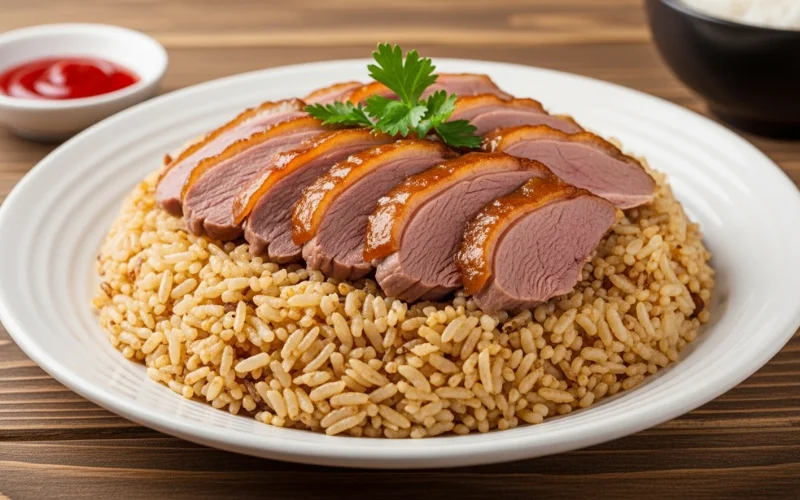
Other northern jewel that is not given the love it deserves. Pour in rice, cilantro, dark beer and aji amaranto and braise the duck until the rice absorbs the last drop of that fat, herby duck-flavor. The rice and its grains become dark green and each grain is so solemn. The salsa criolla is typically served with it, and a cold beer.
It is one of those peru food dishes which foreign guides never give a second thought, yet question any Peruvian in the national region and they will tell you that the country serves the best food. It is a festivities meal, which is commonly served during the weekend and holidays.
Tacu Tacu
Created in Afro-Peruvian ingenuity, tacu tacu began life as an item to put to use day-old rice and beans. You fry the mixture in a thick crispy cake and use it to make a base with steak, fried eggs or seafood. Crispy and golden on the outside and tender and yummy on the inside.
It has come out of modest leftovers to being a star dish at the most upscale restaurants in Lima. It will be served with lomo saltado, grilled octopus, or a fried egg that is to perfection. That change of food of the poor man to high end food? The Peru food story in a nutshell.
Papa a la Huancaina
Drowned in huancaina sauce boiled yellow potatoes, this light yellow, slightly spicy sauce of aji amarillo peppers, fresh cheese, evaporated milk, and crackers. Served cold as a starter with hard-boiled egg and black olives. Simple? Yes. Boring? Absolutely not.
This is often one of the first things to have in Peru that tourists trip over as it appears on the menu as an appetizer on almost all menus. The sauce is not only addictive. After you have sampled a fresh (not the packet) huancaina, you will know why Peruvians use it on everything.
Best Peruvian Seafood Dishes

Peru has 2,400 kilometers of shoreline and the cold and nutrient-enriched Humboldt current to sustain it. So yeah, the seafood is unreal. These are the best of the best of Peruvian seafood dishes which forms a huge portion of everyday meals along the coastline.
Tiradito
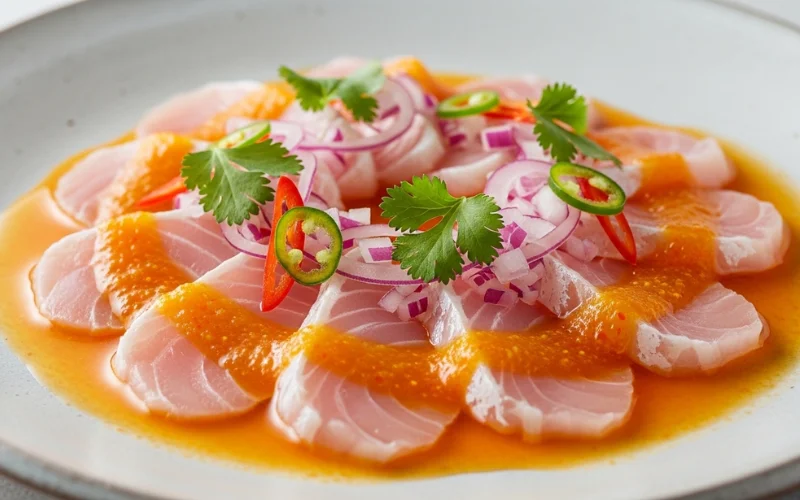
Imagine tiradito is the result of a Japanese sashimi and Peruvian ceviche child. Cubes of raw fish cut into thin slices and left flat on a plate drizzled with spicy hot sauce made of aji amarillo or rocoto pepper and lime. It does not have onion like ceviche and the fish remains silky and raw. Not “cooked” in citrus.
It is the keynote of the Nikkei cuisine, which is more lightweight than ceviche and really prestigious. The majority of Lima up-scale restaurants have their variation and it is one of the best peruvian foods to those who likes fine seafood. Don’t sleep on this one.
Jalea
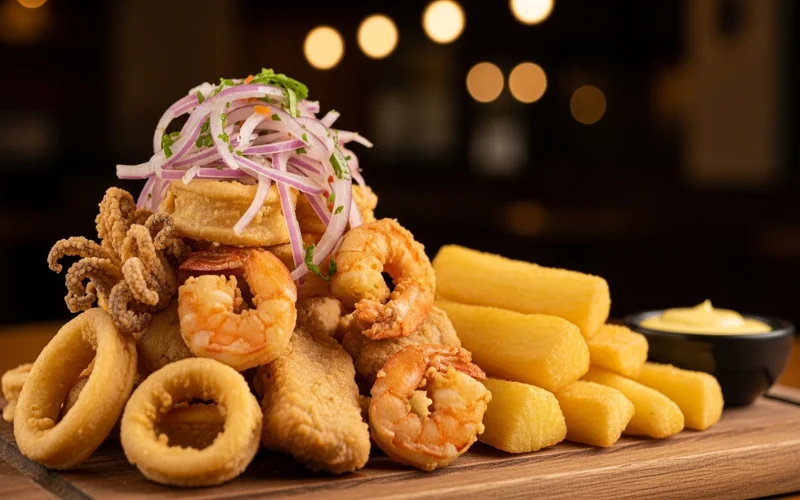
Jalea is a sharing of the seafood fried in Peru, but well made. A combination of fish, calamari, shrimp and occasionally octopus is battered and deep-fried, and stacked high on top of fried yuca, salsa criolla and tartar sauce. The batter is not thick and oily; it is light and crisp.
Available in almost any cevicheria. It is simply suited to a cold Cusquena beer, and the portions are normally large enough to share. Come hungry.
Arroz con Mariscos

Peru’s seafood rice. Tourists even compare it to paella but in the real sense, it is another whole different ball game. Arroz con mariscos is rice cooked in a sauce with shrimp, mussels, calamari, and octopus in the aji panca, garlic and tomato sauce. The Rice is wet and full of flavor. Not dry, not crunchy. Different vibe.
It is no frills comfort food on the coastal side and one of the cheapest means of having a large plate of mixed seafood. It is served at a number of cevicherias at a price of less than 8 USD. Hard to beat that value.
Chupe de Camarones
Arequipa is served as a rich, thick, creamy shrimp chowder made with freshwater river shrimp, potatoes, corn, fava beans, rice, milk, eggs, and a healthy portion of aji panca and huacatay (black mint). One bowl is a full meal. Like, genuinely full. Order nothing other with it.
The best place to have it is in picanterias of Arequipa. The shrimp are of the Majes River, and have a different flavor altogether of ocean shrimp, sweeter and lighter. This is among those famous peruvian dishes that should be given much international coverage.