

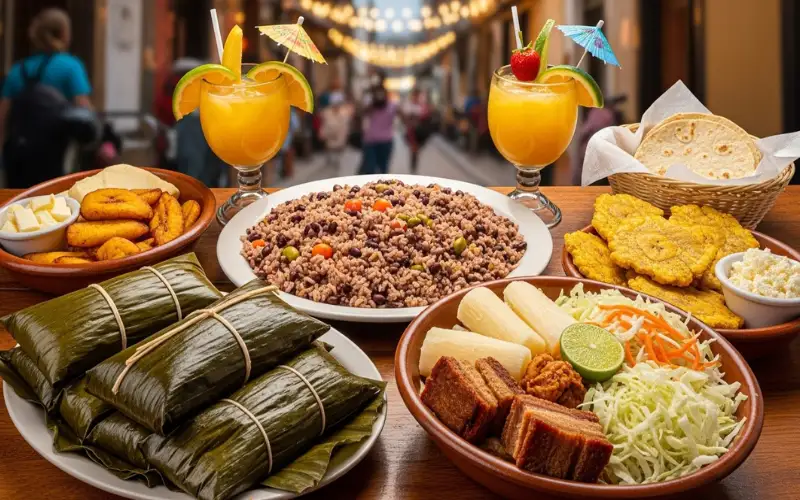

The first meal that made me addicted to Nicaraguan food was a good nacatamal I had on a Sunday morning. It was a mess, wrapped in a gigantic banana leaf, and one of the best things that I have ever tasted in my mouth.
It includes all that you need to know on the national food of Nicaragua to snacks that can only be found at the roadside of fritangas. I am referring to 30+ dishes, drinks, and desserts that make the Nicaraguan cuisine one of the best secrets of Central America.
The Reason Why Nicaraguan food is So Special
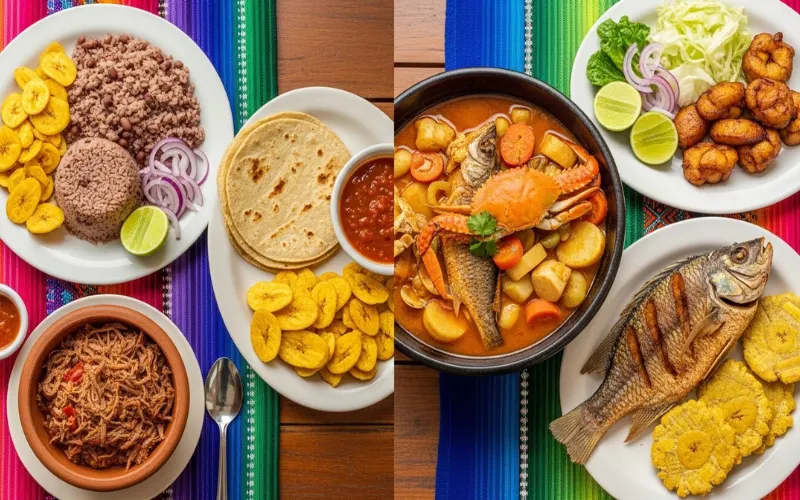
This is what came as the biggest surprise to me about food in Nicaragua: it is not a single cuisine. It is fundamentally two totally different food worlds sewn together with the borders of one country. On the pacific side, they cook using corn, beans and beef. Coconut, seafood, and spice are the driving power behind the Caribbean coast.
The division thereof renders Nicaragua food infinitely more compelling than many might assume. You can have a plate of gallo pinto breakfast in Granada and next evening fly to Bluefields and have coconut bread and spicy rondon. None of the other Central American countries yank off that kind of range.
Indigenous and Colonial Roots That Shaped the Food
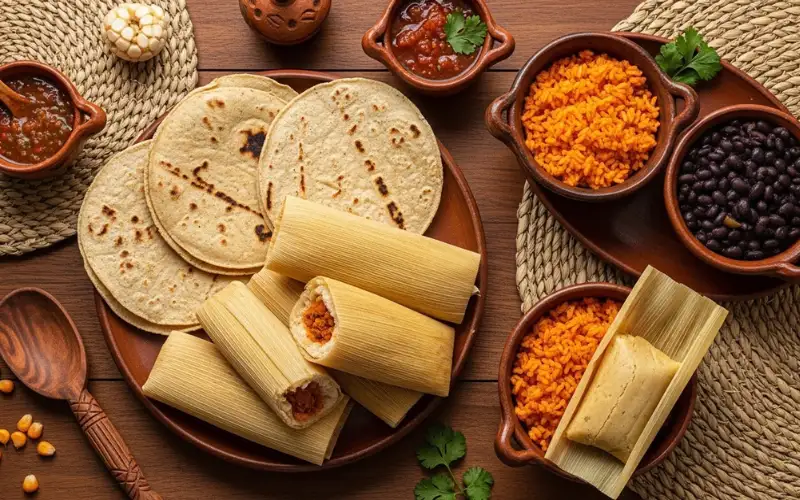
This area had the Chorotega and Nicarao peoples, who had been cultivating corn more than 4,000 years before the arrival of the Spanish in 1522. Nicaraguan people mean when they say that they are children of corn (Somos hijos del maiz) and they are not being a joke. Tortillas contain corn, the tamales, the drinks and even the desserts.
Spanish colonists introduced rice, pork, beef and dairy. In 1640, African slaves who had shipwrecked in the Miskito Coast brought about coconut cooking and what is currently known as gallo pinto.
The influence of British colonialism on the Caribbean side included meat patties and sugar based sauces. All these layers were piled up and what we today refer to as traditional food in Nicaragua.
The Pacific vs Caribbean Divide
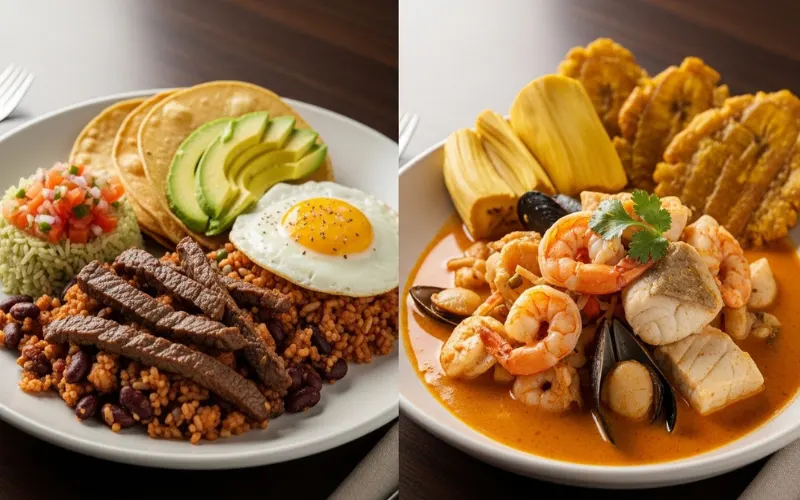
Nicaraguan food in the Pacific coast is lean and hearty. Imagine grilled meat, red beans, plantains, and corn tortillas. The Caribbean coast is audacious in using coconut milk, scotch bonnet peppers, and fresh seafood. Pan de coco is used instead of tortillas there and that too shocked me the first time I sighted it.
More than 1,060 dishes, drinks, desserts and breads were recorded by the Nicaraguan Institute of Culture in the country. That number is still growing. That amount of gastronomic diversity is quite impressive to say the least, considering the size of the nation (approximately 7 million people).
Gallo Pinto: The National Dish Everyone Argues About
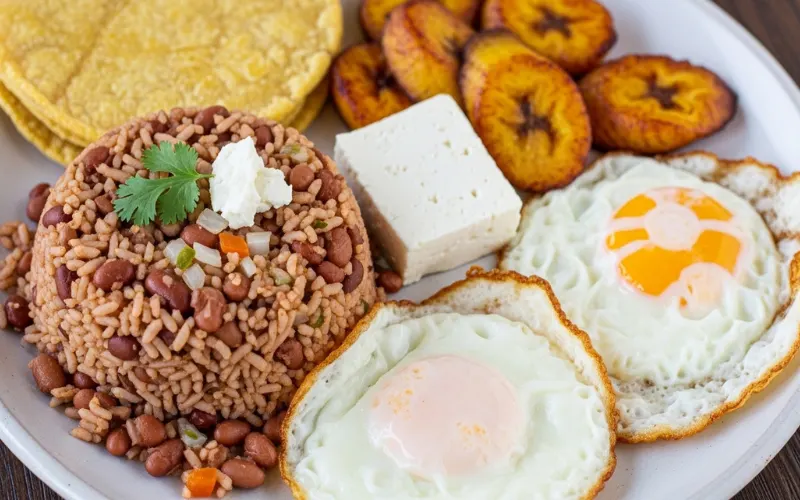
When you inquire of what is the most popular food in Nicaragua, they will always say gallo pinto. Always. The name translates to spotted rooster as the white rice is punctured when it is mixed with colored beans. This is eaten by Nicaraguans at the breakfast, lunch and dinner. It forms the foundation of any meal.
The dish has Afro-Caribbean origins and it was first discovered within the banana plantation workers on the coast. It is so easy on the paper, rice, red beans, onions, oil, salt. But the technique matters. You must have day-old rice, and the beans must also be cooked in the same pan with the rice, till all is that characteristic color.
The Nicaragua vs Costa Rica Rivalry
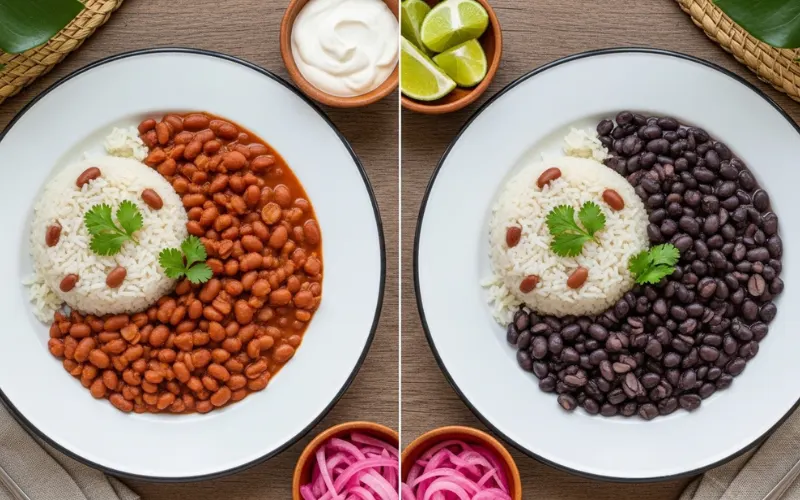
Gallo pinto is considered to be a national dish in both countries and the truth is that the beef between the two is a little humorous. Costa Rica also prepared approximately 1,000 pounds of food in 2003 to a Guinness book of record. Nicaragua retaliated with 1,200 pounds. Costa Rica became nuclear and served 51,000 individuals at a single sitting by 2009.
The real difference? Nicaragua uses red beans. In Costa Rica, black beans are used and Salsa Lizano is added. Being a person who has already tried both variants, I will tell that Nicaraguan style strikes somewhat different. It is less complicated and leaves the flavor of the beans to speak.
How Gallo Pinto Changes by Region
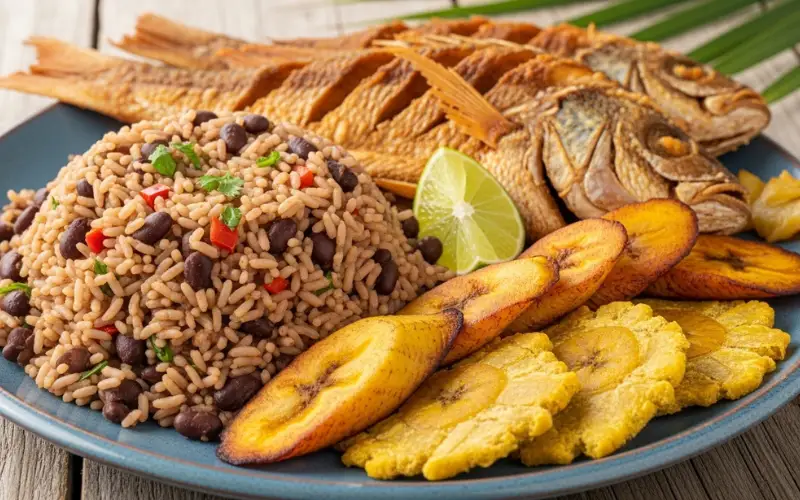
In the Caribbean coast, the cooks prepare gallo pinto using coconut milk in place of plain oil. It also adds a mild sweetness to the rice that compliments fried fish quite unexpectedly well. You will have it served in Managua and Granada, served with fried cheese and scrambled eggs, maduros and thick corn tortilla.
Nicaraguans refer to themselves as Pinoleros (named after pinolillo, the national drink) though the true representation of the identity of the people is gallo pinto. By passing on this meal, you are not trying a real meal of authentic Nicaraguan food.
Must-Try Main Dishes That Define Nicaraguan Cooking
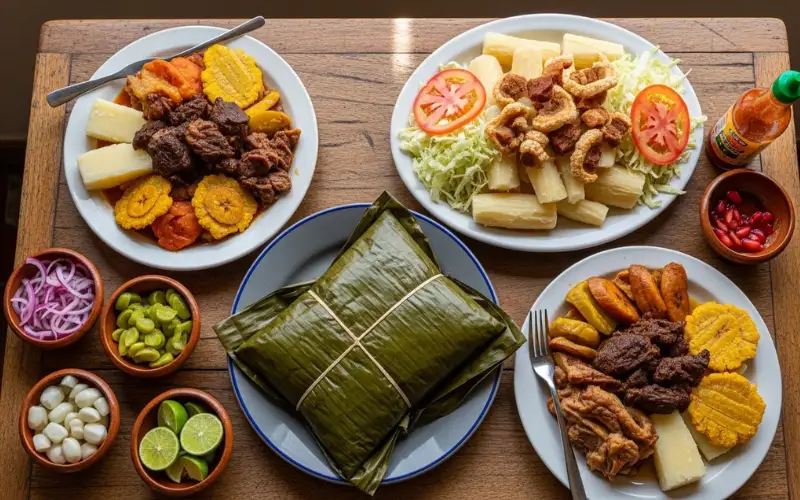
In addition to gallo pinto, the popular foods in Nicaragua is biased towards slow cooking, wrapping in banana leaves, and aggressive seasoning involving achiote and sour orange. These are actually the Nicaraguan dishes that are the source of excitement by the locals.
Nacatamal
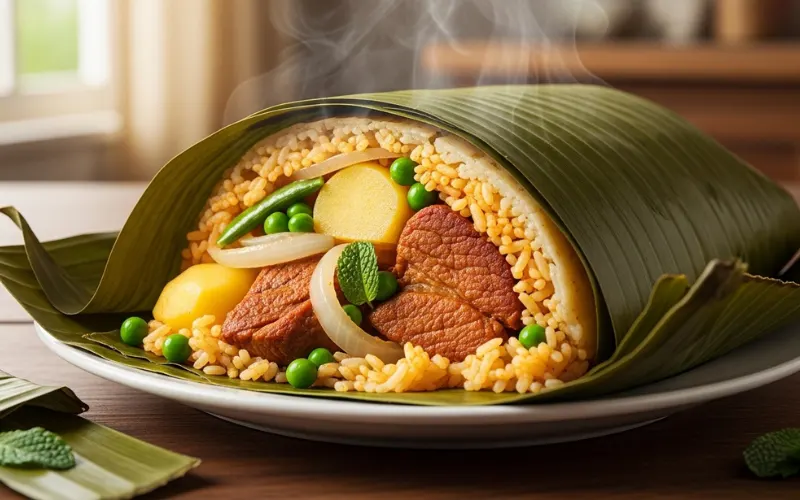
Gallo pinto being the daily bread, the feast on the weekend is the nacatamal. It is called by the Nahuatl: nacatl (meat) and tamalli (tamale). This is something that existed before the Spanish Conquest and it is huge in comparison to a Mexican tamale. It is corn dough full of pork or chicken, rice, potatoes, tomatoes, onions, olives, and occasionally raisins.
All is rolled into banana leaves and it is steamed away. They are prepared on Friday or Saturday in the family and on Sunday morning you will notice signs of HAY NACATAMAL outside the houses selling fresh batches. The buried chile congo pepper is a family game: the first to bite into it is roasted by the rest at the table.
Vigoron
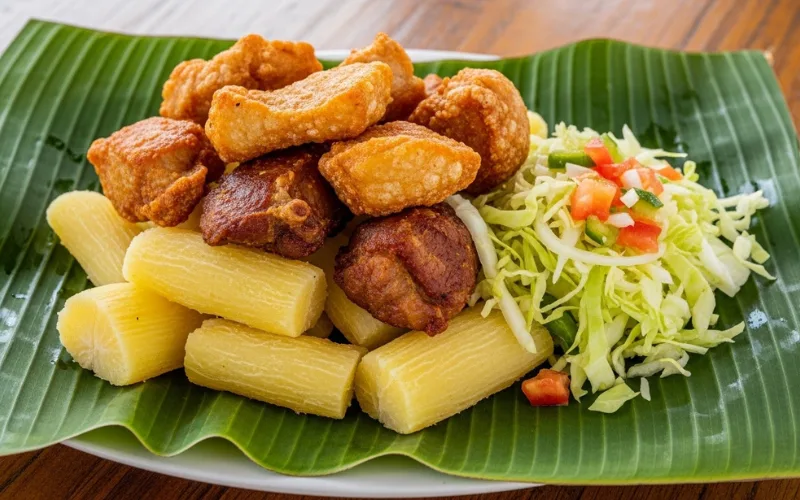
This was painted in Granada, in 1914 by a lady known as Maria Luisa Cisneros Lacayo, who was better known as La Loca. It was named after a medicinal tonic advertisement that she had read, one of the best of all Nicaraguan traditional food origin stories. It consists of boiled yuca, crispy chicharrones and a vinegar-cabbage salad with vinegar and mimbro (sour cucumber tree fruit).
This is street food at its best, being served on a banana leaf in the main square of Granada. The well known sellers all have nicknames: El Gordito, La Pelona, La Perla, La Abuela. However, in my opinion, the best introduction to the traditional food of Nicaragua is vigoron.
Indio Viejo (Old Indian)
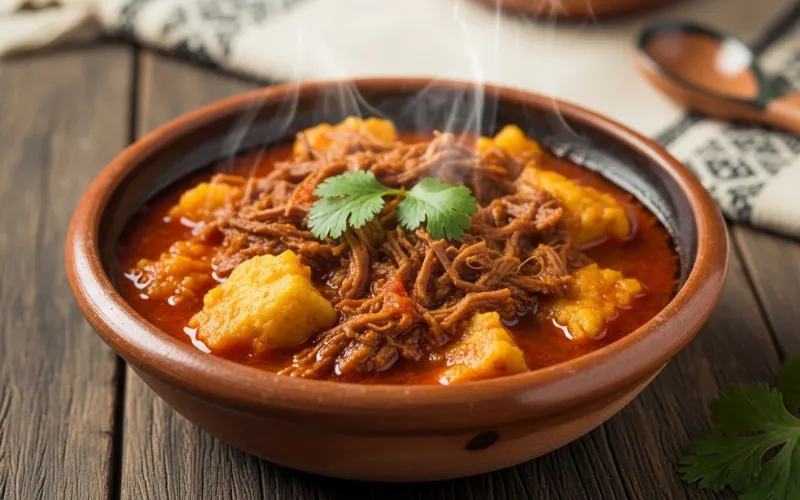
It is one that comes with a legend. When Spanish conquistadors arrived in one of the native villages and inquired of the village leader what was cooking, the village leader replied that it was an old Indian who died yesterday. The terrified Spaniards fled away as the whole tribe burst into laughter and drank their corn stew undisturbed.
The real one is shredded beef or chicken cooked into a thick corn masa base in a combination of onions, garlic, tomatoes, sweet peppers, achiote (to give it the orange look) and sour orange juice.
It boils down to porridge-like consistency which is far more gratifying than it may appear. The cities that are known to make the best version are Jinotepe and Diriamba.
Baho (Vaho)
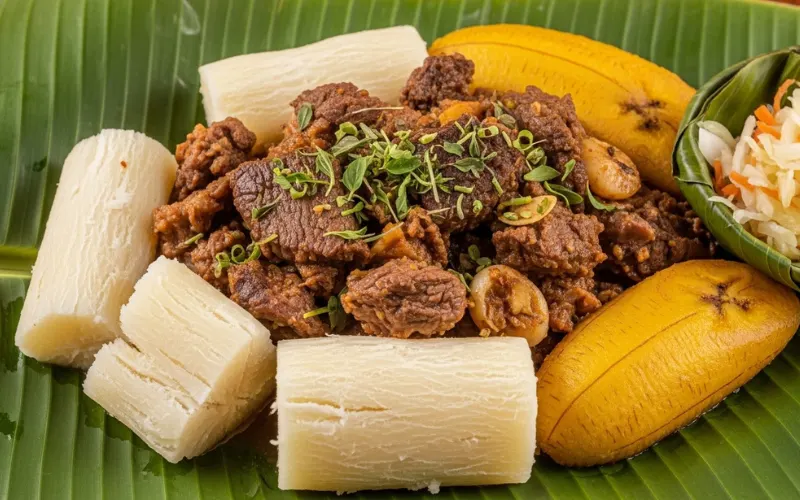
Baho translates to steam or mist in the Nicaraguan slang and this is precisely the way it is cooked. Beef with saltation is marinated in bitter orange and piled over with green plantains, ripe plantains and yuca in a pot lined with banana leaves. The entire process is cooked between four and eight hours. It is a day-long cooking project no joke.
It is the traditional Sunday lunch meal and also doubles up as a legendary hangover remedy. Diriamba prepares the baho which most people find to be the best. Everything is bound together by the pickled cabbage-tomato salad in the top. It is among the Nicaragua famous dishes that tourists usually overlook due to the time taken to prepare it.
Rondon (Run Down)
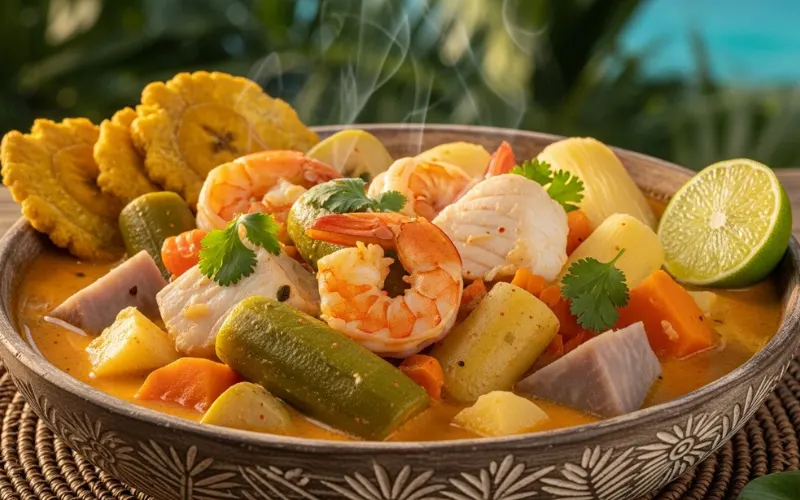
Rondon is Caribbean coast cooking at its finest and it is not even the slightest idea of what can be found on the Pacific side. The name is derived in English (run down), whatever the cook can run down and put in the pot.
It was originally prepared using green sea turtle (which this time is primarily crab, lobster, fish, or shrimp), but cooks in coconut milk and includes yuca, plantains, breadfruit and a local herb known as nargan.
Bluefields, the seat of rondon, is its spiritual home and the one that is best of all is made with small seabob shrimp (known as chacalines). This is the place to begin, should you wish to get acquainted with the Nicaragua local cuisine in the Caribbean side.
Other Main Dishes Worth Knowing
| Dish Name | What It Is | Where to Find It |
| Chancho con Yuca | Fried pork marinated in sour orange and achiote, served with boiled yuca and cabbage salad | Everywhere, especially Managua fritangas |
| Sopa de Mondongo | Colonial-era tripe soup slow-cooked with vegetables and herbs | Masatepe is the traditional home |
| Arroz Aguado | Soupy rice with chicken or pork, flavored with yerba buena (mint) | Home kitchens and comedores nationwide |
| Carne Asada | Grilled beef, often called the king of Nicaraguan street food | Every fritanga in the country |
| Pescado a la Tipitapa | Fish in a rich tomato-wine sauce, named after the town of Tipitapa | Tipitapa restaurants and upscale Managua spots |
| Sopa de Queso | Thick cheese soup with corn dumplings, a must during Lent | Nationwide during Easter week |
| Arroz a la Valenciana | Nicaraguan paella, also called “arroz de pinata” at birthday parties | Birthday celebrations and family gatherings |
Nicaraguan Street Food and Fritanga Culture
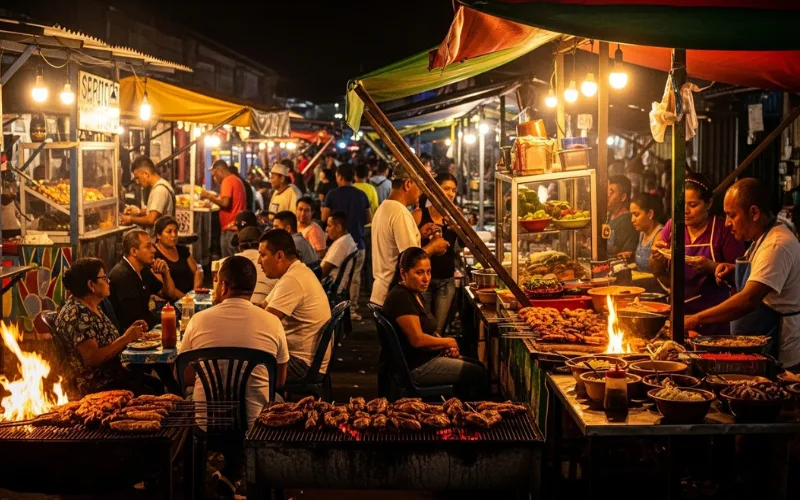
Going to the sit-down restaurants is not important, in case you actually want to know what do Nicaraguans eat on daily basis. Hit up a fritanga. This is the spirit of popular Nicaraguan food , and it is almost free of charge.
What Is a Fritanga?
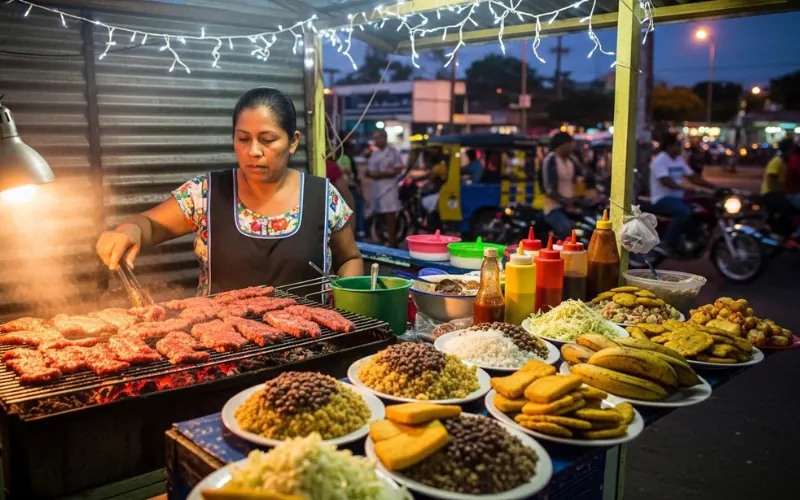
A fritanga is some street food booth, some sort of an open air barbecue, some sort of an outdoor neighborhood hangout. The name is a Spanish origin word, frito (fried), although it is only in Nicaragua that the term is applied to mean both the food and the location where it is consumed. At night women build small charcoal grills and prepare carne asada as well as queso frito.
The entire arrangement can be dated back to the Managua earthquake of 1931, when people were forced to cook on the streets to survive. It has become the heart of the food culture in Nicaragua.
One plate of a fritanga costs you between 1 and 3 dollars. It was even the subject of a love song written by the band La Cuneta Son Machin titled, Amor Fritanguero.
Quesillo
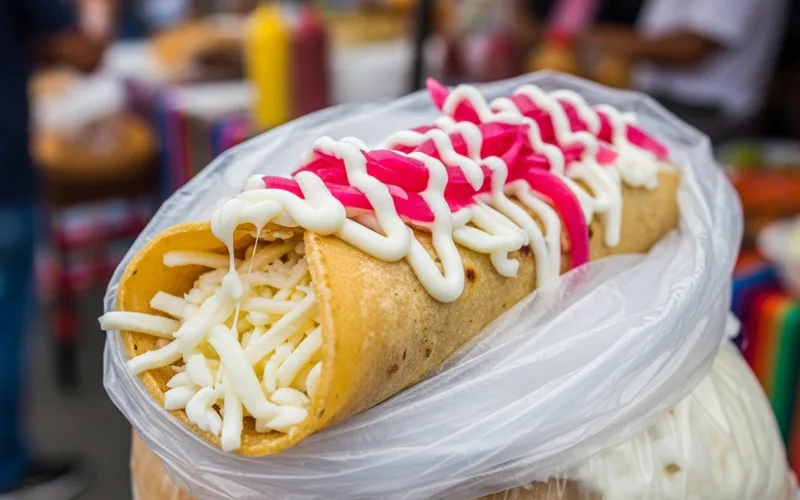
Two towns dispute about the inventor of the quesillo, La Paz Centro and Nagarote, which are between Managua and Leon. It is a hot tortilla with stretchy white cheese of the Chontales dairy area, pickled onions and a liberal measure of sour cream. The entire thing is in a plastic bag which is awkward until you attempt to consume it in any other manner.
The drink to accompany the traditional dish is the tiste which is to be served in a gourd cup. Peddlers that pass by buses and the market are singing Quesillo, quesillo! and truly that sound is an extension of the musical accompaniment of any trip to Nicaragua. It is among those famous foods in Nicaragua that is almost free and yet serves huge.
Guirila
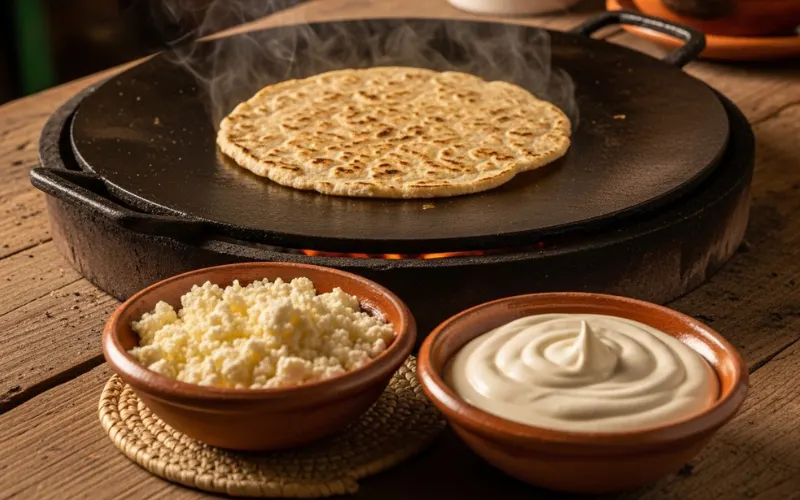
Guirila is a sweet tortilla prepared of young white corn, cooked in banana leaves on a comal which is a flat griddle. It originates in the north highlands and particularly in Matagalpa. It is served with cuajada (fresh cheese curd) and a spoon of sour cream at the top.
The texture is in complete contrast to a normal tortilla. It is creamy, a bit sweet and its mild corn taste is the perfect match with salty cheese. This is the most comforting Nicaraguan food.
More Street Eats Worth Trying
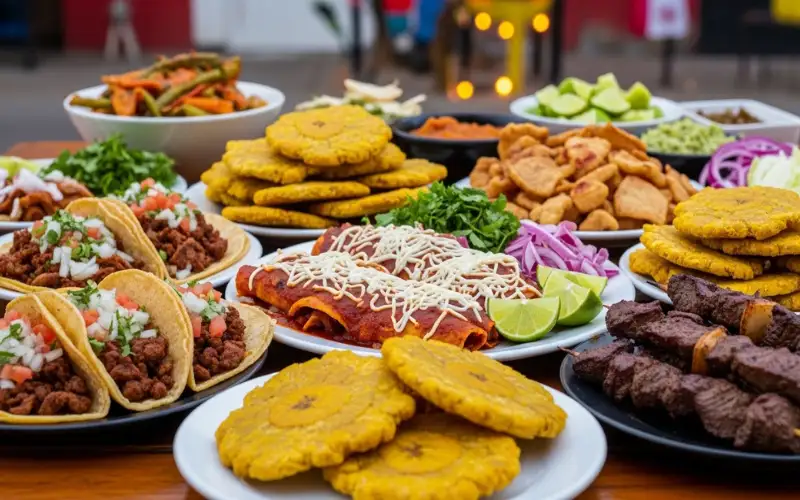
Nicaraguan tacos and enchilada are by no means similar to the Mexican ones. Enchil